Energy and Environment Latest News
New Report: The All-of-the-Above Energy Strategy as a Path to Sustainable Economic Growth
Posted by on May 29, 2014 at 11:30 AM EDT“We can’t have an energy strategy for the last century that traps us in the past. We need an energy strategy for the future – an all-of-the-above strategy for the 21st century that develops every source of American-made energy.” – President Barack Obama, March 15, 2012
The U.S. energy sector is undergoing a profound transformation. The United States is producing more oil and natural gas, is generating more electricity from renewables such as wind and solar, and is consuming less petroleum while holding electricity consumption constant. As detailed in today’s report from the Council of Economic Advisers, these developments have had substantial economic and energy security benefits, and they are helping to reduce carbon emissions in the energy sector and thereby tackle the challenge posed by climate change. These trends have been supported and advanced by President Obama’s All-of-the-Above energy strategy.
The President’s All-of-the-Above energy strategy has three key goals:
- To support economic growth and job creation
- To enhance energy security
- To deploy low-carbon energy technologies and lay the foundation for a clean energy future
KEY POINTS IN TODAY’S REPORT FROM THE COUNCIL OF ECONOMIC ADVISERS
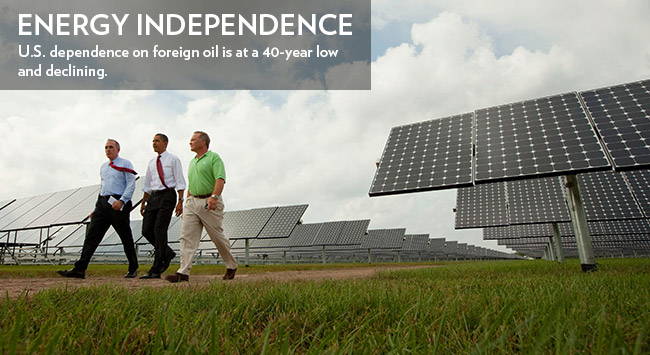
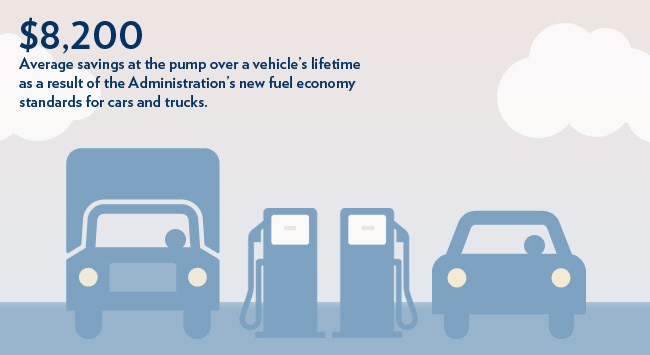
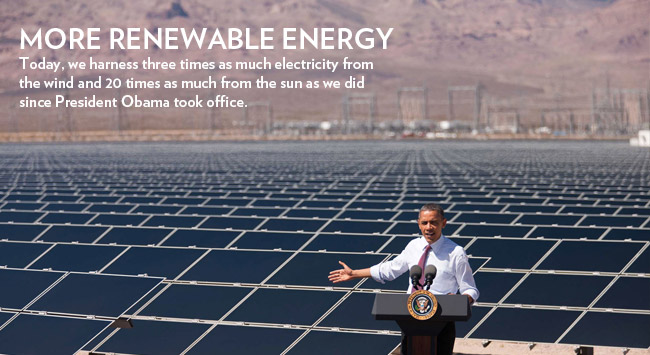
1. Decades-long trends in energy use are being reversed. The U.S. is the world’s leading producer of petroleum and natural gas, surpassing long-standing petro-states Saudi Arabia and Russia. Accompanying these increases has been an unexpected turnaround in petroleum and gasoline demand; while industry-standard projections by the Energy Information Administration from as late as 2006 suggested ever-increasing consumption of oil and gasoline, U.S. gasoline consumption has fallen by 5.5 percent since 2007, or nearly half a million barrels per day. At the same time, production of renewable energy has increased rapidly. Since 2008, electricity production generation from wind has tripled while solar generation is up more than ten-fold.
Learn more about , Economy, Energy and EnvironmentHarnessing the Power of Data, Technology, and Innovation for a Clean Energy Economy
Posted by on May 28, 2014 at 9:46 AM EDTToday, the White House, the Energy Department, and the General Services Administration are teaming up to host an Energy Datapalooza, highlighting important new steps in the public and private sectors to leverage data and innovation in ways that promote a clean energy economy in America.
Advances in technology are making it easier for consumers and businesses across the nation to better understand how they are using and saving energy. Empowering citizens with information about their energy usage can help them make smart choices that cut energy waste, cut down energy bills, and preserve our environment.
The federal government has an important role to play in unleashing energy-related data and catalyzing innovation to support these savings. That is why the Obama Administration has taken unprecedented steps to make open government data more available to citizens, companies, and innovators — including by launching both an Energy Data Initiative and a Climate Data Initiative.
In addition, in 2011, the Administration launched the Green Button Initiative to provide families and businesses with easy and secure access to their own energy-usage information. And today, the Obama Administration is announcing a number of new steps to continue this momentum, including: a successful federal pilot applying the Green Button to help building managers achieve greater efficiencies; and new or expanded data resources and tools in the areas of geothermal, solar, hydropower, bio energy, and buildings.
Learn more about Energy and EnvironmentPresident Obama Promotes Local Jobs and Tourism While Protecting National Treasures
Posted by on May 23, 2014 at 5:38 PM EDT
President Barack Obama signs a proclamation establishing the Organ Mountains-Desert Peaks National Monument in south-central New Mexico, at the Department of Interior in Washington, D.C., May 21, 2014. (Official White House Photo by Pete Souza)
Ed. note: This is cross-posted on the U.S. Department of the Interior blog. See the original post here.
Today, we joined the community of Las Cruces, New Mexico to celebrate the President’s designation of the Organ Mountains-Desert Peaks National Monument, a breathtaking set of mountain ranges and lowlands in southern New Mexico.
This marks the 11th time the President has used his executive authority under the Antiquities Act to create national monuments, adding visibility and permanent protection to nearly 800,000 acres. Add that to the Wilderness areas and wildlife refuges he has protected during his Administration, and that’s more than 3 million acres of public lands preserved for future generations. And when the President signed the proclamation on Wednesday, he promised to do even more to protect our national landscapes and boost local tourism economies.
Learn more about Energy and Environment10 Ways to Celebrate Memorial Day in Your National Parks
Posted by on May 23, 2014 at 4:12 PM EDT
Spring sunset on the Madison River in Yellowstone National Park. (by National Park Service)
Ed. note: This is cross-posted on the National Parks Foundation blog. See the original post here.
On the last Monday of May, our nation will come together to observe Memorial Day and honor the men and women who gave their lives in service of our country. Throughout the National Park System, many sites will hold events in memoriam of the greatest sacrifice made by these brave American veterans, while other sites stand as permanent tributes to fallen soldiers year-round.
Learn more about Energy and Environment,Acting on Climate: Asthma in the Latino Community
Posted by on May 23, 2014 at 2:16 PM EDTEd. Note: This blog was cross posted from the United States Environmental Protection Agency.
Leading up to Asthma awareness month I participated in a #LatinoHealth Twitter chat with League of United Latin American Citizens (LULAC) and Environmental Defense Fund (EDF). We were excited to expand the virtual conversation about air pollution and asthma, issues that seriously affect Latino health. It is scary that so many forms of pollution are hidden in plain sight, such as air pollution and toxic chemicals, which are often part of our everyday lives. But it was also inspiring to be part of such an enthusiastic conversation with concerned community members from Utah to North Carolina, Georgia to New Jersey.
Many of the questions raised in the chat were concerned with the direct link between air quality and asthma. The truth is, lots of chemicals found at home or in the workplace have been linked to the development of asthma. And common outdoor pollutants, like smog and ozone, also contribute to the development of asthma or more severe symptoms. Today, over 3.6 million Latinos in the US are living with this condition, including one in every ten Latino children.
There’s no known cure for asthma, but understanding how indoor and outdoor air pollutants can trigger an asthma attack or episode is an important step in managing this condition. That’s why EDF and LULAC developed bilingual fact sheets to help raise awareness about these issues, and will be launching an education initiative to highlight the serious and underreported environmental threats that disproportionately affect Latino communities around the country.
But we can’t stop there. Tackling hazardous indoor and outdoor air pollution is critical to healthy communities, particularly for Latinos. 39% of Latinos live within 30 miles of a power plant and almost 1 in 2 Latinos in the U.S. live in counties with unhealthy levels of ozone pollution. These pollutants often come from sources that also emit carbon pollution, which contributes to climate change. That warming, in turn, creates longer allergy seasons, higher rates of asthma, and even more smog. In short, unless we limit carbon pollution, our children are going to face more asthma attacks in the future.
Fortunately, President Obama’s Climate Action Plan lays out commonsense steps to cut carbon pollution from power plants and ultimately build climate resilience. If we can begin to reduce this pollution, all Americans will benefit – but the positive impact on Latino health will be especially pronounced.
When organizations like LULAC and EDF build partnerships to battle health threats, and individuals come together to address these challenges in their communities, it is a big step in the right direction. At EPA, we also know it’s our responsibility to play our role in protecting the environment and minimizing these hazards to public health. That’s exactly what we’re doing when we act to support President Obama’s Climate Action Plan. A big thanks to everyone who participated in the #LatinoHealth Twitter chat – here’s looking forward to another productive conversation in the future!
Gina McCarthy is the Administrator for the U.S. Environmental Protection Agency.
Learn more about Energy and EnvironmentA Brand-New National Monument: The Organ Mountains-Desert Peaks
Posted by on May 22, 2014 at 1:14 PM EDTYesterday, President Obama walked over to the Department of the Interior to designate the Organ Mountains-Desert Peaks a National Monument. In the President's remarks, he illustrated not only the importance of preserving the beauty of this region, but the history as well.
Learn more about Economy, Energy and Environment,
- &lsaquo previous
- …
- 33
- 34
- 35
- 36
- 37
- 38
- 39
- 40
- 41
- …
- next &rsaquo
Related Videos
-
 May 09, 2014 9:21 AM
Inside the White House: Solar Panels
-
 September 01, 2016 9:25 PM
President Obama Delivers a Statement to the Press
White House Blogs
- The White House Blog
- Middle Class Task Force
- Council of Economic Advisers
- Council on Environmental Quality
- Council on Women and Girls
- Office of Intergovernmental Affairs
- Office of Management and Budget
- Office of Public Engagement
- Office of Science & Tech Policy
- Office of Urban Affairs
- Open Government
- Faith and Neighborhood Partnerships
- Social Innovation and Civic Participation
- US Trade Representative
- Office National Drug Control Policy