Energy and Environment Latest News
Seeking Energy-Efficient Solutions for Military Operations
Posted by on April 19, 2012 at 10:07 AM EDT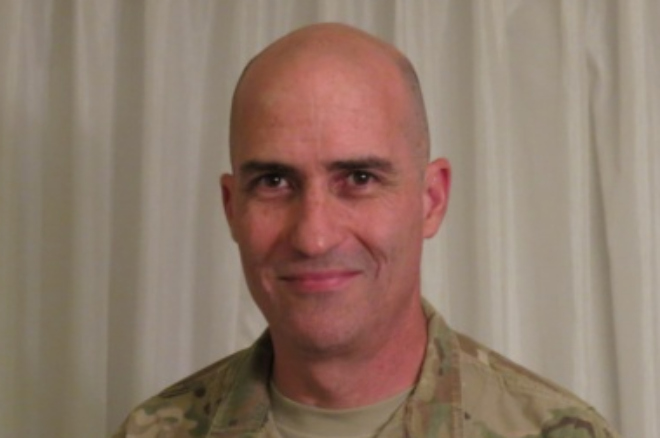
Alan Samuels is being recognized as a Champion of Change for his work advancing new ideas that are leading the way to a clean energy future and an economy that’s built to last.
I am humbled to be recognized as a White House Champion of Change on behalf of a dedicated community within the Department of Defense, whose focus is to improve our efficiencies in expeditionary energy. The logistics associated with transporting military power to remote areas across the globe are extraordinary and can lend themselves to inefficiencies, and therefore present an excellent opportunity for the Army and joint research and development communities. During my recent deployment to Afghanistan, in support of Operation Enduring Freedom, I had the opportunity to study our operational energy practices and technology and to learn where we can improve our power generation and usage techniques, training and material to make our forces effective across the full range of military operations -- from combat missions in Afghanistan, to humanitarian assistance/disaster relief missions anywhere in the world. History, and my own experience at the U.S. Army Research, Development and Engineering Command’s (RDECOM) Chemical-Biological center, shows that once the military develops these methods and technologies they transfer to the public and even more uses are found for them.
Learn more about Defense, Economy, Innovations, Energy and Environment, Rural, Service, Working FamiliesWatch Live: Be a Virtual Ocean Explorer
Posted by on April 19, 2012 at 10:00 AM EDTHave you ever wanted to dive deep beneath the ocean’s surface? Discover a sunken shipwreck? Watch sea cucumbers dance and crabs scurry amongst deep corals? Or witness as scientists make new discoveries? Here is your chance.
Learn more about Energy and Environment, Additional IssuesCracking Down on Oil Market Manipulation
Posted by on April 17, 2012 at 4:37 PM EDT
President Barack Obama delivers a statement announcing a plan to increase oversight and crack down on manipulation in oil markets, in the Rose Garden of the White House April 17, 2012. Standing with the President from left are: Commodity Futures Trading Commission (CFTC) Chairman Gary Gensler, Treasury Secretary Timothy Geithner, Attorney General Eric Holder and Federal Trade Commission (FTC) Chairman Jon Leibowitz. (Official White House Photo by Chuck Kennedy)
Lately, President Obama has spent a lot of time discussing his all-of-the-above strategy for American energy.
The central idea is this: It's going to take a range of initiatives, from increased drilling to scientific breakthroughs in the development of renewable fuel sources, to put the United States on solid footing when it comes to our energy future.
But one of the reasons that fuel prices can jump unpredictably has nothing at all to do with production or even consumption. There are those who work to manipulate the energy markets for their own financial gain.
And today, President Obama announced a new series of steps to strengthen oversight over those markets -- while asking lawmakers to pass legislation aimed at curbing illegal behavior and holding the people who manipulate markets accountable.
At an event this morning in the Rose Garden, the President outlined the reasons for action:
We can't afford a situation where speculators artificially manipulate markets by buying up oil, creating the perception of a shortage, and driving prices higher -- only to flip the oil for a quick profit. We can’t afford a situation where some speculators can reap millions, while millions of American families get the short end of the stick. That’s not the way the market should work. And for anyone who thinks this cannot happen, just think back to how Enron traders manipulated the price of electricity to reap huge profits at everybody else’s expense.
The President's plan would do five things:
1) Increase funding to increase the number of surveillance and enforcement staff charged with oversight of the oil futures market;
2) Allow the Commodity Futures Trading Commission (CFTC) to upgrade the technology used to monitor the energy markets;
3) Increase the civil and criminal penalties for those convicted of manipulating the oil futures market;
4) Provide the CFTC with additional the authority to limit disruptions in the oil market; and
5) Expand access to CFTC data so that analysts can better understand trading trends in the oil markets.
Read his full remarks here.
Learn More:
- President Obama Describes an All-of-the-Above Strategy for Energy
- Everything You Need to Know About President Obama's Blueprint for American-made energy
Learn more about Economy, Energy and EnvironmentPreserving Our Natural Resources for the Future
Posted by on April 13, 2012 at 1:16 PM EDT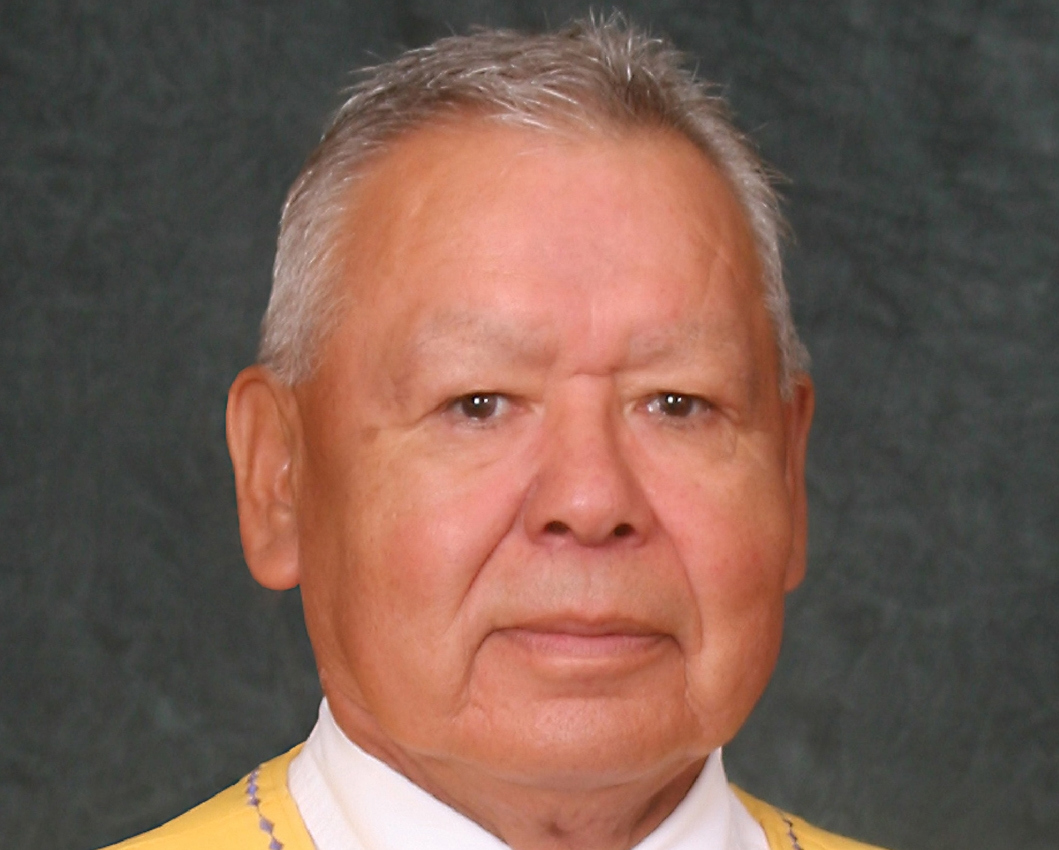
Harold "Gus" Frank is being recognized as a Champion of Change for his work demonstrating that corporate environmental leadership makes sense, both for business and for American communities.
The Forest County Potawatomi Community (”FCPC” or the “Tribe”) is guided by a fundamental belief in protecting Mother Earth and ensuring that future generations will have access to clean air, water and land. This philosophy has led FCPC to become an environmentally proactive tribe and take a pragmatic approach to ecological stewardship.
Over the past several years, FCPC has implemented a number of energy efficiency initiatives to significantly lower its energy usage and reduce its carbon emissions. Since 2007, the Tribe has reduced its energy usage per gross square foot by 12 percent and reduced their corresponding carbon emissions by more than 20 percent. These efficiencies have significantly lowered both the Tribe’s energy costs and its environmental footprint. It has eliminated more than 14,400 tons of emitted carbon dioxide per year, equivalent to the annual greenhouse gas emissions from 2,560 passenger vehicles, or the CO2 emissions from the electricity use of 1,630 homes for one year.
Facilitating Safe and Responsible Expansion of Natural Gas Production
Posted by on April 13, 2012 at 11:56 AM EDTA key part of President Obama’s all-of-the-above energy strategy is expanding production of American energy resources. Since the President took office, energy from renewable sources like wind and solar has nearly doubled, the administration provided funding for the first nuclear power plant in over 30 years, and production of domestic oil and gas has increased each year, trends the President has made clear he wants to make sure continue.
The most dramatic expansion has been in natural gas. Since taking office the President has made clear that he believes this important, abundant domestic resource holds unique promise to fuel our energy sector, fuel our vehicles, as well as fuel job growth – all while reducing harmful emissions. U.S. natural gas production grew in 2011 – the largest year-over-year volumetric increase in history – and easily eclipsed the previous all-time production record set in 1973.
To ensure that we can successfully tap this critical resource for decades to come, we must develop it safely and responsibly, taking full advantage of the opportunity while also giving American families and communities the confidence that our air and water are safe.
At the same time, as the administration develops a framework for safe and responsible production that builds on steps already taken by states across the country, we must ensure that those efforts continue to happen in a coordinated way.
That is why, in line with his goal of expanding safe and responsible production of natural gas, today the President issued an Executive Order to create a new Interagency Working Group to Support Safe and Responsible Development of Unconventional Domestic Natural Gas Resources.
Learn more about Energy and EnvironmentVoice of an Innovator: Sustainability Makes Sense
Posted by on April 13, 2012 at 11:20 AM EDTEditor's Note: This blog introduces readers to Sarah Van Aken, founder of Philadelphia-based design house SA VA, which has committed to social and environmental sustainability through living wage apparel and sustainable manufacturing processes.
When I launched the clothing company SA VA in 2006, it was because I had a dream of becoming a fashion designer. I never dreamed that becoming a socially sustainable company would be my next goal – but that's what happened.
In 2008, I looked at our product lifecycle and realized something had to change. We purchased textiles from mills in Europe, air-shipped them to Bangladesh, and then air shipped the garments to the U.S – all in the name of fashion. I knew that I had to transform my business, and I worked with the Philadelphia Industrial Development Corporation to open a local manufacturing center, creating 15 American jobs and cutting our carbon footprint in half. We pay living wages, use sustainable and recycled materials, and promote community partnerships. The apparel industry is a big environmental polluter. As SA VA grows, our hope is to create more jobs, build an infrastructure for others to do the same, and help shift demand for sustainable practices in our industry.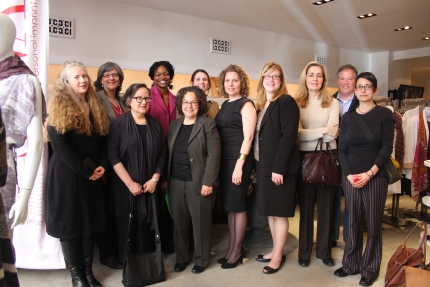
CEQ Chair Sutley meets with SA VA founder Sarah Van Aken and other women sustainable business owners from the Greater Philadelphia area to share ideas to advance sustainable business practices across the country. (Photo Credit: SA VA)
Sustainable businesses are not only good for the environment, they are good for our communities. Three times the amount of money spent in local, independent businesses stays in the community that it's spent in. As President Obama has said, we don't have to choose between a healthy environment and a healthy economy – that is a false choice. Sustainable small businesses like ours are proving we can have both.
Sarah Van Aken is founder of Philadelphia-based design house SA VA
Learn more about Energy and Environment
- &lsaquo previous
- …
- 79
- 80
- 81
- 82
- 83
- 84
- 85
- 86
- 87
- …
- next &rsaquo
Related Videos
-
 May 09, 2014 9:21 AM
Inside the White House: Solar Panels
-
 September 01, 2016 9:25 PM
President Obama Delivers a Statement to the Press
White House Blogs
- The White House Blog
- Middle Class Task Force
- Council of Economic Advisers
- Council on Environmental Quality
- Council on Women and Girls
- Office of Intergovernmental Affairs
- Office of Management and Budget
- Office of Public Engagement
- Office of Science & Tech Policy
- Office of Urban Affairs
- Open Government
- Faith and Neighborhood Partnerships
- Social Innovation and Civic Participation
- US Trade Representative
- Office National Drug Control Policy