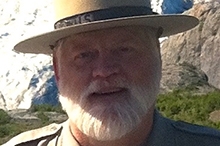
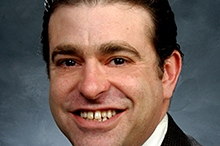
Local Climate Action Takes Center Stage at the National League of Cities Conference

As mayors from across the country gather today with President Barack Obama in Washington, D.C. for the 50th National League of Cities (NLC) Congressional City Conference, local climate action is taking center stage. Since the effects of climate change, which impose a serious threat to our nation’s communities, are felt most urgently at the community level, local governments are leaders in strengthening the response to climate change.

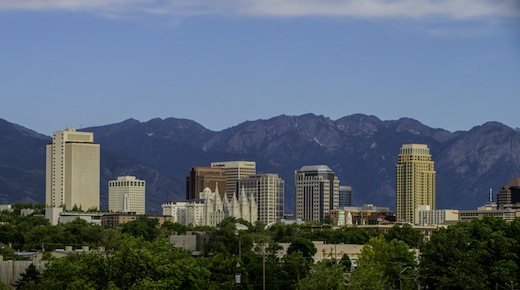
Since Salt Lake City is ringed with mountains, air pollution often becomes trapped during the winter months, resulting in poor air quality and health alerts until the next storm literally clears the air.

NLC is the nation’s largest and most representative membership and advocacy organization for city officials, comprised of more than 19,000 cities, towns, and villages representing more than 218 million Americans. Its members consistently place climate action as a top priority.

As President of NLC, I recognize the importance of leading by example and have called on the NLC membership to become an “army of advocates” to work with the federal government to assist and support state, local, and tribal action on climate change.

Ralph Becker is the Mayor of Salt Lake City.
Related Topics: Energy and Environment, Utah

Teaching for Tomorrow

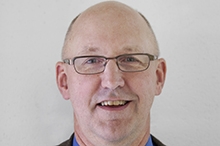
Craig Johnson

Craig Johnson is being honored as a Climate Education and Literacy Champion of Change.

Early in my career as a science educator, I attended a lecture on Minnesota’s changing climate given by a well-known University of Minnesota Ecology professor.  The concept of climate change was relatively new to me at the time, and I was startled to hear that some of the most dramatic seasonal, climate change-induced temperature variations in the United States were predicted to occur in Minnesota and the upper Midwest over the coming decades.  Was it true?  How did he know?  What could this mean for the places in Minnesota that are important to me?  Were similar impacts in store for the rest of the world? How much should I worry, and what, if anything, should I do about it?  Whether I realized it at the time or not, I was on my own path toward climate literacy.

Twenty years later, as a teacher at the School of Environmental Studies (SES), I continue to work to understand the complexity of these questions and to challenge my high school students to wrestle with the implications of these questions in their own lives as well.  At SES, we embrace a mission that calls on our learning community to “develop active citizen leaders who are environmentally informed, self-perpetuating learners, and connected to the local and global community.” Over the past decade, climate education has played an integral part in bringing our mission to life.  This issue provides fertile ground for getting students to engage scientific concepts and processes in timely and relevant ways and, more broadly, to examine the systemic relationships between science, economics, politics, international relations, and ethics that are embedded in the challenge of fighting climate change.

In order to prepare our students to be the next generation of effective citizen leaders, it is equally important that they have authentic opportunities to engage the issues that are important to them. 

At SES, campus renewable-energy initiatives, climate-related school and non-profit partnerships, scientific modeling projects, and a host of student-led climate-change mitigation efforts provide testimony to the fact that our students are interested in learning about and addressing the challenges inherent in a changing climate.

The societal challenges today’s students will face as adults will not be the same as those of my generation.  As educators, we have the responsibility to provide not the education we received, but the one our students will need.  For the past several years, students and faculty from SES and a variety of international partner schools have attended the annual United Nations Framework Convention on Climate Change Conference of the Parties.  Members of the youth constituency at these conferences can often be seen wearing t-shirts with their now-familiar slogan, “How Old Will You Be in 2050?” It is a challenging question, not only in terms of the implications it has for the decisions we make today concerning the climate issue, but also in terms of the obligation we as educators have to provide our students with the knowledge, skills, and habits of mind they will need to effectively address the challenges of the world they will inherit. 

Craig Johnson teaches Senior Environmental Studies and Advanced Placement Environmental Science at the School of Environmental Studies in Apple Valley, Minnesota.

Building Climate Resilience through Action Today

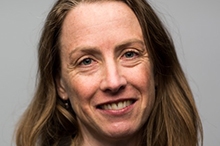
Amy Snover

Amy Snover is being honored as a Climate Education and Literacy Champion of Change.

It is often said that we don’t know enough about climate change to take action. But we know that the choices we make today about energy use and preparing for a changing climate will shape the challenges and opportunities of the 21st century. 

We know that large reductions in global emissions of heat-trapping gases could help us avoid the most damaging impacts of climate change. We know that preparing for a changing climate can prevent needless and costly harm. And we know that many of the changes necessary to reduce the negative effects of climate change will take time to implement and would benefit from careful risk assessment, planning, and a sustained and engaged civic discussion about priorities and appropriate responses.

We also know that none of us can solve this alone, within our silos, with our limited tools and skills. Building climate resilience requires melding the knowledge and prediction of science with the best ideas, creative energy, and practical insights of business, policy and planning, the arts and humanities, and community organizations. This is why it’s so important to build an educated, this-generation American workforce that grasps the climate-change challenge and is equipped to seek and implement solutions.

Since 1996, I’ve worked with the Climate Impacts Group at the University of Washington’s College of the Environment to develop, deliver, and support the use of decision-relevant science on climate impacts and adaptation, in order to build a climate-resilient Northwest. I began as a student, on a leave of absence from my graduate program, searching for ways to better connect the analytic and predictive skills of science with the practical needs and multiple objectives of real-world decision making. After helping to convene the first-ever discussion of climate-change risks and response options in the Northwest, and preparing the scientific summary to support that discussion, I was hooked. This was the meeting ground I was looking for: scientists, resource managers, policy makers, citizens, and business leaders working together to identify concerns, critical knowledge gaps, and ways to use existing scientific knowledge to advance societal objectives.

At the Climate Impacts Group, we take this multi-faceted approach every day.  We work with local, regional, and national decision makers, planners and resource managers, tribes, non-governmental organizations, and private industry to develop a common understanding of the ways climate fluctuations can influence desired outcomes, and to identify knowledge gaps precluding climate-resilient decision making. We assemble the best interdisciplinary scientists – atmospheric scientists, water-resource engineers, coastal economists – to address these gaps. Through trainings, technical advising, ground-breaking guidance, and long-lasting relationships, we build local capacity for applying science-based climate information, tools, and expertise in planning and risk management. And we’ve made a difference. The Northwest is home to many of the nation’s leaders in climate preparedness and resilience.

Sixteen years after completing my PhD and re-joining the group as a post-doc, I am proud of all that we’ve accomplished together and am honored to be recognized as a White House Champion of Change. The most exciting part of all of this for me continues to be bridging the gap between science and practice – not only assembling, interpreting, translating, and delivering state-of-the-science understanding about climate risks facing the Northwest – because you can’t address risks that you don’t know about – but working with practitioners to develop guidance on how to apply climate information in their work today. As more and more people face the question, “What needs to change in the way we do business to set ourselves up for success as the climate changes?,” we’re ready to help them find answers.

Amy Snover, PhD, serves as Assistant Dean for Applied Research and Director of the Climate Impacts Group at the University of Washington. 
Communicating Climate Change through Science and Interpretation

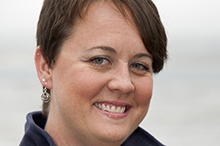
Sarah-Mae Nelson

Sarah-Mae Nelson is being honored as a Climate Education and Literacy Champion of Change.

My family is made up of Southerners and outdoorsmen. Some called the Great Smoky Mountains home, and others hunt and fish as a matter of course. I grew up visiting lakes and streams, mountains and plains, and spending as much time near the ocean as possible. I attended church every Sunday and Christian school from kindergarten through my senior year of high school. I learned that to waste naught was to want naught. I learned to treat others as I would have them treat me. I was raised by strong, confident women who taught me I could do anything and everything I wanted as long as I worked hard for it. My father took the time to chaperone field trips and take me to museums and into nature. My mother was my best friend.

It seems like I was born a scientist with endless questions and an unquenchable thirst for knowledge. I read encyclopedias, looked at creek water under a microscope, and was fascinated by the ocean and weather. A marine biology teacher in high school recognized my potential and introduced me to the student volunteering program at the Monterey Bay Aquarium. I started volunteering in 1996 and was introduced to the field of science interpretation. Science interpretation uses knowledge of audiences and resources, combined with communications techniques, to translate complex information into accessible messages for general audiences.

I was incredibly fortunate to train in interpretation concurrent with my undergraduate studies in marine science. Through interpretation, I learned how to communicate science to people who didn’t have access to the deep background knowledge I had acquired. Upon graduating from the University of California, Santa Cruz, I entered the field of interpretation working in museums and aquariums.

Thanks to my upbringing in nature, I have always been aware of the environment around me. Through extensive readings, I was aware of Intergovernmental Panel on Climate Change reports that indicated with increasing certainty that human activity was driving changes in global climate. In early 2007, an Aquarium colleague and I recognized that there was no one specializing in climate-change interpretation at our facility, and we decided to become the experts so we could fill that role. Over the next two years, the Aquariums and Climate Coalition was formed and hosted the first Communicating Climate Change Summit in December 2008. From this Summit, it was determined that climate change interpreters needed an online space to share ideas, and the website that would become climateinterpreter.org was born.

With funding from the National Oceanic and Atmospheric Administration, the Monterey Bay Aquarium partnered with the National Aquarium and New England Aquarium in 2009 to create training and interpretation materials to communicate about climate change and the ocean. As part of this effort, I was asked to become one of the first-ever Climate Change Interpretive Specialists. By accepting this position, I helped lead the charge to train volunteers and staff on how to most effectively communicate climate science, ocean acidification, and climate-change impacts to Aquarium visitors.

Every day, I work with colleagues across the country to increase climate literacy through informal science education. I never imagined this was where my love of science and the ocean would take me, but I am so grateful to be here today. It is truly a joy to see understanding appear on someone’s face when they grasp what you are teaching. I live for those lightbulb moments and the change they mean for the world. There is a famous saying that tells us to “be the change.” I live the change I want to see in the world.

Sarah-Mae Nelson creates specialized training materials focusing on climate literacy and interpretation as Conservation Interpreter for the Monterey Bay Aquarium and Online Community Manager for climateinterpreter.org. 

Empowering Teenagers to Fight Climate Change

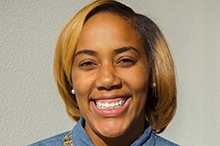
Amber Nave

Amber Nave is being honored as a Climate Education and Literacy Champion of Change.

In my family, I am jokingly called the “life-long babysitter”, not just because I have been a certified babysitter since the age of 12, but also because I genuinely care for youth and have spent the majority of my career in education. I enjoy working in jobs that empower youth and encourage their success. Some of my most memorable experiences in these positions include: teaching an autistic five-year-old gymnastics student how to tumble, teaching a second-grade, low-performing student how to read, and managing the day-to day operations of an afterschool program.

It was not until I started working as a Program Director for the Alliance for Climate Education (ACE), in 2011, that I discovered how these diverse experiences would ignite my work in climate education. My experiences have taught me that in order to effectively motivate youth, you have to be an exceptional communicator.

At ACE, we teach climate science that puts teenagers at the center of the story, communicating the undeniable science behind climate change. Our assembly presentation uses animation, music, video, and humor to captivate teenagers and educate them on the science behind climate change. This is the first step in inspiring them to take climate action.

Next, you have to be willing to listen to their ideas and solutions for climate action. ACE offers every student an opportunity to engage through our Action Program. It is my responsibility to actively listen to students, find out their personal interests, and engage them in our program based on those interests.

In my region of Georgia, many students enjoy working on climate solutions that embrace their interests in music, media, and performing arts. After listening to their interests, I organized opportunities for them to professionally record songs about climate change, blog about climate change and air quality in partnership with the Clean Air Campaign, and testify at an Environmental Protection Agency hearing.

Overall, my experience empowering teenagers to fight climate change is a constant reminder of the hope that sparks the climate movement. It is young people who have the most to lose when it comes to climate change, and the most to gain by fighting it. I have found a true passion empowering teenagers to fight climate change, and I encourage you to join the movement. What will you do to fight climate change today?

Amber Nave is the Georgia Program Manager for the Alliance for Climate Education (ACE), a non-profit that educates and inspires young people to break through the challenge of climate change

Rehearsing the Future - Creating a Shared Vision of Community

John Morris

John Morris is being honored as a Climate Education and Literacy Champion of Change.

For as long as I can remember, I’ve wanted to be a park ranger. Growing up, my family spent most of its summer weekends camping and hiking in our National Parks.  I’ve always valued both the lessons I learned there, and the sheer privilege of being able to have such enriching experiences.

Parks are places in our country that not only protect our natural history, they tell the stories of people and events that create our national heritage.  They not only preserve our past, they foretell our future. So what are the future people or events that will continue to define our heritage? How society faces climate change will surely be one of them.

A changing climate will have a lot to do with our heritage, and parks make wonderful living laboratories. Parks provide opportunities to gain vision, not only vision about the environment, but vision about the future.  We enjoy the parks,  but we can also use them to understand nature and to appreciate civilization.  To effectively manage our parks (to manage our lives, really), the best results occur when we come together and choose a vision about what it is that we collectively want.  Parks were envisioned for everyone, so their vision has to be shared by everyone.

Our task as interpreters and educators is to raise awareness about what’s occurring and changing in the world around us, especially when it’s resulting from our collective lifestyle. At the National Park Service, we have explored several possible scenarios that climate change is bringing, to discover ways to respond that have feasible and effective outcomes. We have rehearsed how to cope with them before they actually happen. Similarly, by informing citizens and helping them engage in finding solutions rather than finding blame, we have helped dispel some of the controversy that can be a distraction today.  There are many solutions already available that we can advance together.

I believe we must also learn and use the power of collaboration and frequent communication along the way. Working closely with others can be a hard and sometimes painful process of confronting controversy or facing failings in ourselves and others, but it is a critical part of the educational effort. Shared mistakes can be empowering, as can acceptance of our shortcomings.  When we share the effort, we not only learn about the impacts and implications of climate change, we also learn about each other and ourselves, and about the creative capacity we have to overcome difficulties.  As a park interpreter, I’m proud to have been a part of all of it.

We are on the early steps of a long journey. It may take several decades or more to fully respond to our changing climate. Our community in the future will likely be very different from today’s.  I believe we can and will navigate that transformation.  Ultimately, we must learn to create energy differently and use it more efficiently, and I suspect those changes will come mostly from individual choices and new lifestyles, from decisions made by ordinary people in their daily routines.  As educators and interpreters, that puts the responsibility right on our shoulders. We are the honest brokers for the best science, the best ideas and the latest innovations, and the best of humanity to respond. It’s by sharing our hopes, with enthusiasm and passion, that we’ll eventually find success.  What could be more important, or fun - sounds like a pretty good heritage, after all!

John Morris is a recently retired Interpretive Ranger with the National Park Service in Alaska. 

Mass Transit as a Platform for Science Learning

David Lustick

David Lustick is being honored as a Climate Education and Literacy Champion of Change.

A significant body of research substantiates the drivers and impacts of human-induced climate change. While schools help young people understand basic science, how do adults learn about new and relevant scientific concepts (like climate change) after graduation? Many rely on news sources for general information, but few seek in-depth sources for science understanding.  How can the general public learn about important scientific discoveries? How can they become knowledgeable about emerging scientific issues? These are the questions that drive both Cool Science and Sciencetogo.org, two collaborative projects that use public mass transit as a milieu for informal science learning.

Cool Science uses children’s artwork to engage the local community with climate science. The project is a collaboration between University of Massachusetts Lowell, University of Massachusetts Boston, Anastas Advertising, and the Lowell Regional Transit Authority.  Each year, we hold an art competition in the Commonwealth of Massachusetts, where students from grades K-12 are encouraged to express their ideas and questions about climate change through the visual arts.  The best submitted artwork is then displayed in and on local buses.  As the buses travel their routes, the community can see, consider, and reflect upon young people’s ideas about climate change.  With 5,000 riders per day and 500 participating artists annually, Cool Science engages both formal and informal audiences.  Initially supported through a University of Massachusetts’ Creative Economy Grant, Cool Science now also includes corporate sponsors, such as United Parcel Service.  Our goal is to continue to foster such partnerships and bring Cool Science to other communities across the Commonwealth and the nation.

ScienceToGo.org also uses mass transit as its platform for learning about climate change. This partnership features a 12-month multi-media learning campaign staring “Ozzie the Ostrich,” who appears on posters and placards placed on Massachusetts Bay Transit Authority (MBTA) train cars and station platforms.  Riders follow Ozzie on his story of awakening to the reality, relevance, and current solutions to the climate change challenge.  This campaign brings the power of an effective science exhibit to the daily routines of the commuting public.  With a website and social media hosted by the Museum of Science (MOS) and ad space donated by the MBTA, this National Science Foundation-funded project harnesses the power of marketing to engage 400,000 daily riders with free-choice learning options about climate change.

Both Cool Science and ScienceToGo.org represent innovative efforts to transform the daily routine of a person’s life into entertaining science learning opportunities.  A big part of these projects’ success can be attributed to our cross-disciplinary approach.  A team of partners from a number of universities and institutions helps to build our work through ScienceToGo.org and fosters effective science communication and engagement. Together, we build relationships between the private, public, and non-profit sectors for the common good of our respective communities.

David Lustick is a National Board certified teacher and an Associate Professor of Science & Math Education at the University of Massachusetts Lowell’s Graduate School of Education. 

"How Low Can We Go?" A Fun Challenge for U.S. Schools to Reduce Energy Consumption

Linda Gancitano

Linda Gancitano is being honored as a Climate Education and Literacy Champion of Change.

Back in 2008, I was watching the Oprah Winfrey Show as she showed snippets of the documentary, An Inconvenient Truth. My eyes just happened to catch a scene that would change my world: the swimming polar bear who couldn’t reach another iceberg because the sea ice was melting. As the polar bear drowned, I found myself crying and thinking, this is wrong. This shouldn’t be happening. That image stayed in my mind for a long time.

In November 2008, I formed a Green Team at Driftwood Middle School (DMS) in Hollywood, Florida. Our team consisted of three teachers and three student leaders. The team has since tripled in size, and the school’s culture is visibly environmentally friendly. In fact, that was a primary objective of our first initiative: we created a visual board so that the entire school could track monthly energy usage.

Next, we raised awareness of energy conservation via the "How Low Can We Go?" Challenge—an initiative that later became partners with the Miami Heat during NBA’s Green Week to impact 64 Broward County Public Schools, the sixth-largest district in the country. If any partner could raise awareness of reducing CO2 emissions, it was the Miami Heat, voted one of the top "green" sports teams in the country.

Our first Energy Team, better known as the "DMS Chillers," walked from room to room after school looking for classrooms with lights left on. The students would leave a painted paw print (in memory of the polar bear) on the door saying, “You’ve been Chilled!” as a reminder to teachers to turn off lights when they left for the day. Our teachers and custodial staff started to get really involved in conserving energy. No teacher wanted a big paw print on their door on Monday morning!

Next up, the Green Team took to creating an Energy Audit Team that ventured into classrooms and made suggestions to the teachers and other students on how to conserve energy. Last year's new initiatives included the "Are You S.E.K.C.?" (Stopping Excessive Kilowatt Consumption) and the "Are You a H.E.R.O.?" (Helpful Energy Resource Officer) campaigns. The students hand out green H.E.R.O. bracelets when they catch a teacher or another student conserving energy. Since the Green Team was formed in 2008, the school has seen a 23% decrease in emissions. Our greatest challenge in decreasing energy even further is technology, an antiquated cooling system that needs to be replaced. DMS continues to expand our alternative energy education by including future projects, such as solar power and a wind turbine, to the curriculum. The tradition of the DMS Chillers lives on, impacting our 1,600 students and faculty.

So, How Low Can You Go?

Our partnership with the Miami Heat initially has enticed schools to rise to the challenge of reducing their environmental footprint. Not only by raising awareness of the effects of CO2 emissions but also educating the facilities on potential financial savings through responsible energy consumption. Curtailing wasteful spending on unnecessary energy consumption has the added benefit of allowing schools to allocate those saved dollars to under-funded programs. In the one-month pilot program in February 2014, we saved over $34,000 in energy costs and reached over 90,000 faculty and students. This school year, with 87 schools registered for the challenge, the impact will reach over 100,000. Future possibilities include South Florida's Tri-County Area and the whole country!

Won't you join us?

Linda Gancitano is a Physical Education and Wellness educator at Driftwood Middle School in Broward County, Florida.

A Generation of Hope

Gina Fiorile

Gina Fiorile is being honored as a Climate Education and Literacy Champion of Change.

It is an honor to be selected as a White House Champion of Change because I am representing countless students and youth leaders who work tirelessly to combat climate change. 

My generation is one of subtle controversy.  Recent advances in technology have been openly accepted by youth, and because of this, we have become the most social generation in history.  Our interconnectedness may come with a few negative effects, but there are also significant positive outcomes that result from our social nature.  We are more mindful, more aware, and have more opportunities to support each other.

My passion for climate education began in high school, where I became involved in the annual Adirondack Youth Climate Summit.  This two-day conference is held at a local science museum where students from across the Northeast gather to learn about climate change and create climate action plans to implement in their schools.  Not only do students have the opportunity to learn from renowned climate scientists, but they are also able to build a community around their environmental passions and connect socially.  This summit changed my life in that it inspired me to dedicate my career to the cause.  It also opened the eyes of thousands of students.  It is has been adopted as a model for similar programs across the country as part of the White House’s Climate Education and Literacy Initiative, and has spread internationally.  My peers and I had the opportunity to be featured in a PBS documentary titled “The Resilient Ones,” which followed us throughout the planning process.  After my experience at the Summit, I was inspired to take on a number of projects including waste reduction, the building of a greenhouse and school garden, the local farm-to-school movement, and communications with the community.  My work and motivation is an example of the outcomes of successful climate education.

I do not believe it is a coincidence that the generation I am a part of has arrived at the same time in history as human-induced climate change.  We now have the tools we need to communicate the effects of climate change and fully understand the science behind it.  We have the capacity to build a network around climate science and climate education in the battle for sustainability. 

It is time we take advantage of the opportunities we have created for ourselves to fight this battle with full force.  An attitude of realism as opposed to negativity is what will carry us through.  It is important that we look to future generations as a source of hope when we feel discouraged by setbacks on the road to sustainability.  Our greatest defense in this fight is an increase in climate literacy, so that future leaders are better prepared to catalyze positive change.

Climate change is one of the greatest challenges we have faced because it is an issue that will impact every single human being and living thing now, and for millions of years to come.  If this is the case, how can we not do everything in our power to combat it? In accepting our responsibility to educate future generations by utilizing all of the resources we have, the next generation will be more capable to combat this challenge.  They are a source of hope during this period of ecological and social change. 

Gina Fiorile is a freshman Environmental Studies Major in the Rubenstein School of the Environment and Natural Resources at the University of Vermont.

7 out of 10 Doctors: Climate Change Is Already Harming Patients’ Health

Two-thirds of the American people believe climate change is a serious problem, and that the government should take action to address it. It shouldn’t be surprising that our nation’s doctors do, too — nearly 90 percent of them.

Today, the American Thoracic Society (ATS) will hit the halls of Congress to educate our representatives about a new survey of more than 900 ATS members, which found the majority of doctors believe climate change is already negatively affecting the health of their patients. In fact, 77 percent of respondents reported that increases in air pollution due to climate change are worsening the severity of illnesses in their patients, and they expect these health impacts will further increase in the future.

ATS members also indicated that their patients are experiencing other climate-related health problems — including injuries due to severe weather, allergic reactions, and heat-related impacts. These findings are in line with the results of a survey of the National Medical Association’s members last year, which also found that the sick, elderly, and people living below the poverty line will be disproportionately impacted by climate change. 

Brian Deese is Senior Advisor to President Obama.
Related Topics: Energy and Environment