Increasing Investment in Clean Energy Technologies

Over the last several years, we have seen the potential for clean energy and economic growth to go hand in hand. Today, we produce more wind and solar energy than ever before, while our economy is creating jobs at the fastest pace since 1998. According to industry analyses, employment in the solar industry has grown more than 85 percent since 2010, while the price of a rooftop solar system has dropped more than 50 percent.

We have to keep at it — because promoting clean energy innovation will help grow the economy while taking decisive action on climate change. 

That is why, today, I was proud to announce a new Clean Energy Investment Initiative at the Department of Energy ARPA-E Summit. Through the Initiative, the Administration seeks to catalyze $2 billion of expanded private-sector investment in solutions to climate change, including innovative technologies with breakthrough potential to reduce carbon pollution. By leveraging the tools and capabilities of the federal government, this new Initiative will increase investment in clean energy technologies.

A New Flood Standard for Federal Investments Will Help Communities Weather Climate Change, Extreme Storms

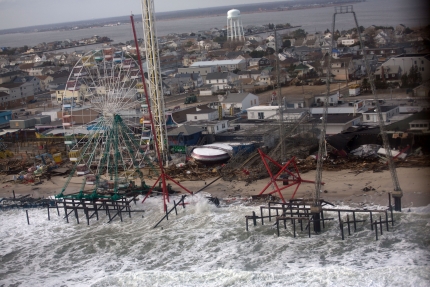
The view from aerial tour of Hurricane Sandy damage  of New Jersey's barrier beaches

The view from aerial tour of Hurricane Sandy damage of New Jersey's barrier beaches, Nov. 18, 2012. (Official White House Photo by Sonya N. Hebert)

When Hurricane Sandy hit New York City, the storm sent water cascading into the South Ferry subway station, pouring into the Brooklyn-Battery Tunnel, inundating neighborhoods from Staten Island to Queens. At Battery Park in lower Manhattan, water reached more than 9 feet above the average high-tide line.

One factor fueling the surge -- New York Harbor, where waters have risen about a foot since 1900. We know that rising sea levels, higher average temperatures, higher ocean temperatures, and other effects of climate change will make extreme weather events more frequent and more severe. And the climate is changing -- earlier this month, NASA and NOAA announced that 2014 was the hottest year on record globally, meaning that 14 of the 15 hottest years in recorded history have happened this century.

That’s why when we invested billions to help communities rebuild from Sandy, we also committed to “build back better” -- to rebuild infrastructure to a higher standard so it can withstand the increased risks posed by sea level rise and other climate impacts.

Today, the White House is building on that experience by releasing a new flood risk management standard for new and rebuilt federally funded structures in and around floodplains. This new resilience standard will help ensure taxpayer dollars are well spent on infrastructure that can better withstand the impacts of flooding.

We Must Act Now to Protect Our Winters

Ed. note: This is cross-posted on the U.S. Environmental Protection Agency's blog. See the original post here.

2014 was the hottest year on record, and each of the last three decades has been hotter than the last.

In mountain towns that depend on winter tourism, the realities of climate change really hit home. Shorter, warmer winters mean a shorter season to enjoy the winter sports we love—and a financial hit for local economies that depend on winter sports.

Even if you hate winter, climate change affects you – because climate risks are economic risks. Skiing, snowboarding and other types of winter recreation add $67 billion to the economy every year, and they support 900,000 jobs.

Last week I went to the X-Games in Colorado to meet with some of our country’s top pro snowboarders and the businesses that support them to hear how they are taking action on climate.

Gina McCarthy is the Administrator of the U.S. Environmental Protection Agency.

The White House

Office of the Press Secretary

Fact Sheet: U.S. and India Climate and Clean Energy Cooperation

To further support the achievement of our ambitious climate and clean energy goals, the United States and India have pledged to enhance our cooperation in this area.  The United States welcomes India’s intention to increase the share of renewable energy in electricity generation consistent with its intended goal to increase India’s solar capacity to 100 GW by 2022, and intends to support India’s goal by enhancing cooperation in clean energy and climate change.  Our two countries already have a robust program of cooperation, including the highly successful U.S.-India Partnership to Advance Clean Energy (PACE) umbrella program, and we will expand policy dialogues and technical work on clean energy and low greenhouse gas emissions technologies. 

The United States and India agreed on:

  • Enhancing Bilateral Climate Change Cooperation: President Obama and Prime Minister Modi, stressing the importance of working together and with other countries on climate change, plan to cooperate closely this year to achieve a successful and ambitious agreement in Paris.
  • Cooperating on Hydroflurocarbons (HFCs): Building on their prior understandings from September 2014 concerning the phasedown of HFCs, the leaders agreed to cooperate on making concrete progress in the Montreal Protocol this year.
  • Expanding Partnership to Advance Clean Energy Research (PACE-R): Both sides renewed their commitment to the U.S.-India Joint Clean Energy Research and Development Center (PACE-R), a $125 million program jointly funded by the U.S. and Indian governments and private sector.  The renewal includes extending funding for three existing research tracks of solar energy, building energy efficiency, and advanced biofuels for five years and launching a new track on smart grid and grid storage technology.
  • Accelerating Clean Energy Finance: Prime Minister Modi emphasized India’s ongoing efforts to create a market environment that will promote trade and investment in this sector. USAID will install a field investment officer in India this summer, backed by a transactions team to help mobilize private capital for the clean energy sector.  In February, The United States will host the Clean Energy Finance Forum and government-to-government Clean Energy Finance Task Force to help overcome strategic barriers to accelerating institutional and private financing.  The Department of Commerce will launch a trade mission on clean energy.  The Export-Import Bank is exploring potential projects for its MOU with the Indian Renewable Energy Development Agency for up to $1 billion in clean energy financing.  OPIC plans to build on its existing portfolio of $227 million in renewable energy and continue to identify potential projects to support utility-scale growth and off-grid energy access.
  • Launching Air Quality Cooperation: The United States will implement EPA’s AIRNow-International program and megacities partnerships, focused on disseminating information to help urban residents reduce their exposure to harmful levels of air pollution, and enable urban policy planners to implement corrective strategies for improving ambient air quality in cities, allowing for estimates of health and climate change co-benefits of these strategies.
  • Starting Technical Cooperation on Heavy-Duty Vehicles and Transportation Fuels: Both countries will discuss how to reduce the environmental and emissions impact of heavy-duty vehicles and transportation fuels by working to adopt cleaner fuels, emissions, and efficiency standards in India.
  • Initiating Climate Resilience Tool Development: Jointly undertaking a partnership on climate resilience that will work to downscale international climate models for the Indian sub-continent to much higher resolution than currently available, assess climate risks at the sub-national level,  work with local technical institutes on capacity building, and engage local decision-makers in the process of addressing climate information needs and informing planning and climate resilient sustainable development, including for India’s State Action Plans.
  • Promoting Super-Efficient Off-Grid Appliances: Strengthening our joint commitment to promote super-efficient off-grid appliances that can dramatically extend the range of energy services available to those lacking electricity, the United States and India intend to support the deployment of these resources to help meet India’s energy access goals.
  • Transforming the Market for Efficient and Climate-Friendly Cooling: The United States will develop an Advanced Cooling Challenge to catalyze the development of super-efficient, climate-friendly, and cost-effective cooling solutions optimized to perform in India’s climates.
  • Demonstrating Clean Energy Initiatives on the Ground: The United States will work with India on additional pilot programs and other collaborative projects, including developing an innovative renewable energy storage project and hosting a smart grid workshop.

The two countries concluded negotiations on a five-year MOU on Energy Security, Clean Energy and Climate Change to carry this work forward, to be signed as early as possible at a mutually-agreed upon date.  

Launching the Presidential Challenge for Advanced Outdoor Lighting

We take it for granted that outdoor lights are there to help keep America moving after the sun goes down. But the outdoor lighting when you drive your car down the road at night, cheer for your favorite baseball team, or load groceries into your car after work uses energy and takes a bite out of budgets in cities and towns across the country.

Outdoor lighting in the U.S. will consume enough energy to power 6 million homes this year, costing cities about $10 billion annually.

That is why we are working with mayors to deploy the latest technologies to determine how best to light their cities while saving money. Using today's new technologies, local governments can cut their outdoor lighting bills by 50 percent or more. Today we are launching the Presidential Challenge for Advanced Outdoor Lighting, and tripling the DOE Better Buildings program goal of upgrading 500,000 poles to 1.5 million, to encourage more mayors to lead their cities with this win-win solution.

Dan Utech is the Deputy Assistant to the President for Energy and Climate Change.
Related Topics: Energy and Environment

New Approach to Conservation Creates New Partnerships, New Jobs

Ed. note: This is cross-posted on the U.S. Department of Agriculture's blog. See the original post here.

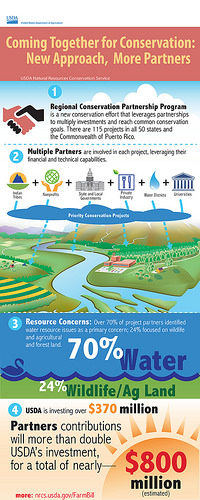
When USDA unveiled the new Regional Conservation Partnership Program last year, I said that this effort would pioneer a new era of conservation. As of today, the program is doing just that — leveraging an unprecedented three-quarters-of-a-billion-dollar investment in projects to preserve clean land and water and create new jobs across the country.

One of the innovative programs in the 2014 Farm Bill, the Regional Conservation Partnership Program brings a wide variety of new partners together — from private businesses, to universities, to local and tribal governments, to non-profit organizations and more — to develop their own action plans and to pledge their own resources to the project. Local organizations are in the driver’s seat, setting priorities and developing conservation projects that make sense for their communities.

The response to this new approach to conservation projects was overwhelming. Earlier this year, when local partnerships submitted their plans to USDA, they requested more than six times the amount of available funding in the first round. This incredible response is a call to action and it shows how much need there is for a program like RCPP.

Tom Vilsack is the U.S. Secretary of Agriculture.
Related Topics: Energy and Environment, Rural

New Actions to Reduce Methane Emissions Will Curb Climate Change, Cut Down on Wasted Energy

The United States is now the largest oil and natural gas producer in the world, and developing these cleaner-burning fuel sources to light and heat American homes and businesses is crucial to the President’s energy strategy. But while these important energy sources produce less carbon pollution overall, methane leaks throughout the oil and gas system are fueling climate change — and wasting valuable fuel that should be captured and used.

Methane — the primary component of natural gas and the third-largest source of U.S. greenhouse gas emissions — is a potent climate pollutant, trapping 25 times as much heat as carbon pollution over the course of a century. The good news is emissions from the oil and gas sector are down 16 percent since 1990. However, without additional action, emissions from this sector are projected to rise more than 25 percent by 2025.

That’s why, today, the Obama administration is announcing an ambitious new goal to cut methane emissions from the oil and gas sector by 40-45 percent from 2012 levels by 2025. Achieving this goal would save up to 180 billion cubic feet of wasted natural gas in 2025 — enough to heat more than 2 million homes for an entire year.

John Podesta is Counselor to President Barack Obama.
Related Topics: Energy and Environment

Watch: The President's Science Advisor Answers Your Questions About Climate Change

Watch on YouTube

Last month, Dr. John Holdren -- the President's science advisor -- invited the public to ask him anything about climate change on social media using the hashtag #AskDrH.

Since then, he's gotten a lot of questions. Brandon, a seventh-grader, wanted to know if climate change will affect him during his lifetime. A number of people asked whether climate change is driving extreme events, like the heavy snowfall we've seen recently in Buffalo, New York. Some people wanted to know what Dr. Holdren is doing to prevent climate change himself. 

And Dr. H answered. In a video series we're releasing today, Dr. Holdren answers some of the questions you asked about our climate, and explains some of the science behind how our planet is changing.

Ex-Im Bank: Supporting American Jobs, Protecting American Taxpayers

With the U.S. economy on the move -- and with worldwide demand for quality, innovative goods on the rise -- there have never been greater opportunities for American small businesses to prosper on the global stage and add good-paying jobs here at home.

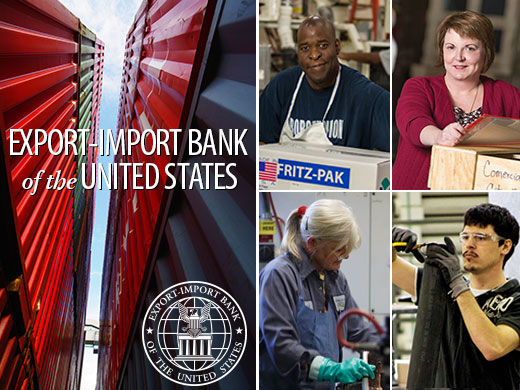
The Export-Import Bank of the United States, or "Ex-Im," is a small agency that exists to equip U.S. businesses with the financing tools they need to overcome obstacles and open new markets for their goods and services. We know that when entrepreneurs are empowered to win export sales against their foreign competitors, businesses grow, our economy becomes more durable, and layoffs are replaced with 'Now Hiring' signs in communities across our country.

Our 2014 Annual Report, available here, details some of the work we did this year -- which happened to mark our 80th anniversary -- to support U.S. job growth and promote American economic leadership abroad.

Fred P. Hochberg is the Chairman and President of the Export-Import Bank of the United States.

The White House

Office of the Press Secretary

President Obama Protects Alaska’s Bristol Bay From Future Oil and Gas Drilling

Today, in a video message posted online, President Obama announced his plan to designate Bristol Bay as off limits to consideration for oil and gas leasing -- an action that will safeguard waters that help provide 40 percent of America’s wild-caught seafood, support a $2 billion annual fishing industry, and are vital to the commercial fishing and tourism economy and to Alaska Native communities. The President’s video message can be found HERE. 

***

WASHINGTON, DC – Today, President Obama designated the pristine waters of Bristol Bay as off limits to consideration for oil and gas leasing.  This action safeguards one of the nation’s most productive fisheries and preserves an ecologically rich area of the Bering Sea off the coast of Alaska that is vital to the commercial fishing and tourism economy and to Alaska Native communities.

Bristol Bay is at the heart one of the world’s most valuable fisheries, helping to provide 40 percent of America’s wild-caught seafood and support a $2 billion annual fishing industry.  The beautiful and remote area is also an economic engine for tourism in Alaska, driving $100 million in recreational fishing and tourism activity every year. Bristol Bay hosts the largest runs of wild sockeye salmon in the world, and provides important habitat for many species, including the threatened Stellar’s eider, sea otters, seals, walruses, Beluga and Killer whales, and the endangered North Pacific Right Whale. 

Today’s decision to withdraw the area from all future oil and gas leasing extends indefinitely a temporary withdrawal that President Obama issued in 2010 and was set to expire in 2017.  This action builds on decades of local efforts to protect Bristol Bay from oil and gas development by Alaska Native tribes and organizations, as well as local seafood and tourism businesses that create jobs and strengthen Alaska and the nation’s economy. It also honors the legacy of Alaska residents like Harold ‘Harvey’ Samuelsen, a salmon fisherman who is legendary for his lifelong dedication to Bristol Bay and to creating economic opportunities for Alaska Native and rural communities.

The North Aleutian Basin Planning Area that includes Bristol Bay consists of approximately 32.5 million acres, a portion of which was leased in the mid-1980s but never developed due to litigation.  The previous Administration set in motion a new lease sale for 2011 that would have opened approximately 5.6 million acres – about one-fifth of the planning area – for drilling.

In 2010, President Obama temporarily withdrew the Bristol Bay area from oil and gas development, exercising his authority under section 12 of the Outer Continental Shelf Lands Act, which gives the President authority to withdraw offshore areas from potential oil and gas leasing. President Eisenhower was the first to exercise the authority in 1960, withdrawing an area now included in the Florida Keys National Marine Sanctuary. Since then, Presidents on both sides of the aisle have acted to withdraw areas of the Outer Continental Shelf from oil and gas leasing.

Under the Outer Continental Shelf Land Act of 1953, the Department of the Interior develops a new leasing program every five years for energy development in federal offshore waters.

The current Five Year Program for 2012–2017, which expires in August 2017, schedules 15 potential lease sales in six planning areas with the greatest resource potential, including more than 75 percent of the estimated undiscovered, technically recoverable oil and gas resources in federal offshore waters.

The Bureau of Ocean Energy Management (BOEM) is currently developing the 2017-2022 program, which includes opportunities for public comment.