President Obama Attends a Hurricane Preparedness Meeting

May 30, 2014 | 3:30 | Public Domain

The President delivers remarks at a hurricane preparedness briefing at the FEMA headquarters in Washington, D.C.

Download mp4 (126MB) | mp3 (3MB)

Read the Transcript

Remarks by the President at Hurricane Preparedness Briefing

FEMA Headquarters
Washington, D.C.

2:18 P.M. EDT

THE PRESIDENT:  We’re here at FEMA’S National Response Coordination Center to get an update on this year’s preparations for hurricane season, which begins on Sunday.  I want to thank Secretary Jeh Johnson as well as FEMA Administrator Craig Fugate for leading this briefing.  And I also want to thank all the hardworking employees in all the departments that are responsible for helping us prepare, respond to, and recover from emergencies.

States still have the primary role in preparing for and responding to disasters, and we’ll continue to make sure that they get the full resources that they need, the support they need to back them up.  But it’s also every citizen’s responsibility to make sure that we are prepared for emergencies when they come -- and not just hurricanes but every emergency.  And that’s why I want to thank the representatives that we have from not just the Department of Energy, but also the Commonwealth of Virginia as well as the folks from Orange County, Florida, who have developed mobile apps to give residents the ability to plan, prepare for, to get faster notice of, and respond to emergencies.

Before a hurricane is even on the horizon, these apps can help families develop emergency plans, figure out evacuation routes, and receive emergency alerts.  After a storm, one app provides information about power outages and where gas stations might be open.  Others show residents where to find shelter and water.  So I encourage every American to visit ready.gov -- that’s our national website where you can go and get every bit of information you need to figure out whether you’re ready in the event, heaven forbid, something happens, you can get even more information about family emergency plans and supply kits and the plans that are taking place in your community. 

And over the larger term, the changes we’re seeing in our climate means that, unfortunately, storms like Sandy could end up being more common and more devastating.  And that’s why we’re also going to be doing more to deal with the dangers of carbon pollution that help to cause this climate change and global warming.  And that’s why we’re also, with the terrific help of these departments, thinking of how we can build more resilient infrastructure.

But, obviously, more urgently, as hurricane season begins, we have to remember that responding to a hurricane is a team effort and everybody is going to have a role to play on the federal, state, and local levels.  So I encourage every family and business owner to check out ready.gov and see what you can do to be prepared. 

And while I’m here I also want to thank not only the staff employees who each and every day without a lot of attention are helping communities deal with disasters, but I also want to thank all the first responders out there all across the family, because when they’re called on, they’re the ones who have to get there first and often put themselves at risk and do an amazing job.

Thank you, everybody.
  
END
2:22 P.M. EDT

Close Transcript

President Obama Announces Josh Earnest Will Replace Jay Carney

May 30, 2014 | 4:55 | Public Domain

During the White House Press Briefing, the President announces that current Deputy Press Secretary Josh Earnest will replace Jay Carney as Press Secretary.

Download mp4 (178MB) | mp3 (5MB)

President Obama Talks About My Brother's Keeper

May 30, 2014 | 6:50 | Public Domain

President Obama meets with the My Brother's Keeper Task Force and discusses their 90-day report.

Download mp4 (249MB) | mp3 (7MB)

Read the Transcript

Remarks by the President with the "My Brother's Keeper" Task Force

Roosevelt Room

12:35 P.M. EDT
 
THE PRESIDENT:  Earlier this year, I launched something we’re calling “My Brother’s Keeper,” and I think that many of you recall me talking in very personal terms about someone who grew up without a father and made some mistakes when I was young, but benefitted from the love and attention and opportunities that were given to me during the course of growing up, and the fact that we have too many young men of color -- black boys and young men, Latino boys and young men -- who are adrift and don’t have those same opportunities and don’t have those same structures of support. 

The idea behind “My Brother’s Keeper” was that there are a lot of folks that want to do something, but we hadn’t created a platform, a mechanism to gather all those resources together, concentrate and focus on them, get good data, figure out what the best practices are, and then go out there and implement. 

And so what I did was assign a process for us to inventory everything that’s already being done to help young boys of color and men of color to succeed, to have every agency -- from Justice Department to Education to HUD to USDA -- look at how they could contribute to the process to make sure that we’ve got the best data possible, and then to report back to me so that we can have a plan of attack.

Today, thanks to the good work of my Cabinet Secretary, who has been heading this up as well as our Deputy Secretary of Education -- Broderick Johnson and Jim Shelton, they’ve presented to me our report on what we need to be doing.  And it is comprehensive and it goes -- everything from making sure that we’ve got better early childhood education to finding better ways to create apprenticeship programs and job-training programs and mentorship programs; how do we modify policies in schools where young men of color are being disproportionally suspended -- which we know results in higher dropout rates, which we know results potentially in them ending up in the prison system -- all the way to how do we deal with young people who have gotten into trouble with the law but can be redeemed if we have effective ways of reaching them. 

With this task force report, we’re now looking to implement. And we’re partnering with philanthropies, we’re partnering with businesses, we’re partnering with community organizations and non-governmental organizations that are already doing great jobs on the ground but feel isolated and disconnected from other efforts in other places. 

And the goal then is going to be for us over the course of the next couple years to really put in place not only an all-hands-on-deck effort on the federal level, but a partnership with the private sector so that we can see some concrete outcomes.  And we’ve already got enormous enthusiasm from mayors around the country, many of whom tell us that this is the single-most important priority that they have in ensuring that their cities will thrive.  We’ve got businesses who are saying, we know this is going to be the workforce of the future, and if we do not address this demographic, our companies aren’t going to prosper and the American economy as a whole is not going to grow as quickly as it could. 

We know that there is enormous enthusiasm from faith-based groups that feel as if they’re laboring out there on their own and want to connect up with others.  We know that our national service programs have real interest in figuring out how this works. 

So you’re going to see a rollout over the next several weeks of some very specific commitments that have already been made.  We have benefited from input from a whole range of sources.  There have been listening tours that Broderick and Jim have conducted in cities all across the country. 

I want to thank the CEO of Deloitte, Joe Echevarria, as well as Magic Johnson, who are going to be leading an external push to get more folks on board.  And I also want to thank members of Congress who have given us some great input, as well.

One of the big pushes we’re going to make because of the timing is on summer jobs.  And already we’re seeing I think a much greater sense of urgency this summer about putting these young people in opportunities where they can learn the basic skills that they’re going to need to get attached to the labor market. 

So overall, I’m very happy with the report.  We’ll give the press the report and our executive summary to see the very specific steps, the things that we know are going to work.  And we are going to be rolling out over the next several weeks more specifics about commitments that we’ve obtained, and you can expect over the course of the next year, you’re going to be getting more news from us about the successes that we’re achieving and the lessons that we’ve learned.

But the bottom line is this:  As we approach Father’s Day, I’m just reminded that I am only here because a bunch of folks invested in me.  We’ve got a huge number of kids out there who have as much talent, and more talent than I had, but nobody is investing in them.  And I want to make sure that I use this platform, and every Cabinet member here wants to make sure that they use the tools that they’ve got, so that these young men, young boys, know somebody cares about them, somebody is thinking about them, and that they can succeed, and making America stronger as a consequence.

Thank you very much, everybody. 

END             
12:42 P.M. EDT

Close Transcript

President Obama Speaks to the Press

May 30, 2014 | 22:17 | Public Domain

President Obama makes a statement to the press and announces the resignation of Secretary of Veterans Affairs Eric Shinseki.

Download mp4 (821MB) | mp3 (22MB)

Read the Transcript

Statement by the President

James S. Brady Press Briefing Room

11:17 A.M. EDT

THE PRESIDENT:  Good morning, everybody.  A few minutes ago, Secretary Shinseki and Rob Nabors, who I’ve temporarily assigned to work with the VA, presented me with the department’s initial review of VA facilities nationwide.   And what they’ve found is that the misconduct has not been limited to a few VA facilities, but many across the country.  That’s totally unacceptable.  Our veterans deserve the best.  They’ve earned it.  Last week, I said that if we found misconduct, it would be punished.  And I meant it. 

Secretary Shinseki has now begun the process of firing many of the people responsible, including senior leaders at the Phoenix VA.  He’s canceled any possible performance bonuses this year for VHA senior executives.  And he has ordered the VA to personally contact every veteran in Phoenix waiting for appointments to get them the care that they need and that they deserve. 

This morning, I think some of you also heard Ric take a truly remarkable action -- in public remarks, he took responsibility for the conduct of those facilities, and apologized to his fellow veterans and to the American people.  And a few minutes ago, Secretary Shinseki offered me his own resignation.  With considerable regret, I accepted.

Ric Shinseki has served his country with honor for nearly 50 years.  He did two tours of combat in Vietnam -- he’s a veteran who left a part of himself on the battlefield.  He rose to command the First Cavalry Division, served as Army Chief of Staff, and has never been afraid to speak truth to power. 

As Secretary at the VA, he presided over record investments in our veterans -- enrolling 2 million new veterans in health care, delivering disability pay to more Vietnam veterans exposed to Agent Orange, making it easier for veterans with post-traumatic stress, mental health issues and traumatic brain injury to get treatment, improving care for our women veterans.  At the same time, he helped reduce veteran homelessness, and helped more than 1 million veterans, servicemembers and their families pursue their education under the Post-9/11 GI Bill.

So Ric’s commitment to our veterans is unquestioned.  His service to our country is exemplary.  I am grateful for his service, as are many veterans across the country.  He has worked hard to investigate and identify the problems with access to care, but as he told me this morning, the VA needs new leadership to address them.  He does not want to be a distraction, because his priority is to fix the problem and make sure our vets are getting the care that they need.  That was Ric’s judgment on behalf of his fellow veterans.  And I agree.  We don't have time for distractions.  We need to fix the problem.

For now, the leader that will help move us forward is Sloan Gibson, who will take on the reins as Acting Secretary.  Sloan became Deputy Secretary at the VA just three months ago, but he, too, has devoted his life to serving our country and our veterans.  His grandfather fought on the front lines of World War I.  His father was a tail-gunner in World War II.  Sloan graduated from West Point, earned his Airborne and Ranger qualifications, and served in the infantry.  And most recently, he was President and CEO of the USO, which does a remarkable job supporting our men and women at war, their families, our wounded warriors, and families of the fallen. 

So all told, Sloan has 20 years of private sector and nonprofit experience that he brings to bear on our ongoing work to build a 21st century VA.  And I’m grateful that he is willing to take on this task.

I met with Sloan after I met with Ric this morning, and made it clear that reforms should not wait.  They need to proceed immediately.  I’ve also asked Rob Nabors to stay at the VA temporarily to help Sloan and the department through this transition, and to complete his own review of the VHA.  In the meantime, we’re going to look diligently for a new permanent VA Secretary and we hope to confirm that successor and fill that post as soon as possible.

We’re going to do right by our veterans across the board, as long as it takes.  We're not going to stop working to make sure that they get the care, the benefit, and the opportunities that they’ve earned and they deserve.  I said we wouldn’t tolerate misconduct, and we will not.  I said that we have to do better, and we will.  There are too many veterans receiving care right now who deserve all of our best efforts -- and an honest assessment if something is not working.

This week, I visited some of our men and women in uniform at different stages of their service:  our newest Army officers who graduated from West Point; our troops currently serving in Afghanistan; our veterans and our military families at Arlington. And what I saw is what I’ve seen in every single servicemember, veteran, and military spouse that I have had the privilege to meet -- a selfless, clear-eyed commitment to serving their country the best way that they know how.  They’re the best that our country has to offer.  They do their duty.  They expect us to do ours. 

So, today, I want every man and woman who’s served under our flag to know -- whether your tour has been over for decades, or it’s just about to end -- we will never stop working to do right by you and your families.

Let me take a couple questions.  Leo Shane from Military Times.

Q    Mr. President, what changed in your opinion of Secretary Shinseki in the last few days?  You had said you had confidence in him -- even him coming in today and saying it was time for him to resign.  What made the difference in your mind?

THE PRESIDENT:  Ric’s judgment.  I think his belief that he would be a distraction from the task at hand, which is to make sure that what’s broken gets fixed so that his fellow veterans are getting the services that they need.

I want to reiterate, he is a very good man.  I don’t just mean he’s an accomplished man.  I don’t just mean that he’s been an outstanding soldier.  He’s a good person who’s done exemplary work on our behalf.  And under his leadership, we have seen more progress on more fronts at the VA and a bigger investment in the VA than just about any other VA Secretary:  Cut veterans’ homelessness by 24 percent; brought in folks who had been exposed to Agent Orange who had been waiting for decades to get the services and benefits that they had earned; making sure that post-traumatic stress disorder and traumatic brain injury was dealt with in a serious way; making sure we had facilities for our women vets, who all too often weren’t receiving the kind of specialized services that they needed. 

So he’s been a champion of our veterans.  And where there’s problems, he has been ready and willing to get in there and fix them.  So with the disability backlog that had shot up as a consequence of the admission of the Agent Orange veterans, as well as making it easier to apply for post-traumatic stress disorder disability claims -- when it spiked, he went at it in a systematic way, and we’ve now cut it by 50 percent over the course of the last year or so. 

He’s not adverse to admitting where there’s a problem and going after it.  But we occupy a -- not just an environment that calls for management fixes, we’ve also got to deal with Congress and you guys.  And I think Ric’s judgment that he could not carry out the next stages of reform without being a distraction himself. 

And so my assessment was, unfortunately, that he was right. I regret that he has to resign under these circumstances, but I also have confidence in Sloan, and I share Ric Shinseki’s assessment that the number-one priority is making sure that problems get fixed so that if there’s a veteran out there who needs help that they’re getting a schedule and they’re able to come in and see a doctor, and that if there are facilities that don’t have enough doctors or do not have enough nurses or do not have enough space, that that information immediately gets in the hands of decision-makers, all the way up to me and all the way to Congress, so that we can get more resources in there to help folks.

And that seems to be the biggest problem.  I think that’s the thing that offended Secretary Shinseki the most during the course of this process.  He described to me the fact that when he was in theater, he might have to order an attack just based on a phone call from some 20-something-year-old corporal, and he’s got to trust that he’s getting good information -- and it’s life or death.  And I think he is deeply disappointed in the fact that bad news did not get to him, and that the structures weren’t in place for him to identify this problem quickly and fix it.  His priority now is to make sure that happens, and he felt like new leadership would be -- would serve our veterans best. And I agree with him.

Phil Mattingly. 

Q    Thank you, Mr. President.  Based on the audit, at least the early stage audit the Secretary presented to you, is there a sense that there was criminal wrongdoing?  And I guess more broadly, how much responsibility do you personally bear, as this being an issue you campaigned on and cared about deeply -- you said cared about deeply during your administration -- now that we’re at this point?

THE PRESIDENT:  Well, I will leave it up to the Justice Department to make determinations in terms of whether there’s been criminal wrongdoing.  In terms of responsibility, as I’ve said before, this is my administration; I always take responsibility for whatever happens.  And this is an area that I have a particular concern with.  This predates my presidency.  When I was in the Senate, I was on the Veterans Affairs Committee.  I heard firsthand veterans who were not getting the kinds of services and benefits that they had earned.  And I pledged that if I had the privilege of serving as Commander-in-Chief and President, that we would fix it.

The VA is a big organization that has had problems for a very long time -- in some cases, management problems; in some cases, funding problems.  And so what we’ve tried to do is to systematically go after the problems that we were aware of and fix them.  And where we have seen our veterans not being properly served -- whether it was too many homeless veterans, or a disability claims process that was taking too long -- we would go at it and chip away at it and fix it. 

When it came to funding, we’ve increased funding for VA services in an unprecedented fashion, because we understood that it’s not enough just to give lip service to our veterans, but not being willing to put our money where our mouth is. 

And so what I can say confidently is that this has been a priority, it’s been a priority reflected in my budget, and that in terms of managing the VA, where we have seen a problem, where we have been aware of a problem, we have gone after it and fixed it, and have been able to make significant progress. 

But what is absolutely clear is this one, this issue of scheduling, is one that the reporting systems inside of the VHA did not surface to the level where Ric was aware of it or we were able to see it.  This was not something that we were hearing when I was traveling around the country -- the particular issues of schedule.  And what we’re going to have to do -- part of the review is going to have to be to see how do we make sure that we get information about systems that aren’t working.

I just was talking to Rob Nabors, and he described to me, for example, just in very specific detail, how in some of these facilities you’ve got computer systems for scheduling that date back to the ‘90s; situations in which one scheduler might have to look at four or five different screens to figure out where there’s a slot and where there might be a doctor available; situations in which they’re manually passing requests for an appointment over to somebody else, who’s then inputting them.  Right?  So you have in many cases old systems, broken-down systems.

This is stuff that is eminently fixable, but we’ve got to know about it.  And the big concern that I’ve got, and what I’m going to be interested in finding out, is how is it that in a number of these facilities, if, in fact, you have veterans who are waiting too long for an appointment, that that information didn’t surface sooner so that we could go ahead and fix it.

One last point I want to make on this:  When veterans have gotten access to the system, the health care itself that they are receiving has gotten high marks from our veterans service organizations and the veterans themselves.  So I think it’s important to keep in mind that what the review indicates so far, at least, is that there have been great strides made in the actual care provided to veterans.  The challenge is getting veterans into the door, particularly for their first appointment, in some cases, and where they don’t have an established relationship with a doctor and they’re not in the system. 

Part of that is going to be technology.  Part of that is management.  But as Ric Shinseki himself indicated, there is a need for a change in culture within the VHA, and perhaps the VHA as a whole -- or the VA as a whole that makes sure that bad news gets surfaced quickly so that things can be fixed.  And I know that was the attitude of Secretary Shinseki, and that was what he communicated to folks under him but they didn’t execute.  And that’s a problem.

Christi Parsons, last question.

Q    Thank you, Mr. President.  You said that it was the General’s own judgment that made the decision for you here.  If I remember correctly, Secretary Sebelius offered you her resignation after healthcare.gov failed, and you declined to take it.  So I wonder if there’s a little bit of scapegoating taking place here.

THE PRESIDENT:  Meaning?

Q    Meaning, I mean, the dysfunction within the department seems to have been very deep and very widespread. 

THE PRESIDENT:  Yes.

Q    So is lopping off the head of it really the best step to take going forward here?  What I’m asking is, is there a political reason for removing him other than going straight to the problem of the bureaucracy?

THE PRESIDENT:  Well, the distractions that Ric refers to in part are political.  He needs to be -- at this stage, what I want is somebody at the VA who is not spending time outside of solving problems for the veterans.  I want somebody who’s spending every minute of every day figuring out have we called every single veteran that’s waiting; have they gotten a schedule; are we fixing the system; what kind of new technology do we need; have we made a realistic assessment of how long the wait times are right now, and how are we going to bring those wait times down in certain facilities where the wait times are too long; if we need more money, how much more money do we need to ask from Congress, and how am I going to make sure Congress delivers on that additional funding.

That’s what I want somebody at the VA focused on.  Not how are they getting second-guessed, and speculations about their futures, and so forth and so on.  And that was what Ric agreed to, as well.

With respect to Secretary Sebelius, at the time I thought it would be a distraction to replace somebody at HHS at a time when we were trying to fix that system.  And I wanted to just stay focused because I knew that if we bear down on it and we got folks enrolled that it would work.

So in each instance, my primary decision is based on, how can I deliver service to the American people, and in this case, how can I deliver for our veterans.  And because they are people of integrity, I think in both the cases of Secretary Sebelius, but certainly in the case here of Ric Shinseki, they’ve got the same priority.  They’re view is, what is it that is going to best deliver on behalf of folks who, as Ric said this morning, have been let down.

Q    I remember at the time that you felt she had so much knowledge about what had gone wrong that you couldn’t afford to lose that.

THE PRESIDENT:  Right.

Q    Does somebody with three months in leadership at the department have the capacity to attack the problem quickly now?

THE PRESIDENT:  Well, we’re going to need a new VA Secretary.  So Sloan is acting.  Sloan, I think, would be the first to acknowledge that he’s going to have a learning curve that he’s got to deal with. 

But the nature of the problem that has surfaced and has been the cause of this attention is one that we can start tackling right away, and without completely transforming the system we can immediately make some progress.  We’re going to have some longer-term issues that we’re going to have to take care of. 

So my first step is everybody who’s out there waiting, get them an appointment.  If we need more doctors, let’s figure out how we can surge some doctors in there to make sure that they’re getting the help that they need.  What I wanted to make sure of then is that even if it’s still patchwork, how do we make sure that there is no slippage between somebody making a phone call and them getting an appointment scheduled.  And let’s have a realistic time for how soon they’re going to get an appointment. Those are things that don’t require rocket science.  It requires execution; it requires discipline; it requires focus.  Those are things that Sloan has. 

There are then going to be some broader issues that we’re going to have to tackle.  The information systems inside the VHA, those are probably going to have to be changed.  That will cost some money, that will take some time, and it will have to be implemented.  I think there are going to have to be some changes in the culture within the VHA, because as I said, they’re providing very good service, medical treatment to our veterans when they get in the system, but they don’t have, apparently, the state-of-the-art operations that you would want to see, for example, in a major medical center or hospital. 

Now, keep in mind, those of us who are outside of the VA system and try to get an appointment with the doctor in the private sector, and try to get an appointment for -- a schedule for a hospital visit, there are probably some wait times as well. So part of what we have to do is figure out what are realistic benchmarks for the system. 

And my suspicion is that with not only all the veterans from Iraq and Afghanistan coming back, but also the aging of our Vietnam vets who may have more chronic illnesses, may need more visits -- we may need to get more doctors, and we may need to get more nurses.  And that’s going to cost some money, which means that’s going to have to be reflected in a Veterans Affairs budget, which I have consistently increased.  Even during fiscally tight times, there’s been no area where I’ve put more priority than making sure that we’re delivering the kind of budget that’s necessary to make sure our veterans are being served, but it may still not be enough. 

And we’re going to -- but before we start spending more money, our first job is let’s take care of some basic management issues that I think can be fixed. 

All right?  Thank you. 

END
11:38 A.M. EDT

Close Transcript

The White House

Office of the Press Secretary

Presidential Proclamation -- National Oceans Month, 2014

NATIONAL OCEANS MONTH, 2014

- - - - - - -

BY THE PRESIDENT OF THE UNITED STATES OF AMERICA

A PROCLAMATION

Americans look to the oceans as natural treasures, a source of food and energy, and a foundation for our way of life. Our oceans, coasts, and Great Lakes provide jobs and attract tourism. They provide a habitat for scores of species. They are vital to our Nation's transportation, economy, and trade, linking us with countries across the globe and playing a role in our national security. This month, we reaffirm our responsibility to keep our oceans and coastal ecosystems healthy and resilient.

Meeting this responsibility requires us to reduce pollution, prevent habitat loss, support sustainable fisheries, and prepare for the unavoidable impacts of climate change. To tackle these challenges, my Administration is taking action to deliver on the commitments in our National Ocean Policy. Through this policy, we are striving to improve coordination across all levels of government, enhance efficiency, better our capability to collect and share information, and adopt ecosystem-scale planning and management. The Federal Government is working in coastal regions with States and tribes to support communities as they develop the solutions that work best for them. By taking these steps, we can safeguard these treasured ecosystems and conserve resources that help drive our economy.

During National Oceans Month, let us remember our obligations to good ocean stewardship. Let us celebrate the bounty our marine ecosystems provide by sustaining them for generations to come.

NOW, THEREFORE, I, BARACK OBAMA, President of the United States of America, by virtue of the authority vested in me by the Constitution and the laws of the United States, do hereby proclaim June 2014 as National Oceans Month. I call upon Americans to take action to protect, conserve, and restore our oceans, coasts, and Great Lakes.

IN WITNESS WHEREOF, I have hereunto set my hand this thirtieth day of May, in the year of our Lord two thousand fourteen, and of the Independence of the United States of America the two hundred and thirty-eighth.

BARACK OBAMA

The White House

Office of the Press Secretary

Presidential Proclamation -- Lesbian, Gay, Bisexual, and Transgender Pride Month, 2014

LESBIAN, GAY, BISEXUAL, AND TRANSGENDER PRIDE MONTH, 2014

- - - - - - -

BY THE PRESIDENT OF THE UNITED STATES OF AMERICA

A PROCLAMATION

As progress spreads from State to State, as justice is delivered in the courtroom, and as more of our fellow Americans are treated with dignity and respect -- our Nation becomes not only more accepting, but more equal as well. During Lesbian, Gay, Bisexual, and Transgender (LGBT) Pride Month, we celebrate victories that have affirmed freedom and fairness, and we recommit ourselves to completing the work that remains.

Last year, supporters of equality celebrated the Supreme Court's decision to strike down a key provision of the Defense of Marriage Act, a ruling which, at long last, gave loving, committed families the respect and legal protections they deserve. In keeping with this decision, my Administration is extending family and spousal benefits -- from immigration benefits to military family benefits -- to legally married same-sex couples.

My Administration proudly stands alongside all those who fight for LGBT rights. Here at home, we have strengthened laws against violence toward LGBT Americans, taken action to prevent bullying and harassment, and prohibited discrimination in housing and hospitals. Despite this progress, LGBT workers in too many States can be fired just because of their sexual orientation or gender identity; I continue to call on the Congress to correct this injustice by passing the Employment Non-Discrimination Act. And in the years ahead, we will remain dedicated to addressing health disparities within the LGBT community by implementing the Affordable Care Act and the National HIV/AIDS Strategy -- which focuses on improving care while decreasing HIV transmission rates among communities most at risk.

Our commitment to advancing equality for the LGBT community extends far beyond our borders. In many places around the globe, LGBT people face persecution, arrest, or even state-sponsored execution. This is unacceptable. The United States calls on every nation to join us in defending the universal human rights of our LGBT brothers and sisters.

This month, as we mark 45 years since the patrons of the Stonewall Inn defied an unjust policy and awakened a nascent movement, let us honor every brave leader who stood up, sat in, and came out, as well as the allies who supported them along the way. Following their example, let each of us speak for tolerance, justice, and dignity -- because if hearts and minds continue to change over time, laws will too.

NOW, THEREFORE, I, BARACK OBAMA, President of the United States of America, by virtue of the authority vested in me by the Constitution and the laws of the United States, do hereby proclaim June 2014 as Lesbian, Gay, Bisexual, and Transgender Pride Month. I call upon the people of the United States to eliminate prejudice everywhere it exists, and to celebrate the great diversity of the American people.

IN WITNESS WHEREOF, I have hereunto set my hand this thirtieth day of May, in the year of our Lord two thousand fourteen, and of the Independence of the United States of America the two hundred and thirty-eighth.

BARACK OBAMA

Weekly Wrap Up: POTUS at West Point, "Lego Queens," Honoring Our Veterans, and More

This week had a little bit of everything: President Obama making a surprise visit to Afghanistan; honoring our veterans for Memorial Day; the fourth-ever White House Science Fair; the first-ever Concussion Summit – and group hugs with the President. And that's barely scratching the surface.

Check out what else you may have missed in this week's wrap-up:


Helping Young People Stay on Track

Three months ago, President Obama launched My Brother's Keeper – a new initiative to ensure that America's boys and young men of color reach their full potential. And today, the My Brother's Keeper Task Force released a report on its progress over the initiative's first 90 days.

Watch on YouTube

Learn more about the initiative – and find out how you can get involved in your own community.

Related Topics: Grab Bag

My Brother's Keeper: 90 Days In

Watch on YouTube

Three months ago, President Obama launched the My Brother's Keeper initiative – aimed at expanding opportunities for America's boys and young men of color, and ensuring all young people can reach their full potential.

Through the initiative, the Administration is joining with cities, towns, businesses, and foundations that are working to connect young people to mentoring, support networks, and the skills they need to find a good job or go to college and work their way into the middle class. And the President wants everyone to get involved by signing up to mentor young people in their own communities.

As a part of the launch, the President established the My Brother's Keeper Task Force to develop a "coordinated federal effort to improve significantly the expected life outcomes for boys and young men of color ... and their contributions to U.S. prosperity." Today, he met with the Task Force to receive a report on the progress made in the first 90 days of the initiative, as well as an initial set of recommendations.

Related Topics: Jobs, Education, California

Make Sure You're Ready This Hurricane Season:

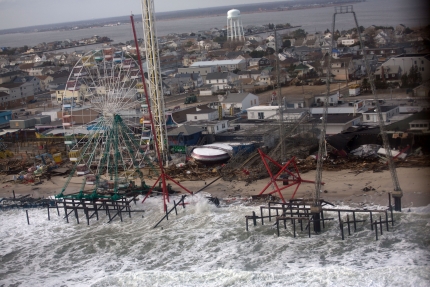
The view from aerial tour of Hurricane Sandy damage  of New Jersey's barrier beaches

The view from aerial tour of Hurricane Sandy damage of New Jersey's barrier beaches, Nov. 18, 2012. (Official White House Photo by Sonya N. Hebert)

The 2014 hurricane season begins this Sunday, and communities across the country are making sure they're ready.

Today, the President headed over to the Federal Emergency Management Agency's National Response Coordination Center, where he received an update on efforts to prepare communities for extreme weather events and other climate change impacts.

In brief remarks ahead of his hurricane preparedness briefing, the President noted that, while states still have the primary role in preparing for responding to disasters, the federal government would continue to ensure they have the resources they need. But, as he also said:

...it’s also every citizen’s responsibility to make sure that we are prepared for emergencies when they come -- and not just hurricanes but every emergency.

Looking for ways to make sure you're prepared? Ready.gov has a whole suite of instructions and resources for before, during, and after a storm. We've pulled a couple out here.

The White House

Office of the Press Secretary

Readout of the President’s Briefing Ahead of the 2014 Hurricane Season

Today at FEMA Headquarters, the President convened a meeting with members of his response team to receive an update on efforts to prepare communities for extreme weather events and other climate change impacts ahead of the 2014 hurricane season. Lisa Monaco, Assistant to the President for Homeland Security and Counterterrorism, led the meeting. NOAA Administrator Kathy Sullivan briefed the President on the upcoming hurricane season, which starts Sunday, June 1st. FEMA Administrator Craig Fugate and Homeland Security Secretary Jeh Johnson reviewed progress on the federal government’s efforts to prepare for and capacity to respond to severe storms.

In particular, the conversation focused on technology innovations and mobile applications developed by Federal, State, and local agencies that will better inform and involve the public in preparedness and response activities. National Hurricane Center Director Rick Knabb presented NOAA’s new storm surge map, which will make public alerts of flooding threats easier to understand. The Department of Energy showcased their new “Lantern Live” app, which will help people in areas affected by severe storms identify electrical outages and locate open gas stations. Other presenters included representatives from the Commonwealth of Virginia, and Orange County, Florida, who provided overviews of their mobile apps that assist residents before, during and after emergency situations. These applications help users develop their own emergency plans, receive emergency alerts, and access critical information including evacuation routes, shelter locations, and ice and water distribution points. The President thanked the State of Virginia and Orange County, Florida for their initiative in developing tools to help prepare and engage their communities.

Earlier this month, the Administration released the third National Climate Assessment, the most comprehensive scientific report of its kind. The assessment confirms that climate change is affecting every region of the United States, with impacts including increasingly frequent extreme weather.  In anticipation of more severe weather during this summer season, the President expects his team to take all necessary steps to prepare for hurricanes, wildfires, and other catastrophes. Today’s briefing joins a series of briefings on wildfires and other extreme weather impacts. These responsibilities include developing and deploying cutting-edge technologies. Additionally, the President directed his team to maintain close coordination with our state, local, tribal and private sector partners and apply the lessons learned from Hurricane Sandy and other recent storms.

Earlier this week, DHS Deputy Secretary Mayorkas and Administrator Fugate participated in calls with emergency managers and representatives from Hurricane-prone states and territories to discuss preparedness efforts, as well as to ensure coordination with federal, state, local, and tribal partners leading in to this year’s hurricane season. Disaster preparedness is a shared responsibility.  President Obama also urges the American people to talk with their families about emergencies, to study their evacuation zone, and to follow the direction of state and local officials if an evacuation is ordered for their area. To learn more about preparing for emergencies and how to protect yourself and your family during severe weather, visit Ready.gov. Please also be alert to weather updates through NOAA Weather Radio and their local news organizations.

Participants in the briefing included:
  • Jeh Johnson, Secretary of Homeland Security
  • Valerie Jarrett, Assistant to the President and Senior Advisor
  • John Podesta, Counselor to the President
  • Anita Decker Breckenridge, Assistant to the President and Deputy Chief of Staff for Operations
  • Todd Park, Assistant to the President and Chief Technology Officer
  • Lisa Monaco, Assistant to the President for Homeland Security and Counterterrorism
  • Robert Work, Deputy Secretary of Defense
  • Daniel Poneman, Deputy Secretary of Energy
  • Craig Fugate, Administrator, Federal Emergency Management Agency
  • Jacob Sullivan, Deputy Assistant to the President and National Security Advisor to the Vice President
  • Rand Beers, Deputy Assistant to the President for Homeland Security
  • Kathy Sullivan, Administrator, National Oceanic and Atmospheric Administration
  • Rick Knabb, Director, National Hurricane Center
  • Joseph Nimmich, Associate Administrator for Response and Recovery, FEMA
  • Tammy Dickinson, Principal Assistant Director for Environment and Energy, OSTP
  • Derek Frempong, Presidential Innovation Fellow, DOE
  • Brian Moran, Secretary of Public Safety and Homeland Security, Commonwealth of Virginia
  • Jeff Stern, State Coordinator, Virginia Department of Emergency Management
  • Teresa Jacobs, Mayor of Orange County, Florida

Rafael Mena, Chief Information Officer, Orange County, Florida