President Obama Meets with Aung San Suu Kyi

President Barack Obama meets with Burmese Opposition Leader Aung San Suu Kyi

President Barack Obama meets with Burmese Opposition Leader Aung San Suu Kyi in the Oval Office, Sept. 19, 2012 (Official White House Photo by Pete Souza)

Yesterday, President Obama met with Aung San Suu Kyi, Burmese Nobel Laureate and leader of the National League for Democracy Party. The President expressed his admiration for her courage, determination and personal sacrifice in championing democracy and human rights over the years.

According to a readout of the meeting, President Obama reaffirmed the determination of the United States to support the “sustained efforts to promote political and economic reforms and to ensure full protection of the fundamental rights of the Burmese people," a process that offers them “the opportunity to take charge of their destiny and to shape a more peaceful, free, and prosperous future.”

Related Topics: Foreign Policy

The White House

Office of the Press Secretary

Readout of the President’s Meeting with Burmese Nobel Laureate Aung San Suu Kyi

President Obama met today with Burmese Nobel Laureate Aung San Suu Kyi and expressed his admiration for her courage, determination and personal sacrifice in championing democracy and human rights over the years.  The President welcomed Burma’s democratic transition and the recent progress made by Aung San Suu Kyi, as leader of the National League for Democracy Party, working together with President Thein Sein.  The President reaffirmed the determination of the United States to support their sustained efforts to promote political and economic reforms and to ensure full protection of the fundamental rights of the Burmese people.  The President expressed his conviction that the ongoing process of reconciliation and reform offers the people of that nation the opportunity to take charge of their destiny and to shape a more peaceful, free, and prosperous future.

The White House

Office of the Press Secretary

Presidential Nominations Sent to the Senate

NOMINATIONS SENT TO THE SENATE:

Sylvia M. Becker, of the District of Columbia, to be a Member of the Foreign Claims Settlement Commission of the United States for the term expiring September 30, 2013, vice Ralph E. Martinez, term expired.

Bibiana Boerio, of Pennsylvania, to be Director of the Mint for a term of five years, vice Edmund C. Moy, resigned.

Joseph Eldridge, of the District of Columbia, to be a Member of the Board of Directors of the United States Institute of Peace for a term of four years, vice Anne Cahn, term expired.

Robert F. Godec, of Virginia, a Career Member of the Senior Foreign Service, Class of Minister-Counselor, to be Ambassador Extraordinary and Plenipotentiary of the United States of America to the Republic of Kenya.

Keith Kelly, of Montana, to be Assistant Secretary of Labor for Veterans' Employment and Training, vice Raymond M. Jefferson.

George E. Moose, of Virginia, to be a Member of the Board of Directors of the United States Institute of Peace for a term of four years.  (Reappointment)

Beth J. Rosenberg, of Massachusetts, to be a Member of the Chemical Safety and Hazard Investigation Board for a term of five years, vice William B. Wark, term expired.

Cheryl Saban, of California, to be Representative of the United States of America to the Sixty-seventh Session of the General Assembly of the United Nations.

Frederick Vollrath, of Virginia, to be an Assistant Secretary of Defense.  (New Position)

Derek Anthony West, of California, to be Associate Attorney General, vice Thomas John Perrelli, resigned.

The White House

Office of the Press Secretary

Presidential Nominations Sent to the Senate

NOMINATIONS SENT TO THE SENATE:

Jennifer A. Dorsey, of Nevada, to be United States District Judge for the District of Nevada, vice Larry R. Hicks, retiring.

Andrew Patrick Gordon, of Nevada, to be United States District Judge for the District of Nevada, vice Kent J. Dawson, retired.

Caitlin Joan Halligan, of New York, to be United States Circuit Judge for the District of Columbia Circuit, vice John G. Roberts, Jr., elevated.

Michael J. McShane, of Oregon, to be United States District Judge for the District of Oregon, vice Michael R. Hogan, retired.

The White House

Office of the Press Secretary

Readout of President Obama’s Video Conference with President Karzai

Earlier today, the President held a video conference with President Karzai of Afghanistan, as a part of their regular consultations and following on their phone call last week.  The two Presidents discussed a range of issues, including efforts to stem insider attacks on U.S., coalition, and Afghan forces; the importance of continuing to encourage restraint and non-violence in reaction to inflammatory materials; and continued implementation of the U.S.-Afghan Strategic Partnership Agreement.  The President expressed his condolences and remembrances on the eve of the one-year anniversary of former Afghan President Rabbani’s assassination, and the two leaders agreed to continue our work together in support of an Afghan-led reconciliation process.  The President reiterated his strong support for Afghan sovereignty, and the two leaders agreed to take additional concrete steps to implement the Strategic Partnership Agreement, including launching the U.S.-Afghan Bilateral Commission in coming weeks and beginning negotiations on a Bilateral Security Agreement.

The White House

Office of the Press Secretary

President Obama Nominates Three to the United States District Courts

WASHINGTON, DC- Today, President Obama nominated Jennifer A. Dorsey, Andrew Patrick Gordon, and Judge Michael J. McShane for District Court judgeships.

“I am honored to put forward these highly qualified candidates for the federal bench,” President Obama said.  “They will be distinguished public servants and valuable additions to the United States District Court.”

Jennifer A. Dorsey:  Nominee for the United States District Court for the District of Nevada
Jennifer A. Dorsey has been a partner at the law firm of Kemp, Jones & Coulthard LLP in Las Vegas, Nevada since 2004, having joined the firm upon graduation from law school in 1997.  Dorsey practices before both state and federal courts and handles a wide variety of matters including appeals, class actions, and complex commercial litigation.  She received her J.D. cum laude in 1997 from the Pepperdine University School of Law and her B.A. cum laude in 1994 from the University of Nevada at Las Vegas.

Andrew Patrick Gordon:  Nominee for the United States District Court for the District of Nevada
Andrew Patrick Gordon has been a partner with the law firm of McDonald Carano Wilson LLP since 1997, having joined the firm in 1994 as an associate.  He worked at the law firm of Dawson and Associates from 1992 to 1994, and at the law firm of Streich Lang Weeks and Cardon from 1987 to 1992.  Throughout his legal career, Gordon’s practice has focused on civil litigation and alternative dispute resolution, with primary emphasis on complex commercial disputes.  He also regularly serves as an arbitrator and mediator.  Gordon received his J.D. in 1987 from Harvard Law School and his B.A. cum laude in 1984 from Claremont McKenna College.

Judge Michael J. McShane:  Nominee for the United States District Court for the District of Oregon
Judge Michael J. McShane has been a Judge on the Multnomah County Circuit Court in Oregon since 2001, where he has presided over a wide variety of matters, including civil, criminal, and family court cases.  He previously served as a Judge Pro Tempore on the same court from 1997 to 2001.  Prior to becoming a judge, he spent almost a decade serving as a public defender at the Office of the Metropolitan Public Defender in Portland, Oregon, where he represented indigent clients facing criminal prosecution.  Judge McShane is the recipient of the 2012 Oregon State Bar President’s Public Service Award.  He received his J.D. with honors in 1988 from the Northwestern School of Law at Lewis and Clark College and his B.A. magna cum laude in 1983 from Gonzaga University.

The White House

Office of the Press Secretary

Statement by the Press Secretary on the Veterans Jobs Corps

No veteran who fought for our nation should have to fight for a job at home, but Republicans in Washington are blocking a common sense plan to create the Veterans Jobs Corps and put tens of thousands of veterans back to work.

Working with Democrats and Republicans in Congress, the Obama Administration has already made real progress to help veterans find jobs. We passed tax credits to encourage employers to hire veterans and released new tools to connect veterans with employers. And thanks to the First Lady and Dr. Biden’s Joining Forces Initiative, more than 2,000 businesses have hired or trained more than 125,000 veterans and military spouses in the past year. But we can do more and Senate Republicans should not block legislation that includes many of their ideas and stand between veterans and good jobs protecting and preserving America.

The White House

Office of the Press Secretary

Press Briefing by Press Secretary Jay Carney, 9/19/12

James S. Brady Press Briefing Room

11:32 A.M. EDT
 
MR. CARNEY:  Hello, everyone.  Good afternoon -- or good morning.  Thanks for being here.  Before I get started, as some of you have seen reported, I can tell you that later this afternoon the President will meet with Aung San Suu Kyi at the White House.  The President looks forward to her visit as it provides another opportunity to reaffirm our longstanding support for her struggle, and the struggle of many others towards democratic, just, and transparent governance in Burma.
 
This is her first trip to the United States in more than 20 years.  The President very much looks forward to that visit.  That's all I have at the top.
 
Q    What time?
 
MR. CARNEY:  Late afternoon around 5:00 p.m.
 
Q    Will there be a photo spray?
 
MR. CARNEY:  We’re still -- press coverage TBD, but we’re working on it.
 
Jim.
 
Q    Thanks, Jay.  Two foreign policy issues.  Reports that Iran is using Iraqi airspace to deliver weapons to Syria, the issue came up today in the Senate Foreign Relations Committee.  What steps is the President prepared to take to prevent Iraq from allowing Iran into its airspace?  Any conditions on financial aid or anything like that?
 
MR. CARNEY:  Well, let me just say broadly that we have made clear to countries around the world that we all need to work together to prevent Assad from acquiring weapons that he can use to continue to perpetrate violence against his own people, and that's a message that we carry in conversations with leaders everywhere. 
 
I don't have anything specific for you with regards to Iraq, and I’m not aware of the meeting on the Hill that you referenced.  But that is something we’re concerned about generally.  We’ve worked very hard with our international partners to cut off access to weapons and financing for Assad, and we continue to do that.
 
Q    On China, Secretary Panetta returned from his trip there, and we quoted that Chinese leaders are expressing concern over our U.S. military shift to the Pacific.  Does the White House have any concerns that that, together with the attention that China has been getting in the presidential campaign, is increasing any tensions with the Chinese?
 
MR. CARNEY:  What I said yesterday holds true today, which is that we have a very complex, broad relationship with China that is extremely important.  And when we meet with the Chinese at the level of the President and below, we engage with them on all of the issues that are part of our relationship, and that includes areas of disagreement as well as areas of cooperation and agreement.  We obviously have an important trade relationship and economic relationship, as well as military-to-military relationship.
 
We are, as the President made clear on his trip to Asia last fall, a Pacific power.  We have a presence there that's important to the United States and to the region, and we intend to pursue that.  But if this is about broader issues than China, it’s about the fact that the United States is obviously a Pacific power with Pacific interests.  And you know that this President believes that in the eight years prior to him taking office there was a loss of focus when it comes to Asia, by the previous administration, because of all the concentrated attention on Iraq in particular.  And he has sought to rebalance our national security, foreign policy, and international economic posture towards Asia for that reason.
 
Q    There are some protests in China that the U.S. presence has emboldened other countries like Japan on territorial disputes.  Does the President feel that -- do you want to put your finger on the scale on issues like that?
 
MR. CARNEY:  No, look, we believe that good relations between China and Japan benefit everyone in the region.  And U.S. policy on the Senkaku Islands, which I think is the issue at the moment, is longstanding and has not changed.  The United States does not take a position on the question of the ultimate sovereignty of the islands, and we expect the claimants to resolve the issue through peaceful means among themselves.
 
Q    Jay, does the President have any reaction to the end of the teacher strike in Chicago yesterday?
 
MR. CARNEY:  His position has been that he hoped to see both sides in the dispute come together, reach an agreement that could serve and would serve the interests that were paramount -- the interest of the children of Chicago, the students in the Chicago school system.  And he certainly welcomes resolution to the dispute and welcomes the fact that kids have returned to class this morning.

Q    And at the risk of sounding like a broken record, oil prices are falling again.  Do you have anything updated today to say about the SPR and your thinking about that?
 
MR. CARNEY:  I don’t.  Our thinking remains what it was.  In regular consultation with our international partners, we monitor global oil markets and we keep all options on the table to deal with disruptions if necessary.  But I have no announcements to make on that.
 
Q    Is there a price level that would change this thinking at all of oil prices and/or gasoline prices in this country?
 
MR. CARNEY:  Again, Jeff, it’s the kind of thing that I won’t get into great specificity on.  We simply monitor the situation mindful of the impact that higher global oil prices have on global economic growth, American economic growth, and mindful of all the various implications that arise when you have a situation like that.  But I’m not going to get into the details of price levels or reserve levels, and suffice it to say that the President insists that all options for dealing with this issue remain on the table, and that includes the SPR.
 
Q    You mentioned yesterday -- just last follow-up on this -- you were pleased about Saudi Arabia’s action.  Can you talk a little bit about what types of negotiations or discussions happened between the White House or U.S. officials and Saudi officials on this?
 
MR. CARNEY:  No.  I can simply say that we welcome the Saudi Arabian oil minister’s recent remarks and share his concerns about rising oil prices, broadly speaking, not in recent days, but rising prices in the international oil market.  And we welcome Saudi Arabia’s continued commitment to take all necessary steps to ensure the market is well supplied and to help moderate prices.  But we have ongoing consultations and conversations with our allies and our partners, including Saudi Arabia, on this issue and many others.
 
Q    In the wake of the attacks in Benghazi, the Pentagon and the State Department both made statements but then had to correct the Pentagon involving whether there were Marines at the embassy in Tripoli -- there were not -- and the State Department, regarding the presence of security firms at the Benghazi compound.  Why was there such confusion?  And is the White House or anyone conducting any sort of internal investigation as to what went wrong?
 
MR. CARNEY:  Well, there is an ongoing investigation into what happened in Benghazi that’s being led by the FBI and --
 
Q    Not that one.  I’m not talking about the criminal act.  I’m talking about the -- obviously, there wasn’t adequate security -- along the lines of what went wrong, what the administration could have done better.
 
MR. CARNEY:  Right.  I think I would refer you for questions about security at the Benghazi diplomatic facility and broadly speaking at diplomatic facilities, consulates, and embassies around the world to the State Department.  In terms of statements that were corrected by Defense or State, I would refer you to those departments.
 
From our perspective, we got out to you the information that we had as soon as we had it and it was available.  And our assessment of what happened has been based on the best available information that we’ve had.  There is an ongoing investigation led by the FBI, now going back to specifically what happened in Benghazi, and we await the results of that investigation for more information about the protests and the attacks and what precipitated them and who participated in them, with the primary objective here of fulfilling the President’s commitment that those people responsible for the deaths of four Americans be brought to justice.
 
Q    What reason could there be -- or let me rephrase that -- who made the decision that there should not be Marines at our diplomatic post in Libya?  More than half of our diplomatic posts have Marines.  I understand they're not there to protect people, they're there to protect classified data, but it doesn't hurt to have them there.  Who made the decision?
 
MR. CARNEY:  Well, I think security at diplomatic facilities is overseen by and run by the State Department, so I’d refer you to them about how decisions are made and what the allocation of resources was in Benghazi and elsewhere.  I think they're the best people to answer that question.
 
Q    Is the President concerned that there was a failure by someone in the administration to ensure adequate security measures whether through --
 
MR. CARNEY:  The President is concerned that violent actions were taken that led to the deaths of four Americans.  You can be sure that he’s concerned about that, and he is absolutely concerned that we take the necessary measures to make sure that those who killed Americans are brought to justice.  And he has been focused from the beginning on ensuring that adequate security reinforcements be brought to bear at embassies and consulates and diplomatic facilities where that's deemed necessary.
 
Again, there is an investigation -- I think a broad investigation into what happened and how and why in Benghazi.  And we will await the results.
 
Q    But that's about the perpetrators of the violence.
 
MR. CARNEY:  Well, I think it encompasses everything that happened.  I’m sure that they will look at everything that happened there.  I mean, I would refer you to the FBI for details.  Look, Jake, I think what happened in --
 
Q    It just seems -- you have the anniversary of 9/11, an unstable country with roving bands of individuals who are armed, a government that says it itself cannot provide security, it’s not ready to do so yet, and it would just seem not that complicated to discern that there need to be some sort of serious security effort there to protect our diplomats.
 
MR. CARNEY:  Jake, I appreciate the question, and I understand it.  And I can simply say that there is an active investigation into what happened in Benghazi that led to the killing of four Americans.  And the President has taken action to make sure that we have reinforced security at facilities as deemed necessary and is very focused on ensuring that we bring to justice those who killed Americans abroad.
 
But I appreciate your question, and I think that we are awaiting the results of the FBI investigation.
 
Q    Okay.  On one other subject.  Did the President have any response to the Office of Special Counsel report on Secretary Sebelius violating the Hatch Act?
 
MR. CARNEY:  I have not spoken to him about it.  I think that Secretary Sebelius has responded to that and made sure that what was in -- her remarks were extemporaneous.  The Health and Human Services Department has since reclassified the event to meet the correct standard.  The U.S. Treasury has been reimbursed, and Secretary Sebelius has met with ethics experts to ensure that this never happens again.
 
The error was immediately acknowledged by the Secretary and promptly corrected, and no taxpayer dollars were misused.
 
Q    Is it safe to assume that as far as the President is concerned, that's the end of the matter?
 
MR. CARNEY:  Well, I think it’s safe to assume that action has been taken by the Secretary and the department to remedy what was the result of an inadvertent error based on extemporaneous remarks.  And she acknowledged it immediately, promptly corrected it, and ensured that no taxpayer dollars were used, and that the department reclassified the event to make sure that the correct standards were met.
 
Q    Thanks, Jay.
 
MR. CARNEY:  Dan.
 
Q    Thank you, Jay.  Aside from the FBI investigation, doesn’t the White House have its own intelligence that would allow you to say with some degree of certainty that the attack in Benghazi was either a coordinated attack or a spontaneous reaction to the movie?
 
MR. CARNEY:  The White House doesn’t have its own intelligence, Dan.  The White House has --
 
Q    The White House doesn’t have its own intelligence on this?  I mean --
 
MR. CARNEY:  Outside of the intelligence community of the United States government?
 
Q    No, outside of the FBI investigation?  You don’t have --
 
MR. CARNEY:  Are you suggesting that we have a clandestine intelligence operation here in the White House?
 
Q    No.  You are able to find out a lot of information on your own, independently.  And what I’m saying, in addition to what the FBI is doing, does the White House not have information that it has gathered that will allow --
 
MR. CARNEY:  I think the FBI is leading an investigation that will encompass all of the information available to the White House and to the intelligence community and to the broader diplomatic community.  What I can tell you is that, as I said last week, as our Ambassador to the United Nations said on Sunday and as I said the other day, based on what we know now and knew at the time, we have no evidence of a preplanned or premeditated attack.  This, however, remains under investigation, and I made that clear last week, and Ambassador Rice made that clear on Sunday.  And if more facts come to light that change our assessment of what transpired in Benghazi and why and how, we will welcome those facts and make you aware of them.
 
But again, based on the information that we had at the time and have to this day, we do not have evidence that it was premeditated.  It is a simple fact that there are, in post-revolution, post-war Libya, armed groups, there are bad actors hostile to the government, hostile to the West, hostile to the United States.  And as has been the case in other countries in the region, it is certainly conceivable that these groups take advantage of and exploit situations that develop, when they develop, to protest against or attack either Westerners, Americans, Western sites or American sites. 
 
And again, this is something that’s under investigation.  We have provided you our assessment based on the information we’ve had as it’s become available.  As more information becomes available, we will make clear what the investigation has revealed.
 
Q    And another question on Afghanistan.  Given some of the developments that we’ve seen there recently, does the President still believe that Afghan forces are capable of handling their own security and will be able to do so in time for the 2014 deadline?
 
MR. CARNEY:  The President believes that after a decade of war, we can and should pursue a strategy that transitions security authority over to Afghan forces and allows us to end the war in Afghanistan and bring home our men and women in uniform.  That process is underway. 
 
We have gotten to this point because the President, having inherited a policy in Afghanistan that was widely viewed as adrift, without a focused mission, under-resourced, he very deliberately, working with his national security team, honed in on what the proper objectives should be in Afghanistan; made clear that our number-one objective in that region was to disrupt, dismantle, and ultimately defeat al Qaeda, and to ensure, in support of that goal, that Afghanistan could not become a safe haven again for al Qaeda or other extremists who have as their objective attacking the United States or U.S. allies.
 
And the execution of that strategy continues.  It led initially to a surge in U.S. forces, which halted the Taliban’s momentum; which allowed us to take the fight to al Qaeda in the region in a way that we had not been able to before; that led to the decimation of al Qaeda’s leadership, including the elimination of Osama bin Laden; and has now allowed us to draw down the surge forces and to continue the transition to Afghan security forces’ responsibility for security of that country.
 
That process continues, as I said the other day.  We are very concerned about the green-on-blue attacks that have been taking place in Afghanistan, the increase in those attacks.  And our commanders are taking measures to ensure that there is more security for our troops in Afghanistan.  But the process of partnering with and training Afghan security forces continues, and the process of transitioning to Afghan security lead continues.  And the President has made clear that the pace -- that the drawdown of U.S. forces will continue.  The pace of that will depend on evaluations by and assessments by commanders on the ground.  But it will continue, and he remains committed to ending the war in Afghanistan in keeping with the NATO objectives by 2014.
 
Q    So it continues, but does he think they will be prepared to handle their own security?
 
MR. CARNEY:  Thanks to the extraordinary sacrifice of our men and women in uniform and our partners’ men and women in uniform, we have made tremendous strides towards enhancing the capacity of and the numbers of Afghan security forces.  And that remains a fact even as we contend with this serious problem with green-on-blue attacks.
 
It is true that while we have changed the directives involved in partnering with Afghan forces, it remains true that for a long time now there have been an extraordinary number of missions conducted successfully where U.S. forces or ISAF forces have partnered with Afghan forces.  And it is essential for Afghans’ future that Afghan security forces be able to take over security for their country.  And it is certainly in the interest of the United States that after a decade of war we continue with that transition in keeping with the President’s mission.
 
Bill.
 
Q    If the government still maintains that there was no evidence of a preplanned attack, how come --
 
MR. CARNEY:  Bill, let me just repeat now, again, that based on the information --
 
Q    But how is it that the attackers had RPGs, automatic weapons, mortars?
 
MR. CARNEY:  Bill, I know you’ve done a little bit of reading about Libya since the unrest that began under Qaddafi.  The place is -- has an abundance of weapons, and there are --
 
Q    No question about it.  But do you expect a street mob to come armed that way?
 
MR. CARNEY:  There are, unfortunately, many bad actors in that country as there are throughout the region.

Q    But that’s not the point, Jay.
 
MR. CARNEY:  And they have -- they’re very armed.  The point is you can make suppositions about what happened.  We prefer to have an investigation that looks very closely into what happened, and assembles the facts and presents them.  Based on -- all I’m saying --
 
Q    But our people on the ground have seen the fragments of the -- the remains of the mortars and the heavy weapons that were used.
 
MR. CARNEY:  We’ve been clear that there were armed assailants who used heavy weapons.  We obviously haven’t disputed that.  And --
 
Q    So this is just a random crowd that got together with their heavy weapons, insulted by the film, and decided to go --
 
MR. CARNEY:  As I think I just said, there has certainly been precedent in the past where bad actors, extremists who are heavily armed in different countries, in different regions of the world, have taken advantage of and exploited situations that have developed in order to either attack Westerners or Western assets or American assets.  That is not --
 
Q    They might plan to do it, don’t you think?
 
MR. CARNEY:  They might or they might not.  All I can tell you is, based on the information we had at the time -- we have now, we do not yet have indication that it was preplanned or premeditated.  There’s an active investigation.  If that active investigation produces facts that lead to a different conclusion, we will make clear that that’s where the investigation has led.  It’s not -- our interest is in finding out the facts of what happened, not taking what we’ve read in the newspaper and making bold assertions that we know what happened.  We’d rather investigate it.
 
Q    But doesn’t it seem likely, given the circumstances?
 
MR. CARNEY:  I think that goes back to making presumptions about what happened and we’d rather investigate it.
 
Q    Jay, there were a fair number of questions yesterday about the Romney tape and what he had to say.  There is a tape that the Republicans immediately tried to distribute yesterday, I guess to push back this fairly old -- 14 years ago, the President talking about redistribution.  My question is, from a policy standpoint, the Republicans seem to be trying to use that tape to suggest that the President’s goal is to redistribute income and wealth.  And can you say from a policy standpoint whether that is a fair characterization?
 
MR. CARNEY:  Ed, I would say that all of us who follow politics and policy, whether we’re on this side or your side of the podium, have seen circumstances like this where a campaign is having a very bad day or a very bad week.  And in circumstances like that, there are efforts made -- sometimes desperate efforts made to change the subject.
 
The charge based on this 14-year old video sounds very familiar to one that was tried and failed in 2008.  Fourteen years ago, then-Senator Obama was making an argument for a more efficient, more effective government, specifically citing city government agencies that he did not think were working effectively.  He believed then and believes now that there are steps we can take to promote opportunity and ensure that all Americans have a fair shot if they work hard. 
 
He certainly doesn’t believe, as some apparently do, that any student who looks for a government-backed loan is looking for a handout; or that a senior citizen receiving Social Security is a freeloader; or a combat veteran not paying taxes is a victim.  He believes that we need to make government more effective, more efficient.  He believed that then, he believes it now.
 
Q    But when he says “pool resources” in that tape, that we need to pool resources, and he believes in redistribution, does that -- since you’re characterizing what he meant 14 years ago and with confidence, was he also suggesting he believes in redistribution of wealth?
 
MR. CARNEY:  The President believes that we have to have a government that works efficiently and effectively and wisely in the use of taxpayer dollars on behalf of the American people, that advances the American economy, that helps provide opportunity to middle-class Americans and those seeking to enter the middle class.  He certainly believes that programs like Social Security and Medicare -- that every American who works, contributes to -- are beneficial for the entire society.  And those programs use money that you and I put in every week to ensure that your grandmother and my grandmother have health care now.  That’s a wise use of government resources and taxpayer dollars. 
 
But again, if you look at what he said back then, it was all about his concern, as a state senator, with inefficient, ineffective local government programs, and the need to make them more efficient and more effective.  And that is a focus and a concern that he has brought here to Washington first as a senator and now as President.
 
Q    And the last question.  Beyond the attacks back and forth, the Wall Street Journal today cites U.S. census data that says that in 2011, 49 percent of the population lived in a household receiving some sort of government benefits, and that back in the ’80s it was only 30 percent.  So my question would be, do you think, since the President does talk a lot in his stump about the debt problem, about balancing the budget, is that a sustainable path to go from 30 percent to 49 percent in terms of people receiving benefits?  Is that sustainable?  Can you actually balance the budget if we’re headed in that direction?
 
MR. CARNEY:  Well, I think you have to look at what those benefits are.  We obviously have grown older as a nation.  And if you’re questioning whether or not Social Security is a necessary and beneficial program for America’s seniors, I think the President’s answer would be clear: Yes, it is.
 
Is it absolutely essential that Medicare as we know it remain in place to provide health care to America’s seniors?  Yes, it is.  Are veterans’ benefits -- and we certainly have a large number of veterans and veterans who need assistance returning from the wars in Iraq and Afghanistan -- are those benefits necessary and helpful to American society?  The answer absolutely is yes.
 
Again, there have been a lot of assessments of the 47 percent figure; some of them very interesting and I think substantive and worth examining.  It was noted in a different context when we talk about effective tax rates, all those hardworking Americans, everybody who pays payroll taxes, is working and earning a paycheck, and a lot of them are paying a higher effective tax rate -- even if their federal income tax is extremely low or zero -- than some millionaires and billionaires out there because of the carried interest law or other measures by which somebody like Warren Buffett or others can manage to pay a far lower effective tax rate than a school teacher or a bus driver or a police officer.
 
The President believes that when we talk about tax reform, that's one of the things that we need to fix so that the tax system is more fair.
 
Q    You used the word “desperate.”  So the White House believes the Romney campaign has gotten desperate, you said?
 
MR. CARNEY:  No, I made an observation as a keen observer of the political scene that when a campaign is having a bad day or a bad week, or some might say a bad month --
 
Q    Why stop there?  (Laughter.)
 
MR. CARNEY:  And this has been true in campaigns from both parties, candidates of all stripes, you sometimes witness an effort to -- that seems desperate to change the subject.  We might be witnessing that now.  (Laughter.)  But I leave it up to the experts, including you --
 
Q    You’d normally refer those questions to Chicago, but you seem to be willing to weigh in on the campaign now?
 
MR. CARNEY:  I had a four-shot espresso before I got out here.  (Laughter.)
 
Q    I just want to go back to the surge for a moment.  To be clear, have all of the surge forces now been withdrawn?
 
MR. CARNEY:  Of the so-called surge forces, I believe 33,000 roughly are due to be fully withdrawn by the end of this month.  I would have to check on the absolute status right now.  I don't believe they're to a person completely withdrawn yet, but they are due to be withdrawn by the end of the month.
 
Q    So you don't have any updates about whether or not they’ve actually been withdrawn?
 
MR. CARNEY:  I don't believe that every single person has been withdrawn yet, but again, the timetable is they will be brought out by the end of the month.  And my understanding is -- I would refer you to the Pentagon for more details, but my understanding is that that timetable is being met.
 
Q    And also, Senators McCain, Lieberman, and Graham put out a statement today saying that the green-on-blue attacks were actually precipitated by the overly speedy drawdown of the surge troops, and they recommended the administration “take a step back and reconsider withdrawing surge troops in light of these insider attacks.”  What is the President’s reaction to that?  And is this under consideration at all?
 
MR. CARNEY:  We disagree.  The President believes that it is absolutely essential to continue with the transition to Afghan security lead, that after a decade of war -- more -- in Afghanistan, it is time to wind down that war and to gradually transfer security responsibility to the Afghans.
 
We have expended a great deal of blood and treasure in that effort, and it is through the heroic and remarkable service of our men and women in uniform in particular that we are at a place now where Afghan security forces have developed capabilities and have developed the numbers that allows them to gradually take over security lead.
 
The green-on-blue attacks are a very concerning problem, and action is being taken to protect against those kinds of attacks.  But it does not change the mission; the mission continues.  And I mean, with regard to those assessments, I would simply note that when this President took office, he inherited an Afghan policy -- an Afghan policy from the previous administration that was largely endorsed by some of the very same critics of the President’s policy -- in which there were a fraction of the number of troops that this President allocated to the effort in Afghanistan and the AfPak region, and nothing like the kind of focus on a clear mission on the disruption, dismantlement, and defeat of al Qaeda that this President has pursued.
 
The President made clear in the 2008 campaign that we needed to refocus attention on Afghanistan, that we needed to end the war in Iraq.  He has fulfilled the promise to end to war in Iraq, and he is fulfilling his promise with regards to Afghanistan.
 
Q    Well, if it’s not linked to the drawdown of the surge forces, has the administration gotten closer to figuring out what is behind this uptick in violence?
 
MR. CARNEY:  For details on this, I think the Pentagon and ISAF would be the best places to go.  I think one thing that I understand to be true and that is the assessment of our commanders in the field is that because of the success we’ve had in halting the momentum of the Taliban and retaking territory controlled by the Taliban, this is a tactic that is being used as an alternative by the Taliban and other extremists, which might argue against some of the assertions being made that you cite.
 
But let me be clear, this is very concerning, and that is why the steps are being taken by our commanders in the field, by General Allen and others, but it does not change the mission.
 
Margaret.
 
Q    Thanks, Jay.  I wanted to ask you a couple of follow-up questions about the President’s meeting with Aung San Suu Kyi later today.  Can you talk a little bit more about what it says about how he sees her role both in Burma or Myanmar and also more broadly in the region that the meeting is happening? 
 
And in terms of diplomacy, I know like if the Dalai Lama visits, the President has to kind of give considerations about how to position that vis-à-vis the Chinese government.  I’m wondering how this compares.  Did the U.S. give Burma a heads-up?  Diplomacy-wise, was there any issue or concern about that visit in terms of how the U.S. goes forward?
 
MR. CARNEY:  Well, the President very much looks forward to this visit.  The President views Aung San Suu Kyi very much as you described her, which is -- and I did before -- which is as somebody who has been a remarkable beacon for democratic reform in her country and for her people.  And that struggle has lasted for many, many years, and it is certainly appropriate that she will be receiving the Congressional Gold Medal in recognition of her many-year struggle in Burma, a struggle that is resulting now in her visit and in the remarkable reforms that have been undertaken by President Thein Sein, in Burma. 
 
And as I think we discussed the other day when I was asked about her visit and reforms underway and reciprocal actions that we’ve been taking in response to those forms, a great deal has been transpiring in Myanmar, Burma, and we continue to work with President Thein Sein and the government there, as well as others, to help the cause of reform and to help the cause of the democratic process there.
 
Q    Is the visit itself and the symbolism that that connotes what’s more important?  Or do you expect that they're going to actually discuss anything substantive that he’s asking her for information about or vice versa?
 
MR. CARNEY:  I don't want to read out a conversation that hasn’t taken place yet.  I know he looks forward to meeting with her.  He’s spoken with her by phone in the past but has not met with her.  And I’m sure there will be substantive elements to the discussion. 
 
But it is certainly the case that we are engaged with the government of Myanmar very actively when it comes to the reforms that we have been urging them to put in place, and that they have been putting in place.
 
Mark.
 
Q    Circling back to the video again, on the Middle East -- yesterday you said it wasn’t leadership, it was the opposite of leadership for Mitt Romney to say that a solution in the Middle East is an issue that should be kicked down the field.  But if you look at the Obama administration’s record on the Middle East for at least the past 12 months, it seems as though the White House is effectively kicking it down the field as well. 
 
When Senator Mitchell left as special enjoy he wasn’t replaced at a similar level.  The President hasn’t announced a major or even modest new initiative on the Middle East since the speech he gave on the Middle East early last year.  And diplomatic engagement by the U.S. on this issue is by all accounts at a very low level.
 
So I guess the question I’m asking is, is it fair for the White House to say that he’s showing no leadership in saying he’s kicking it down the field when it appears that you guys are kicking it down the field as well?
 
MR. CARNEY:  Well, I would contest the premise.  As you know, Mark, when this President came into office, he made this a priority and he has taken steps to try to advance the peace process.  And this is a very, very difficult problem -- there is no question -- and it has been a problem that previous Presidents have worked to resolve.  And the fact that we are still short of peace does not mean we should throw up our hands and preemptively tell our supporters, or tell the American people, or the Israelis or the Palestinians, that we’re not even going to try. 
 
This President is committed to taking steps to move the Middle East peace process forward, to bringing the two parties to the table to negotiate a lasting peace.  That is the only way that a two-state solution can be achieved that provides the security that Israel deserves and needs, and the sovereignty that the Palestinian people seek. 
 
And we have -- I would certainly not argue that we have not met with the kind of success in those efforts that we all desire, and we believe that a majority of Palestinians and Israelis desire, but we will continue to work on the issue.
 
And my point was that leadership is about acknowledging the difficulty of the challenges you face and trying to tackle them.  It is not preemptively announcing that they’re too hard, so why bother. 
 
Q    I mean, I take your point about the difficulty of it.  But I’m just wondering what evidence you can point to that the President has continued to push hard on this.  Because if you look at it from the outside, it does appear that he’s made perhaps a very valid decision, a very defensible decision, that he’s not going to get anywhere between now and the election at least, so he’s chosen to put it on the back burner.
 
MR. CARNEY:  Well, we continue to press both sides to come to the negotiating table to resolve these very difficult issues that remain the obstacles to a lasting peace.  And we have come at this problem in a variety of ways and will continue to work with our international partners, with the Israelis and Palestinians in that effort. 
 
Again, I concede that this is a challenge.  I concede that this President, like his predecessors, so many of them, has not succeeded in helping bring about that final and lasting peace between the two parties.  But it is too important an issue to disregard and declare unsolvable.  That’s not in the interest of the United States, it’s not in the interest of the Israelis, and it’s not in the interest of the Palestinians.  I mean, it is stated policy of both the Israeli government and the Palestinian Authority that a two-state solution should be pursued.  And it is certainly the policy of this administration and predecessors of this administration, both Republican and Democratic, that it should be pursued, and it is the correct avenue to achieving peace in that region.
 
So this President will continue that effort, hopefully beyond January of next year, and accepts that it’s a challenge but believes deeply that it’s a challenge that we have to meet.
 
Q    The French government has decided to temporarily close their embassies and schools in several Muslim countries after a satirical weekly, Charlie Hebdo, that published cartoons mocking the Prophet Muhammad.  Is the White House concerned that those cartoons might further fan the flames in the region?
 
MR. CARNEY:  Well, we are aware that a French magazine published cartoons featuring a figure resembling the Prophet Muhammad, and obviously, we have questions about the judgment of publishing something like this.  We know that these images will be deeply offensive to many and have the potential to be inflammatory.  But we’ve spoken repeatedly about the importance of upholding the freedom of expression that is enshrined in our Constitution.
 
In other words, we don’t question the right of something like this to be published; we just question the judgment behind the decision to publish it.  And I think that that’s our view about the video that was produced in this country and has caused so much offense in the Muslim world.
 
Now, it has to be said, and I’ll say it again, that no matter how offensive something like this is, it is not in any way justification for violence -- not in any way justification for violence.  Now, we have been staying in close touch with the French government as well as other governments around the world, and we appreciate the statements of support by French government officials over the past week, denouncing the violence against Americans and our diplomatic missions overseas.
 
Andrei.
 
Q    Thank you.  It’s the same subject.  Earlier today in Moscow there was a minor flare-up because the leader of the Russian communists, Mr. Zyuganov --
 
MR. CARNEY:  (Speaks in Russian.)
 
Q    -- supposedly said in his Twitter account something denigrating about the kill of American Ambassador.  And I don’t even want to go there and to repeat what he said -- he denies it, by the way.  But the story was -- most of the story was that it created an outrage in Washington and that the Americans will sanction Mr. Zyuganov, and on, and on, and on.  My question to you is, have you heard about this, about the whole circus of it?
 
MR. CARNEY:  I’m hearing about it for the first time, so I’m not aware of this report and I’m not aware of any outrage here.  I just -- it wasn’t brought to my attention.
 
Q    Have you ever heard of someone being sanctioned in a situation like this for making an offensive comment about an American official?
 
MR. CARNEY:  I have not.  Again, I have not heard of this report.  I know of no basis to it.  That’s all I know.
 
April.
 
Q    Jay, following up on that line of questioning -- what if, if anything, is the White House doing to secure this homeland as skirmishes are happening overseas, this anti-American sentiment?  What is the President doing?  And if you could tell us -- what can you tell us?
 
MR. CARNEY:  Well, I can tell you that it is a fundamental reality of our contemporary life here in the post-9/11 world, but even prior to it, that we have to be extremely vigilant.  And that vigilance continues. 
 
I have no specific briefing to give to you about actions taken in the wake of the protests and unrest in the Middle East, but I can assure you that our security team and our counterterrorism specialists are, as they always are, extremely vigilant about potential threats against the United States, here and against Americans here in the country.
 
Q    And also, the President, when he first became President, he did this Muslim outreach, and he did it just for this reason -- to quell any kind of anti-American concern.  Is there a thought around the White House, or are there conversations among the senior staffers that that may need to happen again to do some kind of outreach so that this kind of anti-American sentiment will not cause more problems than what’s going on right now?
 
MR. CARNEY:  Well, I wouldn’t put it that way, April.  I would simply say that I remember well, since I covered it, that President Bush in the immediate aftermath of the terrible, devastating attacks on 9/11 spoke very clearly about the fact that we would not be and we’re not at war with Islam.  And that remains the case.  And I think that’s a message that this President has carried from the beginning of his administration in echoing the very same sentiments that President Bush put forward in the wake of 9/11.
 
We have made clear -- the President has, Secretary Clinton, Ambassador Rice, even the Press Secretary -- that we find the video that has been so offensive to Muslims to be disgusting and reprehensible and not something that in any way represents the values or the beliefs of the American people.  And we have made clear that, obviously, the American government had nothing to do with it.
 
We make the additional point -- and it is an important point -- that no matter how offensive such a video is, there is no justification for violence.  There is no justification for attacking and killing innocent people.  In this case, in Benghazi, innocent Americans including an ambassador who had done so much to help the Libyan people and to help them emerge from the shadow of tyranny under Muammar Qaddafi.  And that is a message that needs to be very clear as well.
 
Q    So in the investigations about all the skirmishes and the initial skirmish that happened in Libya, has it been concluded that this was linked to trying to show America something on 9/11, to show anti-American sentiment on 9/11?  Is that --
 
MR. CARNEY:  April, I’ve had a lot of questions about what we know about what precipitated the attacks in Benghazi.  And I said earlier and have said on previous days that, based on the information we have now, we don’t have evidence that it was premeditated or preplanned. 
 
It is certainly the case that there are a number of bad actors and armed groups of extremists in Libya who might take advantage of a situation that was brought about initially as a response to the video in question.  But this is under active investigation and we await the results of that investigation by the FBI before we can reach any firm conclusions about what precipitated the attacks.
 
Q    Right now we should say it’s a coincidence that it all happened on 9/11?
 
MR. CARNEY:  Right now I’m saying we don’t have evidence at this point that this was premeditated or preplanned to coincide on a -- to happen on a specific date or coincide with that anniversary.  If that changes, we will certainly make you aware of it.
 
Q    Thanks, Jay.
 
MR. CARNEY:  Thanks very much.
 
END
12:24 P.M. EDT

Press Briefing

September 19, 2012 | 50:43 | Public Domain

White House Press Briefings are conducted most weekdays from the James S. Brady Press Briefing Room in the West Wing.

Download mp4 (506MB) | mp3 (49MB)

Read the Transcript

Press Briefing by Press Secretary Jay Carney, 9/19/12

James S. Brady Press Briefing Room

11:32 A.M. EDT
 
MR. CARNEY:  Hello, everyone.  Good afternoon -- or good morning.  Thanks for being here.  Before I get started, as some of you have seen reported, I can tell you that later this afternoon the President will meet with Aung San Suu Kyi at the White House.  The President looks forward to her visit as it provides another opportunity to reaffirm our longstanding support for her struggle, and the struggle of many others towards democratic, just, and transparent governance in Burma.
 
This is her first trip to the United States in more than 20 years.  The President very much looks forward to that visit.  That's all I have at the top.
 
Q    What time?
 
MR. CARNEY:  Late afternoon around 5:00 p.m.
 
Q    Will there be a photo spray?
 
MR. CARNEY:  We’re still -- press coverage TBD, but we’re working on it.
 
Jim.
 
Q    Thanks, Jay.  Two foreign policy issues.  Reports that Iran is using Iraqi airspace to deliver weapons to Syria, the issue came up today in the Senate Foreign Relations Committee.  What steps is the President prepared to take to prevent Iraq from allowing Iran into its airspace?  Any conditions on financial aid or anything like that?
 
MR. CARNEY:  Well, let me just say broadly that we have made clear to countries around the world that we all need to work together to prevent Assad from acquiring weapons that he can use to continue to perpetrate violence against his own people, and that's a message that we carry in conversations with leaders everywhere. 
 
I don't have anything specific for you with regards to Iraq, and I’m not aware of the meeting on the Hill that you referenced.  But that is something we’re concerned about generally.  We’ve worked very hard with our international partners to cut off access to weapons and financing for Assad, and we continue to do that.
 
Q    On China, Secretary Panetta returned from his trip there, and we quoted that Chinese leaders are expressing concern over our U.S. military shift to the Pacific.  Does the White House have any concerns that that, together with the attention that China has been getting in the presidential campaign, is increasing any tensions with the Chinese?
 
MR. CARNEY:  What I said yesterday holds true today, which is that we have a very complex, broad relationship with China that is extremely important.  And when we meet with the Chinese at the level of the President and below, we engage with them on all of the issues that are part of our relationship, and that includes areas of disagreement as well as areas of cooperation and agreement.  We obviously have an important trade relationship and economic relationship, as well as military-to-military relationship.
 
We are, as the President made clear on his trip to Asia last fall, a Pacific power.  We have a presence there that's important to the United States and to the region, and we intend to pursue that.  But if this is about broader issues than China, it’s about the fact that the United States is obviously a Pacific power with Pacific interests.  And you know that this President believes that in the eight years prior to him taking office there was a loss of focus when it comes to Asia, by the previous administration, because of all the concentrated attention on Iraq in particular.  And he has sought to rebalance our national security, foreign policy, and international economic posture towards Asia for that reason.
 
Q    There are some protests in China that the U.S. presence has emboldened other countries like Japan on territorial disputes.  Does the President feel that -- do you want to put your finger on the scale on issues like that?
 
MR. CARNEY:  No, look, we believe that good relations between China and Japan benefit everyone in the region.  And U.S. policy on the Senkaku Islands, which I think is the issue at the moment, is longstanding and has not changed.  The United States does not take a position on the question of the ultimate sovereignty of the islands, and we expect the claimants to resolve the issue through peaceful means among themselves.
 
Q    Jay, does the President have any reaction to the end of the teacher strike in Chicago yesterday?
 
MR. CARNEY:  His position has been that he hoped to see both sides in the dispute come together, reach an agreement that could serve and would serve the interests that were paramount -- the interest of the children of Chicago, the students in the Chicago school system.  And he certainly welcomes resolution to the dispute and welcomes the fact that kids have returned to class this morning.

Q    And at the risk of sounding like a broken record, oil prices are falling again.  Do you have anything updated today to say about the SPR and your thinking about that?
 
MR. CARNEY:  I don’t.  Our thinking remains what it was.  In regular consultation with our international partners, we monitor global oil markets and we keep all options on the table to deal with disruptions if necessary.  But I have no announcements to make on that.
 
Q    Is there a price level that would change this thinking at all of oil prices and/or gasoline prices in this country?
 
MR. CARNEY:  Again, Jeff, it’s the kind of thing that I won’t get into great specificity on.  We simply monitor the situation mindful of the impact that higher global oil prices have on global economic growth, American economic growth, and mindful of all the various implications that arise when you have a situation like that.  But I’m not going to get into the details of price levels or reserve levels, and suffice it to say that the President insists that all options for dealing with this issue remain on the table, and that includes the SPR.
 
Q    You mentioned yesterday -- just last follow-up on this -- you were pleased about Saudi Arabia’s action.  Can you talk a little bit about what types of negotiations or discussions happened between the White House or U.S. officials and Saudi officials on this?
 
MR. CARNEY:  No.  I can simply say that we welcome the Saudi Arabian oil minister’s recent remarks and share his concerns about rising oil prices, broadly speaking, not in recent days, but rising prices in the international oil market.  And we welcome Saudi Arabia’s continued commitment to take all necessary steps to ensure the market is well supplied and to help moderate prices.  But we have ongoing consultations and conversations with our allies and our partners, including Saudi Arabia, on this issue and many others.
 
Q    In the wake of the attacks in Benghazi, the Pentagon and the State Department both made statements but then had to correct the Pentagon involving whether there were Marines at the embassy in Tripoli -- there were not -- and the State Department, regarding the presence of security firms at the Benghazi compound.  Why was there such confusion?  And is the White House or anyone conducting any sort of internal investigation as to what went wrong?
 
MR. CARNEY:  Well, there is an ongoing investigation into what happened in Benghazi that’s being led by the FBI and --
 
Q    Not that one.  I’m not talking about the criminal act.  I’m talking about the -- obviously, there wasn’t adequate security -- along the lines of what went wrong, what the administration could have done better.
 
MR. CARNEY:  Right.  I think I would refer you for questions about security at the Benghazi diplomatic facility and broadly speaking at diplomatic facilities, consulates, and embassies around the world to the State Department.  In terms of statements that were corrected by Defense or State, I would refer you to those departments.
 
From our perspective, we got out to you the information that we had as soon as we had it and it was available.  And our assessment of what happened has been based on the best available information that we’ve had.  There is an ongoing investigation led by the FBI, now going back to specifically what happened in Benghazi, and we await the results of that investigation for more information about the protests and the attacks and what precipitated them and who participated in them, with the primary objective here of fulfilling the President’s commitment that those people responsible for the deaths of four Americans be brought to justice.
 
Q    What reason could there be -- or let me rephrase that -- who made the decision that there should not be Marines at our diplomatic post in Libya?  More than half of our diplomatic posts have Marines.  I understand they're not there to protect people, they're there to protect classified data, but it doesn't hurt to have them there.  Who made the decision?
 
MR. CARNEY:  Well, I think security at diplomatic facilities is overseen by and run by the State Department, so I’d refer you to them about how decisions are made and what the allocation of resources was in Benghazi and elsewhere.  I think they're the best people to answer that question.
 
Q    Is the President concerned that there was a failure by someone in the administration to ensure adequate security measures whether through --
 
MR. CARNEY:  The President is concerned that violent actions were taken that led to the deaths of four Americans.  You can be sure that he’s concerned about that, and he is absolutely concerned that we take the necessary measures to make sure that those who killed Americans are brought to justice.  And he has been focused from the beginning on ensuring that adequate security reinforcements be brought to bear at embassies and consulates and diplomatic facilities where that's deemed necessary.
 
Again, there is an investigation -- I think a broad investigation into what happened and how and why in Benghazi.  And we will await the results.
 
Q    But that's about the perpetrators of the violence.
 
MR. CARNEY:  Well, I think it encompasses everything that happened.  I’m sure that they will look at everything that happened there.  I mean, I would refer you to the FBI for details.  Look, Jake, I think what happened in --
 
Q    It just seems -- you have the anniversary of 9/11, an unstable country with roving bands of individuals who are armed, a government that says it itself cannot provide security, it’s not ready to do so yet, and it would just seem not that complicated to discern that there need to be some sort of serious security effort there to protect our diplomats.
 
MR. CARNEY:  Jake, I appreciate the question, and I understand it.  And I can simply say that there is an active investigation into what happened in Benghazi that led to the killing of four Americans.  And the President has taken action to make sure that we have reinforced security at facilities as deemed necessary and is very focused on ensuring that we bring to justice those who killed Americans abroad.
 
But I appreciate your question, and I think that we are awaiting the results of the FBI investigation.
 
Q    Okay.  On one other subject.  Did the President have any response to the Office of Special Counsel report on Secretary Sebelius violating the Hatch Act?
 
MR. CARNEY:  I have not spoken to him about it.  I think that Secretary Sebelius has responded to that and made sure that what was in -- her remarks were extemporaneous.  The Health and Human Services Department has since reclassified the event to meet the correct standard.  The U.S. Treasury has been reimbursed, and Secretary Sebelius has met with ethics experts to ensure that this never happens again.
 
The error was immediately acknowledged by the Secretary and promptly corrected, and no taxpayer dollars were misused.
 
Q    Is it safe to assume that as far as the President is concerned, that's the end of the matter?
 
MR. CARNEY:  Well, I think it’s safe to assume that action has been taken by the Secretary and the department to remedy what was the result of an inadvertent error based on extemporaneous remarks.  And she acknowledged it immediately, promptly corrected it, and ensured that no taxpayer dollars were used, and that the department reclassified the event to make sure that the correct standards were met.
 
Q    Thanks, Jay.
 
MR. CARNEY:  Dan.
 
Q    Thank you, Jay.  Aside from the FBI investigation, doesn’t the White House have its own intelligence that would allow you to say with some degree of certainty that the attack in Benghazi was either a coordinated attack or a spontaneous reaction to the movie?
 
MR. CARNEY:  The White House doesn’t have its own intelligence, Dan.  The White House has --
 
Q    The White House doesn’t have its own intelligence on this?  I mean --
 
MR. CARNEY:  Outside of the intelligence community of the United States government?
 
Q    No, outside of the FBI investigation?  You don’t have --
 
MR. CARNEY:  Are you suggesting that we have a clandestine intelligence operation here in the White House?
 
Q    No.  You are able to find out a lot of information on your own, independently.  And what I’m saying, in addition to what the FBI is doing, does the White House not have information that it has gathered that will allow --
 
MR. CARNEY:  I think the FBI is leading an investigation that will encompass all of the information available to the White House and to the intelligence community and to the broader diplomatic community.  What I can tell you is that, as I said last week, as our Ambassador to the United Nations said on Sunday and as I said the other day, based on what we know now and knew at the time, we have no evidence of a preplanned or premeditated attack.  This, however, remains under investigation, and I made that clear last week, and Ambassador Rice made that clear on Sunday.  And if more facts come to light that change our assessment of what transpired in Benghazi and why and how, we will welcome those facts and make you aware of them.
 
But again, based on the information that we had at the time and have to this day, we do not have evidence that it was premeditated.  It is a simple fact that there are, in post-revolution, post-war Libya, armed groups, there are bad actors hostile to the government, hostile to the West, hostile to the United States.  And as has been the case in other countries in the region, it is certainly conceivable that these groups take advantage of and exploit situations that develop, when they develop, to protest against or attack either Westerners, Americans, Western sites or American sites. 
 
And again, this is something that’s under investigation.  We have provided you our assessment based on the information we’ve had as it’s become available.  As more information becomes available, we will make clear what the investigation has revealed.
 
Q    And another question on Afghanistan.  Given some of the developments that we’ve seen there recently, does the President still believe that Afghan forces are capable of handling their own security and will be able to do so in time for the 2014 deadline?
 
MR. CARNEY:  The President believes that after a decade of war, we can and should pursue a strategy that transitions security authority over to Afghan forces and allows us to end the war in Afghanistan and bring home our men and women in uniform.  That process is underway. 
 
We have gotten to this point because the President, having inherited a policy in Afghanistan that was widely viewed as adrift, without a focused mission, under-resourced, he very deliberately, working with his national security team, honed in on what the proper objectives should be in Afghanistan; made clear that our number-one objective in that region was to disrupt, dismantle, and ultimately defeat al Qaeda, and to ensure, in support of that goal, that Afghanistan could not become a safe haven again for al Qaeda or other extremists who have as their objective attacking the United States or U.S. allies.
 
And the execution of that strategy continues.  It led initially to a surge in U.S. forces, which halted the Taliban’s momentum; which allowed us to take the fight to al Qaeda in the region in a way that we had not been able to before; that led to the decimation of al Qaeda’s leadership, including the elimination of Osama bin Laden; and has now allowed us to draw down the surge forces and to continue the transition to Afghan security forces’ responsibility for security of that country.
 
That process continues, as I said the other day.  We are very concerned about the green-on-blue attacks that have been taking place in Afghanistan, the increase in those attacks.  And our commanders are taking measures to ensure that there is more security for our troops in Afghanistan.  But the process of partnering with and training Afghan security forces continues, and the process of transitioning to Afghan security lead continues.  And the President has made clear that the pace -- that the drawdown of U.S. forces will continue.  The pace of that will depend on evaluations by and assessments by commanders on the ground.  But it will continue, and he remains committed to ending the war in Afghanistan in keeping with the NATO objectives by 2014.
 
Q    So it continues, but does he think they will be prepared to handle their own security?
 
MR. CARNEY:  Thanks to the extraordinary sacrifice of our men and women in uniform and our partners’ men and women in uniform, we have made tremendous strides towards enhancing the capacity of and the numbers of Afghan security forces.  And that remains a fact even as we contend with this serious problem with green-on-blue attacks.
 
It is true that while we have changed the directives involved in partnering with Afghan forces, it remains true that for a long time now there have been an extraordinary number of missions conducted successfully where U.S. forces or ISAF forces have partnered with Afghan forces.  And it is essential for Afghans’ future that Afghan security forces be able to take over security for their country.  And it is certainly in the interest of the United States that after a decade of war we continue with that transition in keeping with the President’s mission.
 
Bill.
 
Q    If the government still maintains that there was no evidence of a preplanned attack, how come --
 
MR. CARNEY:  Bill, let me just repeat now, again, that based on the information --
 
Q    But how is it that the attackers had RPGs, automatic weapons, mortars?
 
MR. CARNEY:  Bill, I know you’ve done a little bit of reading about Libya since the unrest that began under Qaddafi.  The place is -- has an abundance of weapons, and there are --
 
Q    No question about it.  But do you expect a street mob to come armed that way?
 
MR. CARNEY:  There are, unfortunately, many bad actors in that country as there are throughout the region.

Q    But that’s not the point, Jay.
 
MR. CARNEY:  And they have -- they’re very armed.  The point is you can make suppositions about what happened.  We prefer to have an investigation that looks very closely into what happened, and assembles the facts and presents them.  Based on -- all I’m saying --
 
Q    But our people on the ground have seen the fragments of the -- the remains of the mortars and the heavy weapons that were used.
 
MR. CARNEY:  We’ve been clear that there were armed assailants who used heavy weapons.  We obviously haven’t disputed that.  And --
 
Q    So this is just a random crowd that got together with their heavy weapons, insulted by the film, and decided to go --
 
MR. CARNEY:  As I think I just said, there has certainly been precedent in the past where bad actors, extremists who are heavily armed in different countries, in different regions of the world, have taken advantage of and exploited situations that have developed in order to either attack Westerners or Western assets or American assets.  That is not --
 
Q    They might plan to do it, don’t you think?
 
MR. CARNEY:  They might or they might not.  All I can tell you is, based on the information we had at the time -- we have now, we do not yet have indication that it was preplanned or premeditated.  There’s an active investigation.  If that active investigation produces facts that lead to a different conclusion, we will make clear that that’s where the investigation has led.  It’s not -- our interest is in finding out the facts of what happened, not taking what we’ve read in the newspaper and making bold assertions that we know what happened.  We’d rather investigate it.
 
Q    But doesn’t it seem likely, given the circumstances?
 
MR. CARNEY:  I think that goes back to making presumptions about what happened and we’d rather investigate it.
 
Q    Jay, there were a fair number of questions yesterday about the Romney tape and what he had to say.  There is a tape that the Republicans immediately tried to distribute yesterday, I guess to push back this fairly old -- 14 years ago, the President talking about redistribution.  My question is, from a policy standpoint, the Republicans seem to be trying to use that tape to suggest that the President’s goal is to redistribute income and wealth.  And can you say from a policy standpoint whether that is a fair characterization?
 
MR. CARNEY:  Ed, I would say that all of us who follow politics and policy, whether we’re on this side or your side of the podium, have seen circumstances like this where a campaign is having a very bad day or a very bad week.  And in circumstances like that, there are efforts made -- sometimes desperate efforts made to change the subject.
 
The charge based on this 14-year old video sounds very familiar to one that was tried and failed in 2008.  Fourteen years ago, then-Senator Obama was making an argument for a more efficient, more effective government, specifically citing city government agencies that he did not think were working effectively.  He believed then and believes now that there are steps we can take to promote opportunity and ensure that all Americans have a fair shot if they work hard. 
 
He certainly doesn’t believe, as some apparently do, that any student who looks for a government-backed loan is looking for a handout; or that a senior citizen receiving Social Security is a freeloader; or a combat veteran not paying taxes is a victim.  He believes that we need to make government more effective, more efficient.  He believed that then, he believes it now.
 
Q    But when he says “pool resources” in that tape, that we need to pool resources, and he believes in redistribution, does that -- since you’re characterizing what he meant 14 years ago and with confidence, was he also suggesting he believes in redistribution of wealth?
 
MR. CARNEY:  The President believes that we have to have a government that works efficiently and effectively and wisely in the use of taxpayer dollars on behalf of the American people, that advances the American economy, that helps provide opportunity to middle-class Americans and those seeking to enter the middle class.  He certainly believes that programs like Social Security and Medicare -- that every American who works, contributes to -- are beneficial for the entire society.  And those programs use money that you and I put in every week to ensure that your grandmother and my grandmother have health care now.  That’s a wise use of government resources and taxpayer dollars. 
 
But again, if you look at what he said back then, it was all about his concern, as a state senator, with inefficient, ineffective local government programs, and the need to make them more efficient and more effective.  And that is a focus and a concern that he has brought here to Washington first as a senator and now as President.
 
Q    And the last question.  Beyond the attacks back and forth, the Wall Street Journal today cites U.S. census data that says that in 2011, 49 percent of the population lived in a household receiving some sort of government benefits, and that back in the ’80s it was only 30 percent.  So my question would be, do you think, since the President does talk a lot in his stump about the debt problem, about balancing the budget, is that a sustainable path to go from 30 percent to 49 percent in terms of people receiving benefits?  Is that sustainable?  Can you actually balance the budget if we’re headed in that direction?
 
MR. CARNEY:  Well, I think you have to look at what those benefits are.  We obviously have grown older as a nation.  And if you’re questioning whether or not Social Security is a necessary and beneficial program for America’s seniors, I think the President’s answer would be clear: Yes, it is.
 
Is it absolutely essential that Medicare as we know it remain in place to provide health care to America’s seniors?  Yes, it is.  Are veterans’ benefits -- and we certainly have a large number of veterans and veterans who need assistance returning from the wars in Iraq and Afghanistan -- are those benefits necessary and helpful to American society?  The answer absolutely is yes.
 
Again, there have been a lot of assessments of the 47 percent figure; some of them very interesting and I think substantive and worth examining.  It was noted in a different context when we talk about effective tax rates, all those hardworking Americans, everybody who pays payroll taxes, is working and earning a paycheck, and a lot of them are paying a higher effective tax rate -- even if their federal income tax is extremely low or zero -- than some millionaires and billionaires out there because of the carried interest law or other measures by which somebody like Warren Buffett or others can manage to pay a far lower effective tax rate than a school teacher or a bus driver or a police officer.
 
The President believes that when we talk about tax reform, that's one of the things that we need to fix so that the tax system is more fair.
 
Q    You used the word “desperate.”  So the White House believes the Romney campaign has gotten desperate, you said?
 
MR. CARNEY:  No, I made an observation as a keen observer of the political scene that when a campaign is having a bad day or a bad week, or some might say a bad month --
 
Q    Why stop there?  (Laughter.)
 
MR. CARNEY:  And this has been true in campaigns from both parties, candidates of all stripes, you sometimes witness an effort to -- that seems desperate to change the subject.  We might be witnessing that now.  (Laughter.)  But I leave it up to the experts, including you --
 
Q    You’d normally refer those questions to Chicago, but you seem to be willing to weigh in on the campaign now?
 
MR. CARNEY:  I had a four-shot espresso before I got out here.  (Laughter.)
 
Q    I just want to go back to the surge for a moment.  To be clear, have all of the surge forces now been withdrawn?
 
MR. CARNEY:  Of the so-called surge forces, I believe 33,000 roughly are due to be fully withdrawn by the end of this month.  I would have to check on the absolute status right now.  I don't believe they're to a person completely withdrawn yet, but they are due to be withdrawn by the end of the month.
 
Q    So you don't have any updates about whether or not they’ve actually been withdrawn?
 
MR. CARNEY:  I don't believe that every single person has been withdrawn yet, but again, the timetable is they will be brought out by the end of the month.  And my understanding is -- I would refer you to the Pentagon for more details, but my understanding is that that timetable is being met.
 
Q    And also, Senators McCain, Lieberman, and Graham put out a statement today saying that the green-on-blue attacks were actually precipitated by the overly speedy drawdown of the surge troops, and they recommended the administration “take a step back and reconsider withdrawing surge troops in light of these insider attacks.”  What is the President’s reaction to that?  And is this under consideration at all?
 
MR. CARNEY:  We disagree.  The President believes that it is absolutely essential to continue with the transition to Afghan security lead, that after a decade of war -- more -- in Afghanistan, it is time to wind down that war and to gradually transfer security responsibility to the Afghans.
 
We have expended a great deal of blood and treasure in that effort, and it is through the heroic and remarkable service of our men and women in uniform in particular that we are at a place now where Afghan security forces have developed capabilities and have developed the numbers that allows them to gradually take over security lead.
 
The green-on-blue attacks are a very concerning problem, and action is being taken to protect against those kinds of attacks.  But it does not change the mission; the mission continues.  And I mean, with regard to those assessments, I would simply note that when this President took office, he inherited an Afghan policy -- an Afghan policy from the previous administration that was largely endorsed by some of the very same critics of the President’s policy -- in which there were a fraction of the number of troops that this President allocated to the effort in Afghanistan and the AfPak region, and nothing like the kind of focus on a clear mission on the disruption, dismantlement, and defeat of al Qaeda that this President has pursued.
 
The President made clear in the 2008 campaign that we needed to refocus attention on Afghanistan, that we needed to end the war in Iraq.  He has fulfilled the promise to end to war in Iraq, and he is fulfilling his promise with regards to Afghanistan.
 
Q    Well, if it’s not linked to the drawdown of the surge forces, has the administration gotten closer to figuring out what is behind this uptick in violence?
 
MR. CARNEY:  For details on this, I think the Pentagon and ISAF would be the best places to go.  I think one thing that I understand to be true and that is the assessment of our commanders in the field is that because of the success we’ve had in halting the momentum of the Taliban and retaking territory controlled by the Taliban, this is a tactic that is being used as an alternative by the Taliban and other extremists, which might argue against some of the assertions being made that you cite.
 
But let me be clear, this is very concerning, and that is why the steps are being taken by our commanders in the field, by General Allen and others, but it does not change the mission.
 
Margaret.
 
Q    Thanks, Jay.  I wanted to ask you a couple of follow-up questions about the President’s meeting with Aung San Suu Kyi later today.  Can you talk a little bit more about what it says about how he sees her role both in Burma or Myanmar and also more broadly in the region that the meeting is happening? 
 
And in terms of diplomacy, I know like if the Dalai Lama visits, the President has to kind of give considerations about how to position that vis-à-vis the Chinese government.  I’m wondering how this compares.  Did the U.S. give Burma a heads-up?  Diplomacy-wise, was there any issue or concern about that visit in terms of how the U.S. goes forward?
 
MR. CARNEY:  Well, the President very much looks forward to this visit.  The President views Aung San Suu Kyi very much as you described her, which is -- and I did before -- which is as somebody who has been a remarkable beacon for democratic reform in her country and for her people.  And that struggle has lasted for many, many years, and it is certainly appropriate that she will be receiving the Congressional Gold Medal in recognition of her many-year struggle in Burma, a struggle that is resulting now in her visit and in the remarkable reforms that have been undertaken by President Thein Sein, in Burma. 
 
And as I think we discussed the other day when I was asked about her visit and reforms underway and reciprocal actions that we’ve been taking in response to those forms, a great deal has been transpiring in Myanmar, Burma, and we continue to work with President Thein Sein and the government there, as well as others, to help the cause of reform and to help the cause of the democratic process there.
 
Q    Is the visit itself and the symbolism that that connotes what’s more important?  Or do you expect that they're going to actually discuss anything substantive that he’s asking her for information about or vice versa?
 
MR. CARNEY:  I don't want to read out a conversation that hasn’t taken place yet.  I know he looks forward to meeting with her.  He’s spoken with her by phone in the past but has not met with her.  And I’m sure there will be substantive elements to the discussion. 
 
But it is certainly the case that we are engaged with the government of Myanmar very actively when it comes to the reforms that we have been urging them to put in place, and that they have been putting in place.
 
Mark.
 
Q    Circling back to the video again, on the Middle East -- yesterday you said it wasn’t leadership, it was the opposite of leadership for Mitt Romney to say that a solution in the Middle East is an issue that should be kicked down the field.  But if you look at the Obama administration’s record on the Middle East for at least the past 12 months, it seems as though the White House is effectively kicking it down the field as well. 
 
When Senator Mitchell left as special enjoy he wasn’t replaced at a similar level.  The President hasn’t announced a major or even modest new initiative on the Middle East since the speech he gave on the Middle East early last year.  And diplomatic engagement by the U.S. on this issue is by all accounts at a very low level.
 
So I guess the question I’m asking is, is it fair for the White House to say that he’s showing no leadership in saying he’s kicking it down the field when it appears that you guys are kicking it down the field as well?
 
MR. CARNEY:  Well, I would contest the premise.  As you know, Mark, when this President came into office, he made this a priority and he has taken steps to try to advance the peace process.  And this is a very, very difficult problem -- there is no question -- and it has been a problem that previous Presidents have worked to resolve.  And the fact that we are still short of peace does not mean we should throw up our hands and preemptively tell our supporters, or tell the American people, or the Israelis or the Palestinians, that we’re not even going to try. 
 
This President is committed to taking steps to move the Middle East peace process forward, to bringing the two parties to the table to negotiate a lasting peace.  That is the only way that a two-state solution can be achieved that provides the security that Israel deserves and needs, and the sovereignty that the Palestinian people seek. 
 
And we have -- I would certainly not argue that we have not met with the kind of success in those efforts that we all desire, and we believe that a majority of Palestinians and Israelis desire, but we will continue to work on the issue.
 
And my point was that leadership is about acknowledging the difficulty of the challenges you face and trying to tackle them.  It is not preemptively announcing that they’re too hard, so why bother. 
 
Q    I mean, I take your point about the difficulty of it.  But I’m just wondering what evidence you can point to that the President has continued to push hard on this.  Because if you look at it from the outside, it does appear that he’s made perhaps a very valid decision, a very defensible decision, that he’s not going to get anywhere between now and the election at least, so he’s chosen to put it on the back burner.
 
MR. CARNEY:  Well, we continue to press both sides to come to the negotiating table to resolve these very difficult issues that remain the obstacles to a lasting peace.  And we have come at this problem in a variety of ways and will continue to work with our international partners, with the Israelis and Palestinians in that effort. 
 
Again, I concede that this is a challenge.  I concede that this President, like his predecessors, so many of them, has not succeeded in helping bring about that final and lasting peace between the two parties.  But it is too important an issue to disregard and declare unsolvable.  That’s not in the interest of the United States, it’s not in the interest of the Israelis, and it’s not in the interest of the Palestinians.  I mean, it is stated policy of both the Israeli government and the Palestinian Authority that a two-state solution should be pursued.  And it is certainly the policy of this administration and predecessors of this administration, both Republican and Democratic, that it should be pursued, and it is the correct avenue to achieving peace in that region.
 
So this President will continue that effort, hopefully beyond January of next year, and accepts that it’s a challenge but believes deeply that it’s a challenge that we have to meet.
 
Q    The French government has decided to temporarily close their embassies and schools in several Muslim countries after a satirical weekly, Charlie Hebdo, that published cartoons mocking the Prophet Muhammad.  Is the White House concerned that those cartoons might further fan the flames in the region?
 
MR. CARNEY:  Well, we are aware that a French magazine published cartoons featuring a figure resembling the Prophet Muhammad, and obviously, we have questions about the judgment of publishing something like this.  We know that these images will be deeply offensive to many and have the potential to be inflammatory.  But we’ve spoken repeatedly about the importance of upholding the freedom of expression that is enshrined in our Constitution.
 
In other words, we don’t question the right of something like this to be published; we just question the judgment behind the decision to publish it.  And I think that that’s our view about the video that was produced in this country and has caused so much offense in the Muslim world.
 
Now, it has to be said, and I’ll say it again, that no matter how offensive something like this is, it is not in any way justification for violence -- not in any way justification for violence.  Now, we have been staying in close touch with the French government as well as other governments around the world, and we appreciate the statements of support by French government officials over the past week, denouncing the violence against Americans and our diplomatic missions overseas.
 
Andrei.
 
Q    Thank you.  It’s the same subject.  Earlier today in Moscow there was a minor flare-up because the leader of the Russian communists, Mr. Zyuganov --
 
MR. CARNEY:  (Speaks in Russian.)
 
Q    -- supposedly said in his Twitter account something denigrating about the kill of American Ambassador.  And I don’t even want to go there and to repeat what he said -- he denies it, by the way.  But the story was -- most of the story was that it created an outrage in Washington and that the Americans will sanction Mr. Zyuganov, and on, and on, and on.  My question to you is, have you heard about this, about the whole circus of it?
 
MR. CARNEY:  I’m hearing about it for the first time, so I’m not aware of this report and I’m not aware of any outrage here.  I just -- it wasn’t brought to my attention.
 
Q    Have you ever heard of someone being sanctioned in a situation like this for making an offensive comment about an American official?
 
MR. CARNEY:  I have not.  Again, I have not heard of this report.  I know of no basis to it.  That’s all I know.
 
April.
 
Q    Jay, following up on that line of questioning -- what if, if anything, is the White House doing to secure this homeland as skirmishes are happening overseas, this anti-American sentiment?  What is the President doing?  And if you could tell us -- what can you tell us?
 
MR. CARNEY:  Well, I can tell you that it is a fundamental reality of our contemporary life here in the post-9/11 world, but even prior to it, that we have to be extremely vigilant.  And that vigilance continues. 
 
I have no specific briefing to give to you about actions taken in the wake of the protests and unrest in the Middle East, but I can assure you that our security team and our counterterrorism specialists are, as they always are, extremely vigilant about potential threats against the United States, here and against Americans here in the country.
 
Q    And also, the President, when he first became President, he did this Muslim outreach, and he did it just for this reason -- to quell any kind of anti-American concern.  Is there a thought around the White House, or are there conversations among the senior staffers that that may need to happen again to do some kind of outreach so that this kind of anti-American sentiment will not cause more problems than what’s going on right now?
 
MR. CARNEY:  Well, I wouldn’t put it that way, April.  I would simply say that I remember well, since I covered it, that President Bush in the immediate aftermath of the terrible, devastating attacks on 9/11 spoke very clearly about the fact that we would not be and we’re not at war with Islam.  And that remains the case.  And I think that’s a message that this President has carried from the beginning of his administration in echoing the very same sentiments that President Bush put forward in the wake of 9/11.
 
We have made clear -- the President has, Secretary Clinton, Ambassador Rice, even the Press Secretary -- that we find the video that has been so offensive to Muslims to be disgusting and reprehensible and not something that in any way represents the values or the beliefs of the American people.  And we have made clear that, obviously, the American government had nothing to do with it.
 
We make the additional point -- and it is an important point -- that no matter how offensive such a video is, there is no justification for violence.  There is no justification for attacking and killing innocent people.  In this case, in Benghazi, innocent Americans including an ambassador who had done so much to help the Libyan people and to help them emerge from the shadow of tyranny under Muammar Qaddafi.  And that is a message that needs to be very clear as well.
 
Q    So in the investigations about all the skirmishes and the initial skirmish that happened in Libya, has it been concluded that this was linked to trying to show America something on 9/11, to show anti-American sentiment on 9/11?  Is that --
 
MR. CARNEY:  April, I’ve had a lot of questions about what we know about what precipitated the attacks in Benghazi.  And I said earlier and have said on previous days that, based on the information we have now, we don’t have evidence that it was premeditated or preplanned. 
 
It is certainly the case that there are a number of bad actors and armed groups of extremists in Libya who might take advantage of a situation that was brought about initially as a response to the video in question.  But this is under active investigation and we await the results of that investigation by the FBI before we can reach any firm conclusions about what precipitated the attacks.
 
Q    Right now we should say it’s a coincidence that it all happened on 9/11?
 
MR. CARNEY:  Right now I’m saying we don’t have evidence at this point that this was premeditated or preplanned to coincide on a -- to happen on a specific date or coincide with that anniversary.  If that changes, we will certainly make you aware of it.
 
Q    Thanks, Jay.
 
MR. CARNEY:  Thanks very much.
 
END
12:24 P.M. EDT
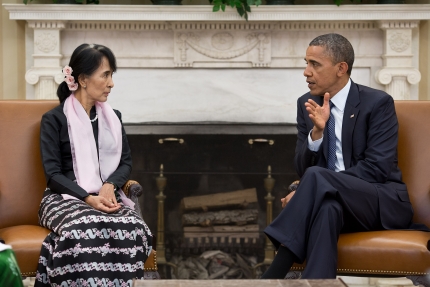
Close Transcript

The White House

Office of the Press Secretary

White House Releases New Travel and Tourism Progress Report

Report Highlights Progress Made Since President Obama Signed Tourism Executive Order

WASHINGTON, DC – Earlier this year, President Obama issued an Executive Order on travel and tourism that directed federal agencies to aggressively expand the nation’s ability to attract and welcome visitors, while maintaining the highest standards of security.  Today, the White House is releasing a progress report from the Departments of State and Homeland Security that outlines the activities underway to meet the President’s goal of boosting the travel and tourism industry in the United States.  This report discusses the steps taken to achieve the President’s visa and foreign visitor processing goals and the current progress of these and other measures to significantly bolster international travel and tourism.

The U.S. tourism and travel industry is a substantial component of U.S. GDP and employment, contributing $1.4 trillion in economic activity and 7.5 million jobs in 2011.  The travel and tourism industry projects that more than 1 million American jobs could be created over the next decade if the U.S. increased its share of the international travel market.  The Obama Administration is implementing important steps, as outlined in the National Travel and Tourism Strategy, to bolster job creation through a range of activities to better promote the United States as a tourism destination and make it easier for legitimate foreign travelers to spend their money in the United States, while enhancing our ability to protect Americans from national security threats.

“Every year, tens of millions of tourists come from all over the world to visit America.  That’s good for business, it’s good for the economy, and it’s good for our country,” said President Obama.  “That’s why, back in January, I announced new initiatives to bolster tourism and promote everything America has to offer and make it even easier for tourists to come and visit, without sacrificing our Nation’s security.  I’m glad we’re making progress and I’ll continue to do whatever I can to strengthen the travel and tourism industry and create an economy that’s built to last.”

According to the U.S. Department of Commerce, international travel resulted in $153 billion in U.S. exports in 2011, an 8.1 percent increase from 2010, and is the nation’s largest service export industry.  This positive trend has continued throughout 2012 with international tourists spending $13.7 billion in the United States in July 2012 alone, up $350 million or 3 percent from the same month the previous year, and travel and tourism-related exports increasing, on average, more than $1.1 billion a month during the first seven months of 2012.  According to the travel industry and Bureau of Economic Analysis, international travel is particularly important as overseas or “long-haul” travelers spend on average $4,000 per visit, which in turn supports and leads to additional travel and tourism-related jobs.

Canada and Mexico remain our greatest sources of international visitors, with Consular officers at State’s ten visa-issuing posts in Mexico adjudicating more than 1,577,529 visas and border crossing cards from January through August 2012, an increase of almost 33 percent from the same time period in the previous year.  The Department of State passed a 1 million visa milestone not only in Mexico, but also in China, and, just last month, Brazil.

In addition to the Executive Order Progress Report, the White House announced a travel and tourism “Listening Tour.”  Administration and Cabinet officials will travel to various cities across the country to discuss the importance of increasing travel and tourism with state and local officials, small business owners, and key stakeholder organizations.  Additional details about the travel and tourism “Listening Tour” will be released as they become available.

Key Highlights from the Executive Order Progress Report:

Visa Processing Capacity Up, Wait Times Down

• Exceeding the President’s interview wait time goal – 88 percent of applicants worldwide are interviewed within three weeks of submitting their applications.  In key markets such as China, Consular officers are keeping interview wait times to an average of five days in 2012 while managing a year-on-year 37 percent increase in visa demand.  Consular officers in Brazil have brought wait times down by 98 percent, from a high of 140 days in São Paulo, to just two days right now, while also managing a 37 percent jump in year-on-year demand.

• Streamlining Processing to Save Time without Sacrificing National Security:  A pilot program that allows consular officers to waive in-person interviews for certain nonimmigrant visa renewal applicants is operational at 52 visa processing posts in 28 countries.  Consular officers have waived interviews for more than 120,000 low-risk visa applicants.

• Expanding Facilities:  The State Department is investing millions of dollars to upgrade and expand its existing consular facilities.  In China, State will open a new consulate building in Guangzhou in Fiscal Year (FY) 2013, a consular section in Wuhan in FY 2014, and new consulates in Belo Horizonte and Porto Alegre will open in Brazil by 2014.  These investments in infrastructure will increase visa processing capacity in Brazil by 140 percent and in China by 120 percent over 2011 levels.  In Mexico, State continues to invest in new facilities, with new buildings opening in Monterrey in 2014, and DHS is using new technology extensively at the border to dramatically reduce wait times. 

• Staffing Increases:  By the end of 2012, the State Department will have created more than 50 new visa adjudicator positions in China and 60 in Brazil, including 43 hired under an innovative staffing program.  With these staff increases, State met the Executive Order’s 40 percent capacity increase target in Brazil in June 2012, and will meet the target in China by December 2012. 

Visa Waiver Program Expansion Continues

• The Department of Homeland Security is currently evaluating Taiwan for Visa Waiver Program (VWP) designation following its nomination by State.  Meanwhile, DHS is working with other Federal government agencies to increase the number of travelers from VWP countries.  The Administration actively supports bipartisan legislation that would give DHS broader authority to expand the VWP while enhancing the program’s already strong security standards.  DHS is also proactively working with partner countries that are currently ineligible for the VWP but willing to complete a number of prerequisites for potential designation, for example the agreements to share information on individuals who may pose a threat to the security or welfare of the United States.

1.5 Million People Now Enrolled in Trusted Traveler or Expedited Screening Programs

 Expanding CBP’s Global Entry and TSA Pre✓™:  The CBP Trusted Traveler programs and TSA Pre✓™ program both facilitate travel for air passengers.  Global Entry allows expedited clearance for pre-approved, low-risk air travelers upon arrival in the United States; TSA Pre✓™ is an expedited screening program at certain U.S. airports.
o More than 1.5 million people, including over 325,000 new members this year, have access to CBP Trusted Traveler Programs.  DHS processed 500,000 more Global Entry passengers in 2012, compared to the same time in 2011.  South Korea joined the Global Entry program on June 12, 2012.  Global Entry is now available at 40 airports.
o As of the beginning of August 2012, over 2 million U.S. passengers received TSA Pre✓™ expedited screening at 23 participating domestic airports in partnership with Alaska, American, Delta, and United Airlines and US Airways.  TSA expects to bring TSA Pre✓™ to a total of 35 domestic airports, encompassing 51 checkpoints, by the end of 2012.  US Citizen members of CBP’s Trusted Traveler programs are eligible for TSA Pre✓™.

• Facilitating More Efficient and Secure Travel at the Border:  Membership in the joint US-Canadian Trusted Traveler program, NEXUS, at pre-clearance airports, land border, and seaport crossings between the United States and Canada is up 16.4 percent in FY 2012, and DHS is working with Canadian authorities to expand NEXUS facilities and membership.  Membership in the SENTRI program on the southern border is up 8.8 percent in FY 2012.  NEXUS and SENTRI travelers are respectively processed 58 and 63 percent faster than travelers through general lanes at land borders.

Improving the Traveler’s Experience

• Focusing on Customer Service:  A recent survey of travelers at airports in the Model Ports program – located at 20 airports representing 73 percent of international aviation travelers at ports of entry – indicates that 90 percent of travelers agree that DHS's U.S. Customs and Border Protection (CBP) officers are welcoming and provide the right information at the right time in a hospitable manner.  CBP port directors identify peak processing periods well in advance based on historical data and real time operational information provided by carriers and airport authorities.  CBP uses this data to optimize staffing at Ports of Entry to minimize travelers’ wait times.

• Enhancing Checkpoint Efficiency:  More efficient domestic airport checkpoints benefit international travelers flying within and returning from the United States.  In 2011, over 99% of federalized airports’ checkpoint operational hours maintained wait times of less than 20 minutes.

• Expediting Baggage Movement:  Under the Beyond the Border initiative with Canada, eight Canadian preclearance airports (Calgary, Edmonton, Halifax, Montréal, Ottawa, Toronto, Vancouver, and Winnipeg) are upgrading their checked baggage security equipment to conform to Transportation Security Administration (TSA) standards.  As a result, baggage for passengers from these airports who are connecting to other flights in the United States will not have to be rescreened. 

Explaining the Visa and Port of Entry Process

• State has released the video:  Visit America:  It’s Easier than you Think, which offers straightforward information about the visa process.

• DHS has, with assistance from Disney, created the video, Welcome to America, Simple as 1-2-3, which clearly and simply explains port of entry procedures for visitors and is seen by over 25 million people each year.

Building Partnerships

• State and DHS are working with travel and tourism industry stakeholders to advance the shared goal of attracting international visitors to the United States.  For example:
Disney:  Industrial engineers from Disney Worldwide Services, Inc. are donating their time and expertise to evaluate consular sections in Brazil and China, where they will suggest improvements for queue management and other ways to improve the applicant experience. 
American Express:  American Express and United Airlines now reimburse top-tier customers for Global Entry application fee.  As of June 30, 2012, American Express has reimbursed nearly 90,000 Global Entry applications fees.