FLOTUS Travel Journal: Empowering Girls Through Education

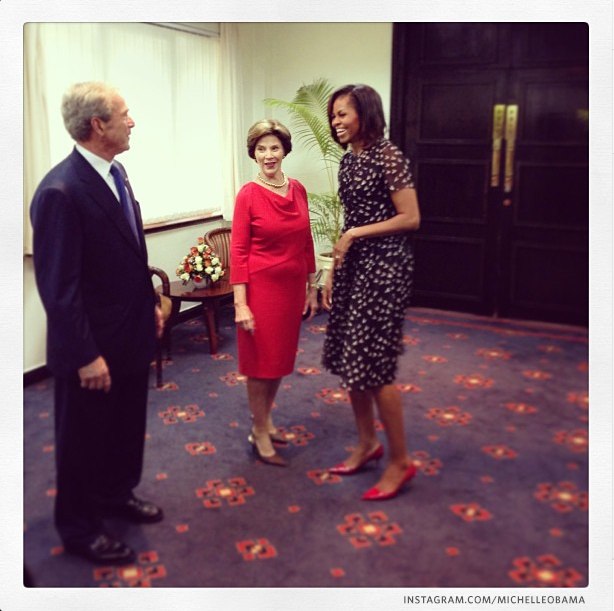
Today, I had the pleasure and honor of ending our trip by attending an African First Ladies Summit entitled “Investing in Women: Strengthening Africa” which was co-sponsored by our former First Lady, Mrs. Laura Bush.  There are so few people in the world who know what it feels like to be married to the President of the United States, and Mrs. Bush has been so incredibly kind and welcoming to me and my family over the years.  So I was thrilled to have the chance to see her and her husband, President Bush, and to attend this very important event.

Upon arrival, I got to meet First Ladies from countries all across Africa who came here to Tanzania for this summit.  These women are doing extraordinary work in their home countries – from raising awareness about HIV/AIDS, to fighting violence against women, to working to end child hunger – and it was inspiring to learn about the difference they are making across this continent. 

I then had a lively discussion with Mrs. Bush about the impact that First Ladies can have on the important issues this conference is focused on: women’s health, women’s economic empowerment, and education for women and girls.  This last issue is particularly near and dear to my heart and has been part of my focus throughout this trip.

The fact is that too often, in developing countries, girls simply don’t get the chance to attend school.  In some parts of Africa, fewer than 20% of girls ever attend high school.

There are many reasons for this education gender gap.  Sometimes, girls’ families simply can’t afford the costs of sending them to school (for things like school fees, uniforms, or school supplies).  Or if parents don’t have enough money to send all their children to school, they’ll send their sons instead of their daughters.  In some parts of the world, girls are expected to get married when they’re very young – when they’re teenagers or even younger – or they have to work to help support their families, so they can’t go to school.  And in some places, a girl may have to walk many miles to attend the nearest school, and it may not be safe for her to do that by herself.

The White House

Office of the First Lady

Remarks by First Lady Michelle Obama and First Lady Laura Bush in a Conversation at the African First Ladies Summit

Serena Hotel
Dar es Salaam, Tanzania

9:56 A.M. SAT
 
MS. ROBERTS:  What a great occasion, and what a tremendous honor for me to be here.  Thank you so very, very much for inviting me to come to Tanzania.  And thank you, Mrs. Kikwete, for hosting this.  This is very -- it's important to do.
 
President Obama said in South Africa on Sunday, quoting the best possible source -- his mother -- (laughter) -- he said that you can measure how well a country does by how it treats its women.  And, of course, President Obama's mother said that long before we had the data -- and we now have tons and tons of data to show that the single two biggest factors in development are the education of girls and the economic empowerment of women. 
 
And for all the reasons that you've just delineated, Mrs. Bush -- the importance of the education of girls and the empowerment of women.  So my hat's off to all of you, and especially the first ladies of Africa -- who are wearing wonderful hats, by the way -- because you work on these issues every day in your countries, pushing and prodding the powers that be -- and yes, your husbands -- to do the right things; to help your countries by helping the women and girls in your countries.  So congratulations to you.
 
And this is a session where we are going to have some congratulations and also some learning.  And in that spirit, I was going to start by saying, why can't the guys get together like this, but now they are getting together.  (Laughter.)  They're getting together this morning; I think they've probably taken their example from you.
 
MRS. OBAMA:  They're learning from us as women.  (Laughter.) 
 
MS. ROBERTS:  Exactly.  But you know, this question of "First Lady" has always been somewhat fraught.  You quoted Mrs. Johnson, Mrs. Bush, but it really -- particularly, I know in the United States, Americans have always been a little bit wary about first ladies -- they're not elected, and they can't be fired -- (laughter) -- and they have a whole lot of power.  But it can also be a little confining, I think is a fair way to put it. 
 
Martha Washington, our first First Lady, wrote in the first year that she was First Lady, she wrote to her niece that she felt like a "Chief State Prisoner."  (Laughter.)  But she was able to do good -- she lobbied for all of those veterans that she had been to camp with through the Revolutionary War.  And people don’t realize that first ladies have been doing that kind of thing from Martha Washington --
 
MRS. OBAMA:  Absolutely.
 
MS. ROBERTS:  And, Mrs. Obama, you talked about -- you've talked about, wherever you go, there's a light that shines, and that you're able to shine that light on something that needs attention that wouldn’t otherwise get it.  Talk about that a little bit. 
 
MRS. OBAMA:  That’s absolutely true. I always joke that we have probably the best jobs in the world because, unlike our husbands who have to react and respond to crisis on a minute-by-minute basis -- they come into office with a wonderful, profound agenda, and then they're faced with the reality.  (Laughter.) 
 
On the other hand, we get to work on what we're passionate about.  And I think that that’s something that I would encourage all first ladies to never lose sight of.  You have an opportunity to speak to your passions and to really design and be very strategic about the issues you care most about.  And I just found it just a very freeing and liberating opportunity.
 
MS. ROBERTS:  No state prisoner?  (Laughter.)
 
MRS. OBAMA:  No, there are prison elements to it.  (Laughter.)  But it's a really nice prison, so --
 
MRS. BUSH:  But with a chef.  (Laughter.) 
 
MRS. OBAMA:  You can't complain.  But there is definitely elements that are confining. 
 
MS. ROBERTS:  And she said that before tweeting and cell phones. 
 
MRS. OBAMA:  That’s right, 24-hour media. 
 
MS. ROBERTS:  And she could cover her hair with that cap.  (Laughter.) 
 
MRS. OBAMA:  Right.  But being able to pursue our passions and do things that not only help our country and connect us with the rest of the world, it's a great privilege.  So while people are sort of sorting through our shoes and our hair -- (laughter) -- whether we cut it or not --
 
MRS. BUSH:  Whether we have bangs.
 
MRS. OBAMA:  Whether we have bangs.  (Laughter.)  Who would have thought?  I didn’t call that one.  (Laughter.) 
 
MRS. BUSH:  I said that just because our daughter, Barbara, cut bangs at the same time Michelle did.  They commiserated --
 
MRS. OBAMA:  I was doing what Barbara was doing.  (Laughter.)  I was just following her lead.  But we take our bangs and we stand in front of important things that the world needs to see.  And eventually, people stop looking at the bangs and they start looking at what we're standing in front of.
 
MRS. BUSH:  We hope.
 
MRS. OBAMA:  They do, and that’s the power of our roles.
 
MS. ROBERTS:  Mrs. Bush, you quoted, again, Lady Bird Johnson, talking about, I have a podium and I'm going to use it.  But it's a unique role, and there must be a learning curve.  And I remember as you were leaving the White House, you said that at first you were "dense" -- (laughter) -- about how hard it was; how the role is really not something that you understood the power of. 
 
MRS. BUSH:  Well, and I should have understood it, because I had a mother-in-law who was a First Lady.  I had watched her, of course, the whole time she served in public office with her husband, my father-in-law, President Bush.  And so, I really had an advantage that -- the only other First Lady that’s had this advantage was Louisa Adams, whose mother-in-law had been first lady as well.
 
So I really did come to the White House knowing a lot about the White House and knowing where things were, and we even knew the staff -- the butlers and the ushers -- because we had stayed there so often with President Bush and Barbara.  But what I didn’t really understand was how people would listen to the First Lady. 
 
And right after attacks of September 11th when -- I gave the presidential radio address to talk about women in Afghanistan.  And right after that, I was in a department store with my daughter, Jenna -- she was a freshman in college and I was in Austin seeing her -- and we want to a department store.  And the women who sold cosmetics at the department store said, thank you so much, Ms. Bush, thank you for speaking for the women in Afghanistan.  And that was the first time it really occurred to me that people really did hear me, and that I really did have that podium that Lady Bird Johnson knew about and had told us about. 
 
And so, I want to encourage every first lady to speak out and speak up and let people know, because people are watching and they are listening.  And you can be so constructive for your country if you speak up about issues that you think are important.
 
MS. ROBERTS:  Did you have an experience like that?
 
MRS. OBAMA:  Absolutely, but I just want to take a moment to commend Mrs. Bush, because she and her staff helped my team with that transition.  And that’s a powerful lesson for other leaders, is that there's a lot of give and take when you're campaigning, but when the dust settles, we are all in this together.  And Laura has been just so helpful.  Her Chief of Staff, Anita McBride, and many of the team members left notes for my staff.  My chief of staff calls Anita on a regular basis -- (laughter) -- I think it's daily or weekly or something like that.
 
But having your predecessors be people who are willing to extend themselves on behalf of the country, to help with that transition makes the world of difference.  But nothing prepares you.  (Laughter.)  Nothing prepares you for this role.  I mean, it is so startling that the transition of power in the United States happens so quickly that you don’t have access to the house until the President takes the oath of office.
 
So, literally --
 
MRS. BUSH:  During the inaugural parade -- one family moves out and the next family moves in.  (Laughter.) 
 
MRS. OBAMA:  Literally.  And I remember walking into that house and I didn’t even know where the bathrooms were.  (Laughter.)  But I had to get ready for a ball.  (Laughter.)  It was like, and I've got to look nice?  It's like, what door is this, and you're opening up all these doors, and you can't find your toothpaste, you don’t know where your kids are.  (Laughter.)  So that’s day one. 
 
MRS. BUSH:  Exactly. 
 
MS. ROBERTS:  That’s a daunting experience.  One of the things -- we did ask the first ladies of Africa if they wanted to submit some questions, and one of the things that was true throughout the questions was the sense of continuity; that -- was there a way to keep your efforts going after the spotlight does go away.  Now, Mrs. Bush, is this one of your ways of doing that?
 
MRS. BUSH:  Yes, this is.  But for George and me, through the Bush Institute, we're able to focus on four areas that were so important to us when George was President. 
 
When you are President, every issue comes to the desk of the President of the United States.  First ladies have it a little bit easier because we can choose specific issues to focus on, but now that we're home, through the Bush Institute -- the policy institute that’s part of our Bush Presidential Center at SMU -- we are able to continue to work on issues that were important to us.
 
MS. ROBERTS:  And you said, Mrs. Obama, that you want your issues to have a lasting effect, so how do you do that?
 
MRS. OBAMA:  Four to eight years is really a blink of an eye.  And you often find that you're just starting to get your teeth into your issues, and then it's time to go.  But none of the issues --
 
MS. ROBERTS:  -- your children.
 
MRS. OBAMA:  That’s true, that’s true.  (Laughter.)  That’s absolutely true.  But none of the work that we do and any of us does will be concluded at the end of a term.  I tell the young people that I work with around health, the military families that I support, that for me, these issues are -- I say a forever proposition.
 
This isn't work that I'm just doing
 
(Audio drops out.)
 
MRS. OBAMA:  -- that I find in this position that there are girls around the world who are looking to us and how we behave and how we carry on our issues.  And they're going to be watching us for decades to come.
 
MS. ROBERTS:  There's that prisoner thing again.
 
MRS. OBAMA:  There it is.  (Laughter.)  Keeps coming --
 
MRS. BUSH:  But there are things that you could establish, like the National Book Festival that I started.  I'm the librarian, and so it was a very obvious sort of thing for me to start.  I started a Texas book festival in Dallas -- I mean, in Austin, when George was governor, and then started one that the Library of Congress now runs.  And so it continues to go on.
 
But Michelle's right -- we'll never finish with education.  We'll never get to rub our hands together and say, oh, we took care of that.  There will be another little class of kindergartners.  And it's something we'll always work on.
 
MS. ROBERTS:  Well, again, it's like child-raising.  Yes, it's like child-raising. 
 
MRS. BUSH:  Exactly -- it's never over. 
 
MS. ROBERTS:  But, Mrs. Bush, you all talked about the -- agenda and it gets disrupted, but your agenda got disrupted too.  And you were on Capitol Hill about to testify before Ted Kennedy's committee about education when September 11th --
 
MRS. BUSH:  That’s right.  I mean, of course, things happen that you don’t expect, like what happened to us in the United States on September 11th.  And the National Book Festival that I founded, it -- just then the weekend before -- the Saturday before that, September 8th.  And then I was scheduled -- in fact, I went onto Capitol Hill on the morning of September 11th because I was going to brief the Senate Education Committee on a summit that I had hosted that summer on early childhood education, and got to the Capitol and joined Senator Kennedy in his office then as we watched on television and started to see the towers fall.  And we knew -- he knew and I knew -- that everything had changed for us and for our country, really. 
 
And that’s what happens to presidents also; those kinds of issues come up that you don’t expect, and it changes your whole focus.  In fact, in our new presidential museum, the very first part of it is everything that we thought we would be working on -- tax cuts, the book festival, the faith-based and community service projects, tee ball on the South Lawn of the White House -- (laughter) -- our first state dinner, which was with Mexico -- which is where we really expected to spend a lot of our time in the Americas because we were from a border state -- and then September 11th --
 
MS. ROBERTS:  And that’s how you got involved with the women of Afghanistan.
 
MRS. BUSH:  That’s right. 
 
MS. ROBERTS:  One of the questions that has come in from the South African -- or from the African first ladies refers to both of you as the mothers of girls -- and you are now the grandmother of a girl.
 
MRS. BUSH:  That’s right, the grandmother of another girl -- baby Margaret Laura.  (Applause.) 
 
MS. ROBERTS:  And the question of the education of girls -- and you, of course, know how important it is in your own lives, but as I alluded to earlier, one of the things we now have just so much data on is that if you educate a girl, you can save a country.  And the first ladies here are saying, what can you do to work with them globally for the education of girls?
 
MRS. BUSH:  Well, we both obviously spend a lot of time on education, especially the education of girls.  But the fact is, in the United States, now more girls are graduating from high school than boys.  And more girls are in college and more girls are in masters programs -- women are -- than boys.  And that --
 
(Audio interruption.)
 
MRS. OBAMA:  -- Mandela's most important quote of the millions of things he has said is that education is probably the most powerful weapon for change.  But a lot of our kids don’t understand that.  In the United States, many of them take it for granted.  Many of them have a mindset that they can't do it because they've been grown up to be taught that they can't.
 
So there's a large part of my initiative that’s really trying to get into the heads of these young people and use my story as an example of what -- the power of education.  And I tell kids all across the country, I want them to look at me not as the First Lady, but as one of them. 
 
I was a girl who grew up on the South Side of Chicago, my parents didn’t have much money, but they invested in my education.  And they invested in my education as equally as they did my brother; there was no different bar.  And as a result of that training and preparation, I have had opportunities and I am sitting here now as First Lady of the United States of America because of education.  (Applause.) 
 
MS. ROBERTS:  It was -- one of the things that the PEPFAR program is doing is not just reaching -- not just treating people -- which is, of course, wonderful -- but getting to the orphans and vulnerable children.  I was in -- Ethiopia with Save The Children where this 13-year-old girl that had been through our program stood up and started talking about what was needed in the community, and then the local minister from that region told her she was crazy and she just stood right back up and just went -- and I -- you go, girl.  And that really does make a difference in the future.
 
MRS. BUSH:  Well, it is important to reach parents as well.  So the parents know that they need to make sure their children are educated -- in whatever way they can. 
 
We know from research that mothers who can bring in a little bit of money, they're more likely to spend their money on their fees for their children's education and on their uniforms and others things they need to go to school.  So all of it really works together -- the economic empowerment as well as just the understanding of how important education is. 
 
MRS. OBAMA:  And I just want to take a moment to recognize Mama Kikwete's work educating female orphans here, the school she has started.  (Applause.)  I got an opportunity to sit with some of the children and watch a cultural program.  But there are so many young girls that don’t have families, they don’t have role models.  And as Mama Kikwete understands, they need a safe place to land, a place where they can get food and shelter and love and direction. 
 
So I applaud Mama Kikwete and all the first ladies who are providing that kind of safe harbor for our young girls.  So, congratulations.  (Applause.)
 
MS. ROBERTS:  Well, you talk about the role models, and you talked about yourselves as role models, but, Mrs. Bush, you said at one point, I think that our first ladies are a lot more complicated than they get treated in the media.  I suspect every first lady here would agree with that.  Why do you think that is?  Why do you think that it's always those sort of --
 
MRS. BUSH:  Well, I think -- in the United States, it has a lot to do with the way you look.  That’s a lot of the discussion about women.  That’s a problem everywhere in the United States -- for girls as well.  The way you look -- girls worry about all sorts of problems that they shouldn’t have to worry about.  They should be worried about what they're doing and how they're being educated instead of whether they look pretty or they look sexy.  (Applause.)  
 
But that’s the way we treat women, sadly.  And it's obviously when you read in the press -- I mean, it's like talking about the bangs, or somebody writing about them, really -- worse -- the press writing about them.
 
MS. ROBERTS:  Do you think you get put in a box?
 
MRS. BUSH:  Yes, a little bit.
 
MRS. OBAMA:  Absolutely.  I constantly get asked, especially in the first term, are you more like Laura Bush, or are you more like Hillary Clinton?  And I'm like, is that it?  That’s all I -- (laughter) --
 
MRS. BUSH:  Exactly the problem -- everyone said -- reporters -- are you Hillary Clinton or Barbara Bush?  And I always just said, well, I think I'll be Laura Bush; I do Laura Bush pretty well, having grown up as her.  (Laughter.) 
 
MRS. OBAMA:  But this is also why it's important for us to make sure that more women use their voices and their power.  Because we know, as women, that we're not that complicated, but we are complex.  We are deep, diverse, enlightened people in the universe.  And the world will be better off when our voices are at the table. 
 
We just bring a different perspective.  We are mothers.  We are nurturers.  We have to juggle a lot.  I love my husband, but sometimes when he has, like, five things to do at one time, it's funny to watch it.  (Laughter.)  You don’t know where you jacket is right now -- (laughter) -- can't find that shoe, Mr. President.  (Laughter.)  It's a little --
 
MRS. BUSH:  I always think -- but they're good at focus. 
 
MRS. OBAMA:  Very focused.  Focus.  (Laughter.)  But I think that that’s the -- and we as women cannot underestimate the value of what we bring, and I think that’s what young girls are taught -- that their voices aren't important; be small, be quiet.
 
MRS. BUSH:  The way we look is more important --
 
MRS. OBAMA:  The way they look is more important --
 
MRS. BUSH:  -- than what they learn and say.
 
MRS. OBAMA:  And we are missing 50 percent of the intellect that could go -- and needs to go to -- that’s true.  But I want to keep it fair.  I don’t want the men to feel too --
 
MS. ROBERTS:  Left out.
 
MRS. OBAMA:  -- lesser.
 
MS. ROBERTS:  You know, you talked -- just briefly mentioned the campaign trail.  And of course, both of you spent a great deal of time on the campaign trail, and wives -- and it has been wives so far -- are sort of in the role of validators, character witnesses for their husbands on the trail.  But then you get to the White House and you have another role, which seemed to me to be incredibly difficult, which is that sometimes you have to be the only truth teller. 
 
Now, this is true of all spouses to some degree, but when I have to tell my husband the truth, there's not his political future or the peace of the world riding on it. 
 
MRS. OBAMA:  It's just "that tie looks bad."  (Laughter.) 
 
MS. ROBERTS:  So how do you deal with sometimes being the only person who can tell your husband the truth?
 
MRS. BUSH:  Well, I have that famous story -- I think I told it to the first ladies last year in New York -- about how Barbara Bush, my mother-in-law, said, don’t criticize George's speeches -- (laughter) -- because she criticized her George's speech and he came home for weeks afterwards with letters saying it was the best speech he'd ever given.  (Laughter.) 
 
So I took her advice -- this was years ago when George was running for Congress -- and we were driving into our driveway after a campaign event in another town.  We were just driving up, and he said, how was my speech?  And I said, well, it wasn't really very good, and he drove into the garage wall.  (Laughter and applause.) 
 
But I think you have to be really careful, actually -- (laughter) -- with -- tells him the truth.  Actually, the President --
 
(Audio interruption.)
 
END
10:24 A.M. SAT

FLOTUS Travel Journal: Baba wa Watoto

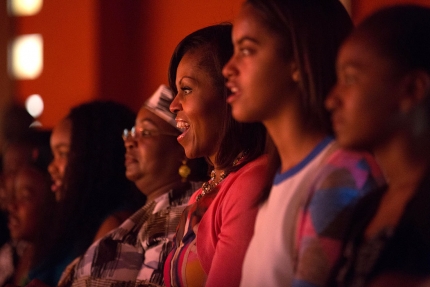
First Lady Michelle Obama and Salma Kikwete, along with daughters Malia and Sasha, watch the Baba Watoto performance

First Lady Michelle Obama and Salma Kikwete, along with daughters Malia and Sasha, watch the Baba Watoto performance at the National Museum in Dar es Salaam, Tanzania, July 1, 2013. (Official White House Photo by Chuck Kennedy)

I just watched the most extraordinary group of young people sing, dance and perform gravity-defying acrobatic feats – and they did it all with rhythm, style and grace! 

These kids are part of the Baba wa Watoto (which is Swahili for “father of children”) Center, an amazing community organization that gives kids the opportunities they need to succeed in school and in life. Many of you might participate in programs like this – such as Girl Scouts or 4H or the Boys and Girls Club – in your own communities, so you know what a difference they can make. Like these programs, Babawatoto teaches kids about the power of hard work, discipline and leadership, skills they can apply to every part of their lives. And seeing the talent, energy and passion these kids brought to that stage today, I’m confident that they’ll be successful wherever their journeys take them.

Related Topics: 2013 FLOTUS Africa Trip

FLOTUS Travel Journal: A Warm Welcome to Tanzania

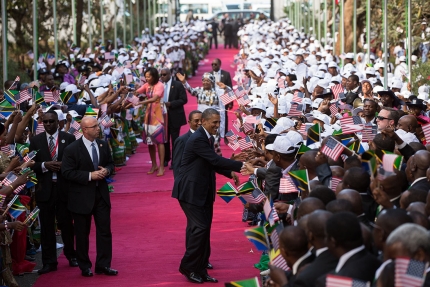
President Barack Obama and First Lady Michelle Obama shake hands as they arrive at the State House in Dar es Salaam, Tanzania

President Barack Obama and First Lady Michelle Obama shake hands as they arrive at the State House in Dar es Salaam, Tanzania, July 1, 2013. (Official White House Photo by Pete Souza)

When we stepped off the plane in Tanzania today, we received a welcome that warmed our hearts and made us feel right at home. We were greeted by the President of Tanzania, President Jakaya Kikwete and his wife, Tanzania's First Lady, Mrs. Salma Kikwete. We then took part in an official arrival ceremony which included a military honor guard, the playing of the Tanzanian and American national anthems, and a magnificent dance and drumming performance with hundreds of dancers. And people lined the streets waving American and Tanzanian flags as we drove away.

Arrival ceremonies like this one are a vital part of diplomacy – they’re how countries and their leaders welcome each other and show their respect for each other. Here in the U.S., we have our own arrival ceremony for visiting leaders where we play their country’s national anthem as well as our own; we give them either a 21 or 19 gun salute (where members of our military fire guns into the air either 21 or 19 times as a show of respect); and both my husband and the foreign leader give brief speeches.

Later that evening, we host a special dinner where we honor our guests and do our best to make them feel at home here in the U.S. For example, we knew that President Calderon of Mexico was born in a region where the monarch butterflies migrate each spring. So when we held our Mexico State dinner, we had a butterfly theme for our decorations. 

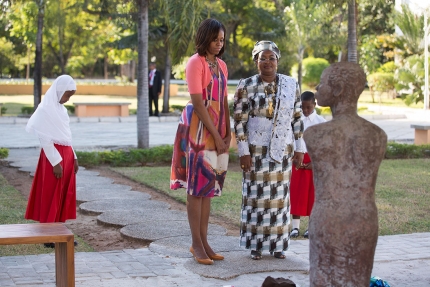
First Lady Michelle Obama and Salma Kikwete pause for a moment of silence

First Lady Michelle Obama and Salma Kikwete pause for a moment of silence while visiting the U.S. Embassy Bombing Memorial at the National Museum in Dar es Salaam, Tanzania, July 1, 2013. (Official White House Photo by Chuck Kennedy)

Raw Video: The First Lady's Instagram Backstage After the Connecting Continents Google+ Hangout

July 01, 2013 | 00:54 | Public Domain

First Lady Michelle Obama is joined by other participants backstage after the Connecting Continents Google+ Hangout in Johannesburg, South Africa for a group Instagram. Check out the First Lady's new Instagram account at http://www.instagram.com/michelleobama

Connecting Continents: A Conversation with U.S. First Lady Michelle Obama

July 01, 2013 | 57:52 | Public Domain

Connecting Continents: A Conversation with U.S. First Lady Michelle Obama.

Connecting Continents: Remarks by the First Lady Michelle Obama

July 01, 2013 | 17:27

First Lady Michelle Obama kicks off the Connecting Continents Google+ Hangout in Johannesburg, South Africa. June 29, 2013

FLOTUS Travel Journal: Robben Island, An Experience We Will Never Forget

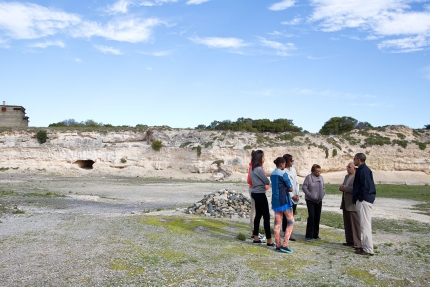
President Barack Obama and First Lady Michelle Obama, along with Leslie Robinson, daughters Malia and Sasha, and Marian Robinson, tour the Lime Quarry

President Barack Obama and First Lady Michelle Obama, along with Leslie Robinson, daughters Malia and Sasha, and Marian Robinson, tour the Lime Quarry on Robben Island in Cape Town, South Africa, June 30, 2013. Ahmed Kathrada, a former prisoner in Robben Island Prison, leads their tour. (Official White House Photo by Pete Souza)

Today, our family visited Robben Island for an experience we will never forget. Robben Island is located off the coast of South Africa, and from the 1960s through the 1990s, this Island housed a maximum security prison. Many of the prisoners there – including the guide for our visit, a man named Ahmed Mohamed Kathrada – were activists who worked to bring down Apartheid, the South African government’s policies that discriminated against people of color.  Under Apartheid, people of different races were separated in nearly every part of South African society.  They were forced to attend separate schools, live in separate neighborhoods, even swim at separate beaches – and in nearly every case, the neighborhoods, schools and other facilities for black people were much worse than the ones for white people. 

Among those imprisoned at Robben Island for fighting Apartheid were three men who went on to become President of South Africa: Nelson Mandela, Kgalema Motlanthe and the current president, Jacob Zuma.

So today, as we toured the island, I couldn’t help but think about how this place must have shaped these leaders.  Put yourself in their shoes – all they were doing was fighting to ensure that people in South Africa would be treated equally, no matter what the color of their skin.  And for that, they wound up confined on this remote island, far removed from the world they so desperately hoped to change. 

Related Topics: 2013 FLOTUS Africa Trip

The White House

Office of the First Lady

Remarks by the First Lady at Connecting Continents Event

Sci-Bono Discovery Center Johannesburg, South Africa

3:50 P.M. SAST

MRS. OBAMA:  Thank you.  (Applause.)  Thank you so much.  It is such a pleasure to be here today for this conversation with young people here in South Africa and across America.  Let me tell you, I am so excited to listen to you and learn from you.  And I'm especially excited for all of you to learn from each other.

But before we begin, I have to just take a moment to say that our thoughts and prayers are very much with President Mandela, and we will continue to hold him and his family in our hearts. 

Now, I want to start by thanking Sizwe for that very kind introduction and for moderating today's discussion.  I'm thrilled that he could be part of this event, and it's wonderful to meet you. 

But most of all, I want to thank all of you for joining us here in South Africa and from across the United States of America.  As you know, my husband has come here to Africa this week to meet with leaders across this continent about some of the most important issues we face -- from ending poverty and hunger, to curing disease, to creating jobs in our global economy. 

And that’s really why I wanted to meet with young people like all of you today.  Because all of you are such a vital part of that very conversation, because in the coming years, all of you will be building the businesses, you'll be making the discoveries and drafting the laws and policies that will move our countries and our world forward for decades to come.

So now, more than ever before, we need you guys to step up as leaders.  We need you to be engaged in the pressing challenges of our time -- truly.  Because the fact is that both here in South Africa and in the United States, our journeys have always been led by young people just like you. 

Think back to the histories of our two countries -- the anti-Apartheid movement here in South Africa is a perfect example.  Decades ago, under a set of laws called Apartheid, people of different races were separated in just about every aspect of their lives -- from the neighborhoods where they lived to the beaches where they swam, black students and white students even had to attend separate schools, and the schools for black students were generally much worse.

Now, over time, understandably, young people grew more and more frustrated with this kind of segregation and inequality.  And 37 years ago this month, a group of students right here in Johannesburg in a township called Soweto --

AUDIENCE MEMBER:  Woo hoo!

MRS. OBAMA:  -- yes, indeed -- (laughter) -- planned a peaceful march.  They were protesting a new law requiring their classes to be taught in Afrikaans, a language which neither they nor many of their teachers spoke.  Thousands of young people took to the streets, and before long the police arrived, firing tear gas and bullets. 

Many people were killed, including children as young as 13 years old.  Folks all across South Africa were inspired by those students, and more and more people started speaking out against Apartheid, insisting that everyone in South Africa be treated equally no matter what the color of their skin. 

Now, young people played a similar role in the history of my country, the United States.  Back in the 1950s and 60s, thousands of students led marches and protests against unfair laws that said that black people and white people had to attend separate schools, drink from separate water fountains, and that black people had to sit at the back of public buses.  And when those laws were finally struck down, a small number of black children began attending the all-white schools, including nine young men and women who became the very first black students at an all-white school in Little Rock, Arkansas. 

These teenagers became known as the Little Rock Nine.  And when these nine young people showed up for their first day of class in September of 1957, they were met by an angry mob of people who didn’t think that black children and white children should go to school together.  The President at the time actually had to call in the military to protect these students.  And for months, the Little Rock Nine endured relentless abuse and discrimination from their classmates and their teachers.

But here's the thing -- they kept on showing up every day, paving the way for generations of young people to get the education they deserve.   See, those students in Little Rock and in Soweto were the exact same ages as many of you.  They came from families just like many of yours.  Their parents were maids and janitors and factory workers. 

So they weren’t rich, and they certainly weren’t powerful.  But these young people decided to face down bullets and beatings and abuse because they desperately wanted an education worthy of their potential.  They wanted the same things that so many of you want today –- they wanted a good education, they wanted to go to college, they wanted to get good jobs, they wanted to provide for families of their own.  And by taking a stand to change the course of their own lives, they changed the course of history.

And today, all these years later, so many of us are still benefitting from the sacrifices they made.  I know that I stand here today as First Lady of the United States of America -- and my husband is President -- because of those nine young men and women in Little Rock, Arkansas. 

So many of you here in South Africa have opportunities that your parents and grandparents never ever imagined for themselves.  But as we go about our lives today, it's so easy to take all of that progress for granted, so easy to get caught up in all the distractions that surround us –- what’s happening on those reality TV shows, who’s throwing the best party, who’s invited, who isn’t. 

I also know that many of you face real challenges in your lives.  Maybe your mom has lost her job, maybe your dad’s not around.  Maybe your school isn’t as good as it should be.  Maybe you have folks in your life who doubt that you have what it takes to succeed, who tell you that you’re not good enough or smart enough to achieve your dreams.  And let me tell you, I know a little bit about that, because that’s what happened to me.

See, when I was growing up, my family didn’t have much money.  Neither of my parents had the chance to go to college.  And let me tell you, there were plenty of people who doubted whether a girl with my background had what it took to succeed.  Plenty of folks urged me not to hope for too much, not to set my sights too high. 

See, but here's the thing -- I made a choice.  I decided not to listen to the doubters and the haters.  Instead, I decided to prove them wrong. 

So here's what I did -- I poured myself into my education.  I woke up early to study.  I stayed up late doing my homework.  And I made sure I had the grades I needed to get in the universities that I dreamed of attending.  And I kept on working until I got my law degree from one of the best universities in my country.  And let me tell you, those degrees were my ticket to all kinds of exciting opportunities -- jobs that let me pursue my passions and provide for my family, and give back to my community and my country.

So here’s what I learned from my own life experiences:  You might not control what family you come from.  You might not control what school you go to or how other people treat you.  But you can control whether you do your homework each night.  You can control whether you go to school every morning.  You can control whether you spend your free time hanging out on the streets, partying, playing video games, or instead, invest that energy in achieving academic excellence by studying for those exams and spending time in the library filling your minds with knowledge.

Now, your friends might not always support those choices.  You might get teased or bullied or ridiculed for choosing to focus on your education.  But like my mother, who is here, always told me, she said, it isn’t what people call you that matters, it’s what you answer to. 

So you can choose to answer to the peer pressure and just go along with what everyone else is doing, or you can answer to your own hopes and dreams, and start working to become whatever you want to be in this life.  

That’s what Siya Xuza did.  He grew up in the township of Mthatha, and his family certainly wasn’t wealthy.  But he studied hard in school, and as a teenager, he invented his own rocket fuel and won all kinds of awards.  And I got to meet Siya in South Africa two years ago, and I got to see him again today, and he just graduated from Harvard University in the United States where he’s been developing new energy technologies to power Africa and save our planet.   

And then there’s this other guy I know from the U.S.  He was the son of a single mother whose father left his family when he was just two years old.  And as a teenager, he didn’t always make the best decisions.  But then he got serious about his schoolwork.  He went to college and law school, became a civil rights lawyer, and a professor and a politician.  And today, you might know that guy as my husband, Barack Obama, the President of the United States.

You see, Siya and President Obama and so many others in South Africa and the United States, they are living proof of what the legendary South African President, Nelson Mandela, once said.  Mandela said, “Education is the most powerful weapon which you can use to change the world.”

Now, getting a good education won’t always be easy.  I know no matter how hard you try, let me tell you, you are going to make some mistakes -- you're going to make a lot of mistakes.  You’ll still have times when you feel lost and like no one understands what you’re going through. 

But I want you to remember this:  No one is born a rocket scientist.  No one is born as President of the United States or of South Africa.  No one is born being smart or successful.  You become smart and successful through hard work –- by doing those math problems, writing those papers; by getting things wrong, and then trying and trying again until you finally get them right. 

And if you get discouraged, if you ever think about giving up, I want you to think about those students in Little Rock and Soweto.  I want you to think about all the people throughout history who sacrificed so much for all of us. 

I want you to think of Carlotta Walls.  She was one of the Little Rock Nine, who said -- she said that no matter how bad things got -- and this was a quote -- she said, "I was not going to give up, because that way, they would’ve won, and I wasn't about to let that happen.” 

I want you to think about President Mandela, and how even though he spent 27 years of his life in prison, he never gave up on his dream of a more fair and equal and free South Africa.

So here's what I tell myself -- if President Mandela can endure being confined to a tiny cell, being forced to perform back-breaking labor, being separated from the people he loved most in the world, then surely, I and all of you can show up for school every day and do your homework every night.  If President Mandela can hold tight to his vision for this country’s future during all those years he faced in jail, then surely, you can hold on to your hopes for your own future; surely you can do everything in your power to seize the opportunities that he fought for.

That’s how I try to live my own life –- by honoring all those who sacrificed so much for me, from my dad all the way up to heroes like Madiba.  Every day, I do my best to make my life worthy of their sacrifice.

And you all have everything you need, right now, to do the same in your own lives.  You have everything.  You have a brain in your head.  You have passion in your heart.  And I know that if you’re willing to work for it and fight for it, you can be anything that you dream of. 

So today, I want to ask you all just to think about what barriers will you break down?  What legacy will you leave for the next generation?  Will you study the science so that you can cure cancer and AIDS and save our environment?  Are you going to study politics so that you can end poverty and violence and build good schools for every child in your country?  Will you study law so you can endure and ensure that decades from now, no one ever has to face discrimination because of what they look like or where they come from or who they love?       

The answers to these questions are up to you.  And that’s what we’re going to talk about today.  We’re going to talk about how you all can use your education to make history and build a better future in the years ahead.

Know this:  I'm already proud of you.  Know this:  The President is already proud of you.  The next step is yours. 

So I'm going to turn it back over to Sizwe so that we can get this conversation started.  How about it?  You all ready?  (Applause.)  All right.

END                4:06 P.M. SAST


# # #


FLOTUS Travel Journal: Connecting Continents

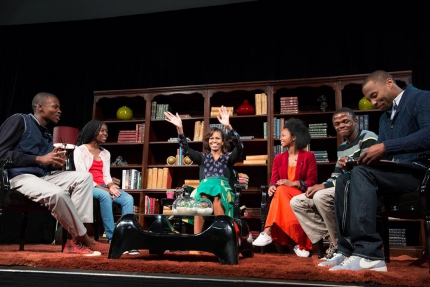
First Lady Michelle Obama participates in a Google+ Hangout on educatio

First Lady Michelle Obama participates in a Google+ Hangout on education at the Sci Bono Discovery Center in in Johannesburg, South Africa, June 29, 2013. (Official White House Photo by Chuck Kennedy)

Today, through the wonders of technology, we brought together students here in South Africa with students across the U.S. who joined us through a Google+ Hangout for a lively town hall about the importance of education.  Singer and songwriter John Legend – who’s passionate about improving education – joined us from Los Angeles.  And singer and actress, Victoria Justice – who works with an organization called Girl Up that empowers girls around the world – beamed in from Houston. 

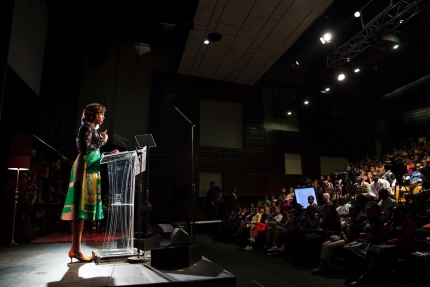
First Lady Michelle Obama delivers remarks during a Google + Hangout on education at the Sci Bono Discovery Center

First Lady Michelle Obama delivers remarks during a Google + Hangout on education at the Sci Bono Discovery Center in Johannesburg, South Africa, June 29, 2013. (Official White House Photo by Chuck Kennedy)