

Latest News
Finding Loving, Supportive, Permanent Homes for All Children
Posted by on December 13, 2011 at 6:39 PM ESTLast month, I had the privilege of participating in a Human Rights Campaign (HRC) event celebrating the close of National Adoption Month. HRC was celebrating the child welfare agencies that have taken steps to increase their pool of available resource and adoptive families by reaching out to prospective lesbian, gay, bisexual and transgender (LGBT) parents.
More than 100,000 children are in foster care waiting for loving, affirming, and supportive families. Trainings like HRC’s All Children-All Families initiative provide child welfare systems with the support and guidance they need to add LGBT-headed families to their pool of prospective permanent homes. And this work is the right thing to do at the right time.
I’m proud to be a part of an Administration that believes no child in foster care should be denied a permanent family simply because of the LGBT identity of the adults willing to provide it, or of the child seeking a new home.
Before I came to Washington, I worked extensively on child welfare issues, and saw first-hand that LGBT youth are frequently underserved. It was heartbreaking to see the struggles that they went through, to recognize that they were running from their placements much more often than their peers, living on the streets and becoming more vulnerable than they were when they came in the system.
And I can honestly say that for the amount of energy we put into getting better at meeting their needs, we probably didn’t make as much progress as we would have wanted. There were a lot of things that we tried that didn’t work. But we kept trying.
One thing that did work was reaching out to more LGBT parents to provide possible homes for these young people, so they could get the kind of support and affirmation that they desperately needed. And here at the Department of Health and Human Services’ Administration for Children and Families, we’re encouraging state child welfare agencies to look for ways to get better at doing this work.
In fact, in April of this year, I wrote to state child welfare agencies to encourage them to reach out to LGBT parents as possible placements for children in foster care, and described the ways we can provide help to those who want to get better at reaching those families. In that document, I also talked about another set of supports we have for child welfare agencies who want to get better at providing services to the LGBT youth in their care.
Learn more about Civil RightsWomen in STEM = American Economic Competitiveness
Posted by on December 13, 2011 at 1:30 PM EST
I am something of an accidental champion of women in STEM fields. In 2008 two young women in my AP Computer Science class applied for and won the National Center for Women & Information Technology's (NCWIT) award for "Aspirations in Computing." When they won the award, I presented it to them at our school's annual award ceremony and it was the only award given by my department to anyone. These two girls were both excellent students and naturally inclined to computer science in the first place, but they were also really interesting people and what you might call “cool”. The next year almost half of my AP class was girls, and again a girl in the class won the NCWIT award and I called her up on stage, alone, at the school's award ceremony. Since then I've never had a gender equity problem in class. Year after year many girls cite seeing those who came before them on stage as a big reason why they gave computer science a try.
As a teacher I have been really lucky to have outstanding female students who won this award, basically on their own, and who were able to influence other girls to try my class. However, once I had all these terrific girls in my classes, I was filled with dread that I would somehow screw it up. So, I began to look very deliberately at my courses to see if there were any differences between the boys and the girls, what they liked and what they didn't like. Quickly, my eyes were opened to the issues of both gender and racial equality that are crippling computer science, American education, and the nation's economic outlook as well. I don't really claim to have hard answers but I can tell you what I do in my classes, why I made some choices, and why I think these things work.
Our Challenge: Change the Culture, Support Women in STEM
Posted by on December 13, 2011 at 11:16 AM EST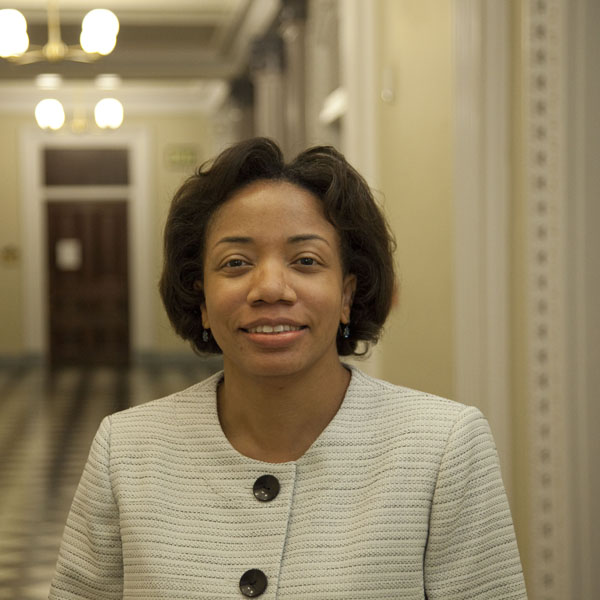
What are the words that describe my reaction to this Champion of Change award? Surprised. Excited. Humbled. Then, challenged.
Challenged because of the opportunity to further a conversation. Challenged to find answers to an important, national problem. Challenged, really, to ask the right questions.
Questions, after all, are what really spur the STEM practitioner.
In my professional life, I am always questioning. What’s really the problem? What’s the best approach? What’s the worst that can happen? In my professional life, I create “things”—medical devices, teams, plans.
In my “spare time,” I also create things. And, I hope that I have taken my best skills—and a small army of dedicated team members—to create something about which I am proud and passionate: We call it “Tech Savvy.”
"Tech Savvy" is a little hard for me to describe in a blog; I always start by giving descriptors for the event: Hundreds of middle school girls and their parents and teachers. Fun technology workshops where students type DNA, unearth fossils, and learn about polymers from gumdrops. Illuminating parent and teacher sessions. A (hopefully) cool theme. “Savvy skills” workshops including negotiation, interviewing skills, ethics. SAT prep for high school students. Mentoring opportunities.
Ensuring Equal Education and Employment Opportunities for All Citizens
Posted by on December 12, 2011 at 6:12 PM EST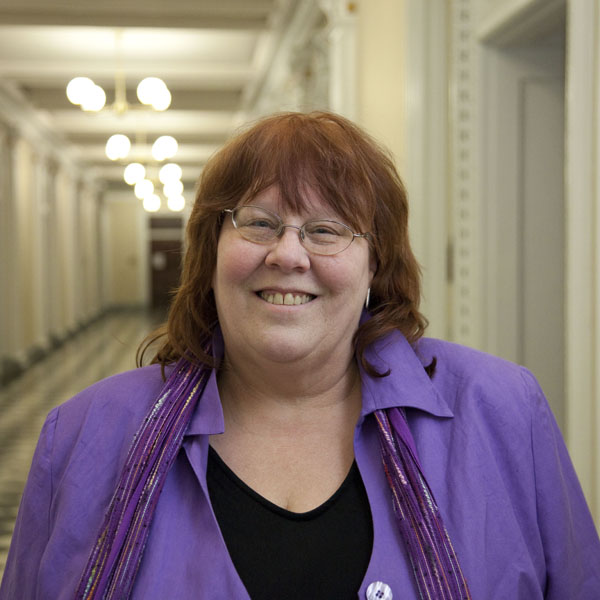
I am thrilled to be nominated for and recognized as a Champion of Change under President Obama’s Winning the Future Initiative. My work to inform and encourage girls (and other under-represented groups) to explore STEM courses, develop STEM skills, and prepare for STEM careers has occurred within the context of a long and fine tradition of ensuring equal education and employment opportunities for all citizens. I represent a network of state leaders created by Title IX of the Education Amendments of 1972, by Title IV of the Civil Rights Act of 1964, by the 1976 federal Vocational Education Act and subsequent Perkins Act reauthorizations working to eliminate sex role stereotyping, bias and discrimination from public school courses, programs and activities. Sadly, all federal policy and investment for these networks was eliminated by 1998.
Using Games and Digital Media to Engage Girls in Computing
Posted by on December 12, 2011 at 3:29 PM EST
Learning experiences outside of the classroom can be crucial in shaping young women’s interest in computer science-related courses and careers, as well as in providing them with a foundation of skills and knowledge that can facilitate their success in more formal education. Notably, video gaming figures prominently as a starting point for boys’ interest in computer science, though not for girls. Simply playing games is not the crucial factor, but having the opportunity to create new content for games, modify the underlying software code, and in the process gain an understanding of how computers work as well as a desire to learn more about them. Games become exemplars for the amazing things that can be done with a knowledge of computing. Gaming also seems to offer these boys a means of developing technology-oriented peer social networks, something that even more tech-oriented girls seem to lack. These networks are crucial for sharing knowledge, resources (such as hardware and software), and social reinforcement for an interest in computing.
Expanding our “If You See Something, Say Something™” Message to the Hispanic Community
Posted by on December 12, 2011 at 2:31 PM ESTEd. Note: Cross-posted from the Department of Homeland Security.
Today I joined law enforcement partners from the Hispanic American Police Command Officers Association, the National Latino Peace Officers Association, and the Washington, D.C. Metropolitan Police Department to launch our Spanish-language Public Service Announcements (PSAs) in support of the “If You See Something, Say Something™” campaign.
At DHS, we often say that homeland security begins with hometown security. It begins with our state and local law enforcement partners, businesses, communities, and individual citizens all working together to identify potential threats and report suspicious activity to the appropriate authorities.
Time and again, we have seen the value of public vigilance in thwarting terrorism and crime, including foiled plots against Times Square in May 2010, an MLK day parade route in Washington state last year, and more recently, the Fort Hood Army Base.
One way we have promoted the “If You See Something, Say Something™” campaign is by airing PSAs on television and radio encouraging individuals to report suspicious activity – a suspicious bag or package, someone who is acting in a suspicious manner, or a vehicle that seems out of place – to authorities.
Learn more about Homeland SecurityFor the Win: Reeling in Hope
Posted by on December 12, 2011 at 11:08 AM ESTFor the Win is a guest blog series featuring the remarkable initiatives that young Americans are advancing to win the future for their communities. Each week we highlight a new young person and learn about their inspiring work through their own words. Submit your story to appear in the For the Win guest blog series.
Jessica Markowitz, a junior at Garfield High School in Seattle, Wash., founded Richard's Rwanda-IMPUHWE, a nonprofit organization that helps girls in Rwanda receive the education they deserve, when she was 11 years old. Jessica was recognized as a 2011 Hasbro Community Action Hero, an award recognizing outstanding young service leaders presented by Hasbro in partnership with generationOn, the global youth enterprise of Points of Light.
Five years ago I founded Richard’s Rwanda-IMPUHWE, an organization dedicated to helping girls in Rwanda receive an education. The organization is creating a generation of leaders striving for a more equitable and educated world. We believe in empowering women through friendship and connecting cultures across the globe.
In 2006, my family hosted Richard Kananga, a Rwandan human rights advocate working with children whose lives were devastated by the genocide. As Richard spoke about the tragedy and the importance of rebuilding hope and forgiveness in the country, I was inspired and determined to find my own way to reach out to Rwandan girls my age. I began generating support from my local community, talking with fellow students and organizing bake sales and school supply drives.
I truly believe in letting our generation know we are the ones who need to make a change. I hope to increase awareness within our generation of global problems to amplify the message that we can take action to make the world a better place. As the future leaders of the world we are part of the solution. We face many pressing issues, and I feel an urgency to help motivate others. One of my responsibilities is to excite those who care about these issues to become lifetime activists. Community service becomes more meaningful if you serve with a purpose.

Jessica Markowitz (Photo courtesy of Points of Light Institute). (by Points of Light Institute)
Today, Richard’s Rwanda-IMPUHWE has expanded and now includes chapters in several Seattle high schools, on the east coast and in Rwanda as well! So far, Richard’s Rwanda-IMPUHWE has sponsored 40 girls in rural Rwanda, providing school uniforms, supplies, health insurance and covering the cost of school fees. The heart of the organization’s success is due to the engagement of the girls on a much more personal level.
Dignity For All: Reactions from LGBT and Human Rights Organizations
Posted by on December 9, 2011 at 2:30 PM ESTEarlier this week, President Barack Obama and Secretary of State Hillary Clinton articulated the first-ever U.S. Government strategy to direct all federal agencies engaged abroad to ensure that U.S. diplomacy and foreign assistance promote and protect the human rights of lesbian, gay, bisexual, and transgender persons.
These actions represent a continuation of the Obama Administration’s commitment to safety, justice, and equality for LGBT people everywhere. President Obama expressed this commitment earlier this year at the United Nations General Assembly, when he said “No country should deny people their rights because of who they love, which is why we must stand up for the rights of gays and lesbians everywhere.” And since January 2009, Secretary Clinton has strongly and consistently championed a comprehensive human rights agenda — one that specifically includes the protection of LGBT people.
In response to these developments, a number of organizations that advocate for LGBT rights and human rights issued statements praising the strong leadership of the President and Secretary of State. Here are just a few of those statements:
Joe Solmonese, President of the Human Rights Campaign
“The Obama Administration has made a tremendous difference in the lives of LGBT people in the United States and this new strategy helps to extend that presidential leadership across the globe. There is no question that the administration’s record of advancing equality for LGBT people has been enhanced by the leadership of Secretary Clinton who consistently underscores the simple truth that LGBT rights are human rights.”
Rea Carey, Executive Director of the National Gay and Lesbian Task Force
“The United States showed extraordinary global leadership today by affirming the dignity of lesbian, gay, bisexual and transgender people around the world. It is what we would hope for — and expect from — our country. The presidential memorandum is the first-ever U.S. government strategy dedicated to combating the abuse of LGBT people abroad. History is being made, but more importantly, lives will be improved and even saved. We applaud the president for this monumental step forward, and thank Secretary Clinton for taking to the world stage to send the unequivocal message that LGBT people everywhere should be able to live freely and with dignity.”
Learn more about Civil Rights
- &lsaquo previous
- …
- 178
- 179
- 180
- 181
- 182
- 183
- 184
- 185
- 186
- …
- next &rsaquo
Twitter