

Latest News
"Standing Together as a People of Faith"
Posted by on December 16, 2011 at 1:20 PM EST
I recently ate at Shady Maple, a restaurant in Lancaster, PA. On the wall I noticed a hand carved picture of a barn raising that brought back childhood memories. My grandfather took me to several barn raisings where I experienced a warm feeling of community, knowing that no matter when tragedy struck, one was not alone. A barn is critical to a farmer’s success and after the barn was raised, there was always a wonderful feast that celebrated the accomplishment and riches produced by the land.
In a sense, the Capital Area Food Bank is similar to a barn -- a community gathering place that provides the opportunity to collect and distribute food to those in need.
The Capital Area Food Bank is a critical hub that distributes food from two food distribution centers – one in Washington, D.C. and the other in Lorton, VA. This year we distributed 30 million pounds of food, including 15 million pounds of fresh produce, to our more than 700 partner agencies.
We help feed over 478,000 people annually who live in the Washington metro area. But there are well over 640,000 people here in the Washington area living on the edge and not able to make ends meet.
Learn more about , Poverty"Veterans Helping Veterans"
Posted by on December 16, 2011 at 11:10 AM EST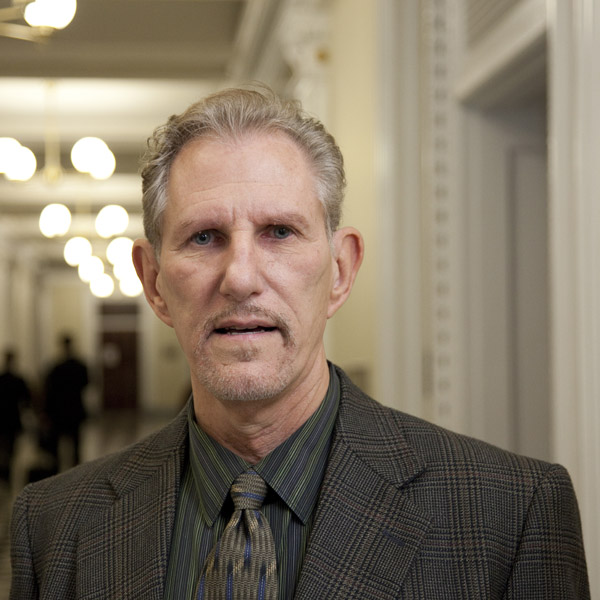
Madison Street Veterans Association began about three years ago with a group of homeless veterans living in an emergency shelter in Phoenix. The veterans decided that they should band together to improve the conditions in the shelter for themselves and any veterans who showed up in the shelter. What a difference they made! Reduction of violence, alcoholism, drug trafficking, and general improvement in order and hygiene in the shelter. It just proved what all of us already knew, that veterans will stick together, help each other out, look after each other, just like we did on active duty when we were serving our country.
Our motto, "Veterans Helping Veterans" guides us on the path to self-sufficiency and independence, but brings with it a sense of camaraderie and belonging. We understand each other, and are there for each other. When a veteran shows up with physical or other disabilities, we do what we can to make sure his or her needs are taken care of. We consider it an obligation and an honor to be able to provide whatever support is needed to another veteran.
Eighteen months ago, we opened our first transitional living facility for homeless veterans, MANA House (Marines, Army, Navy, Air Force). However, since we only have room for 51 veterans at any given point in time, we open up the facility twice a week to homeless veterans throughout the community to use our showers, laundry facilities, and get a bite to eat. We also take our van (donated by Disabled American Veterans) out to the alleyways, river bottoms, and desert to bring water, sleeping bags, blankets, hygiene kits, etc. to homeless veterans wherever they happen to congregate. Periodically we have barbeques and festivities and invite the whole veteran community, especially homeless vets from other facilities or who are still out on the streets. Our brothers in the American Legion, VFW, Disabled American Veterans, Jewish War Veterans, and many others, have helped to support our efforts. It's very gratifying to be able to share our good fortune with other veterans.
We will continue to grow and offer service and support to veterans, to help veterans reintegrate back into civilian life. We currently have one veteran of Korea living at MANA House, a number of Vietnam veterans, and some of our younger residents are veterans of Iraq and Afghanistan. Providing a supportive environment for vets in need is our mission and our passion. We will continue to serve, and especially wish to offer assistance to our current veterans of the Iraq and Afghanistan wars.
Terry Araman is the Program Director of the Madison Street Veterans Association, one of the nation's first homeless veteran service organizations based on the principle of peer support.
Seeking Innovative and Sustainable Ways to Resolve Problems Within Our Communities
Posted by on December 15, 2011 at 3:03 PM EST
I am honored to be recognized as a Champion of Change through President Obama’s Winning the Future Initiative. I have volunteered with the President at service projects in Washington, DC and along with my colleagues at HandsOn Greater DC Cares and the volunteer community of our region, share his commitment to achieving change through service. As the country confronts both new and long-standing societal challenges, its communities are seeking innovative and sustainable ways to resolve the problems that they face. Volunteers offer significant economic and social benefits, and are now giving back to their communities at near record rates and in dramatically new ways, and are uniting to drive conversations and actions towards addressing their communities’ most critical needs.
As a leading coordinator of community service in the Greater Washington, DC region, HandsOn Greater DC Cares works to address key social issues facing individuals and families by building the capacity of nonprofits, schools, and communities through volunteerism, service and support.
Over the past year, HandsOn Greater DC Cares called upon 43,000 community volunteers to play an integral role in the region’s economic recovery. Volunteers alleviated the effects of the downturn for families through meal distribution and preparation, job search consultation, and the upkeep of emergency housing facilities. Our volunteers also worked in partnership with hundreds of nonprofits in DC, MD, and VA to strengthen their capacity as they fight to eradicate the root causes of poverty.
A Girl’s Best Friend
Posted by on December 14, 2011 at 5:42 PM ESTHoliday season at the White House is easily the best time of the year. Thousands of people come through the building to be a part of the many events hosted throughout the month of December. This year the White House Holiday décor features everyone’s favorite pet, the First Dog Bo. When it comes to pets, they’re often more like family members for many folks and bring a unique joy to people’s lives. And for others, they provide a critical service and comfort to people in need. They are after all, man’s best friend.

Jennifer Arnold. (Photo from HelloGiggles)
In this edition of “Women Working to Do Good”, HelloGiggles profiles Jennifer Arnold the founder of an organization that trains and places services animals to thousands of people. In the profile, the author writes:
“Not only does she live her life as an example of what can be done with passion and dedication, she also shows what people with hard work and positivity can overcome…. Listening to her speak about what these animals are capable of doing, the amount of help and comfort they can actually bring to people was amazing and so eye opening.”
I guess you could say dogs are a girl’s best friend too.
Read more about Women Working to Do Good
- Capturing Change
- Giving Thanks
- Showing Up in a Big Way
- Art Cart in the Big Apple
- An “Eco-Renaissance” Woman
- Teachers We Love
- Growing Community in Chicago
- Wonder Woman in the Los Angeles Volunteer World
Ronnie Cho is the Associate Director of the White House Office of Public Engagement.
Building a Diverse Community of Engineers to Face Tomorrow's Engineering Challenges
Posted by on December 14, 2011 at 3:30 PM EST
To solve today’s engineering challenges in energy, environment, health, and society, we need a wide range of solutions, which can result only from having a diverse group of engineers who have strong technical backgrounds. Unfortunately, our ranks in engineering are not diverse.
The American Society of Engineering Education reports that only 17.8 percentage of engineering bachelor’s degrees were awarded to women in 2009, which is the lowest it has ever been since 1995. Moreover, only 4.6 percent of engineering bachelor’s degrees in 2009 went to African-Americans and only 6.6 percent went to Hispanics. The engineering disciplines having the lowest percentage of women receiving bachelor degrees are electrical, computer engineering, and mechanical engineering with percentages all below 12 percent. I represent mechanical engineering, which has had much growth in the numbers of entering students during the past four years, but no growth in the percentage of women entering the field.
Given its breadth, engineering is certainly not an easy profession to describe to a high school student. Through no fault of their own, many of our high school guidance counselors as well as science and math teachers cannot describe the effect that engineers have on our daily lives. That was the case when I went to school. I grew up on a dairy farm in southern Illinois with the only discussed professions being farmers, teachers, and medical doctors. It was not until I received encouragement from a college classmate (whose father was an engineer) that I considered engineering as a profession. Many engineers have such happenstance stories on how they entered engineering. However, we need to do better in expressing the importance of engineering to all high school students so that we can attract a more diverse group to consider the profession.
Dynamic Dialogue and Shared Experience at Miami Summit
Posted by on December 14, 2011 at 2:46 PM ESTEd. Note: Cross-posted from the Department of Education.
More than 200 Latino leaders convened earlier this month in Miami for the White House’s Hispanic Community Action Summit at Miami-Dade College (MDC), a fitting venue for the forum as the nation’s largest community college and one renowned for graduating the largest numbers of both Latino and minority youths.
Eduardo Padrón, MDC president and chair of the President’s Advisory Commission on Educational Excellence for Hispanics, welcomed business and civic leaders, administrators, educators and students to the daylong session. Padron emphasized the link between America’s economic progress and that of Hispanics, and that, as the fastest-growing community in the U.S., Hispanics must be better prepared to succeed both academically and economically if America is to compete globally.
Jose Rico, the new Executive Director of the White House Initiative on Educational Excellence for Hispanics, and Julie Rodriguez, Associate Director of the White House Office of Public Engagement, provided a concise overview of the status of employment, housing, immigration, education, and health care. These presentations provided an excellent foundation for the roundtable discussions that ensued throughout the day.
Want More Women in STEM? Inspire Girls Like Me
Posted by on December 14, 2011 at 1:00 PM EST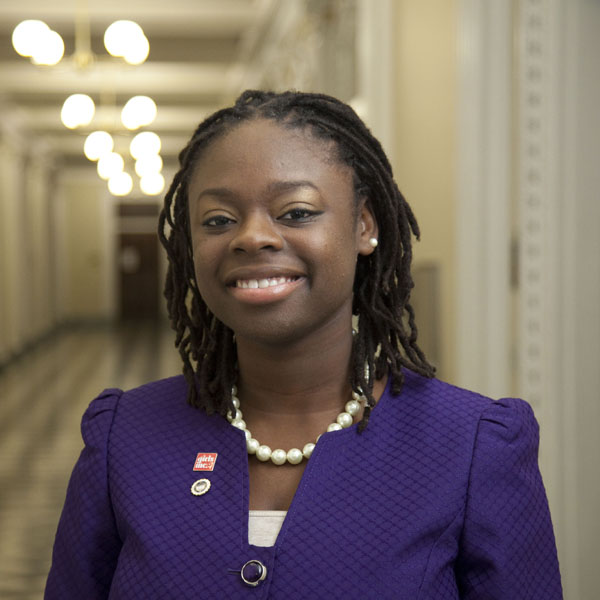
This week, I am being recognized as a White House Champion of Change for encouraging girls to go into STEM fields. Growing up, I knew little about what engineering was, let alone think I would be invited to the White House because of it.
As a young girl in Dallas raised by a single father in challenging circumstances, I didn’t grow up in a house where professions like engineering and STEM careers were discussed. Girls Inc. was truly my support system. The women staff and volunteers would welcome me every day and told me that the sky is the limit. They exposed me to women in careers I did not know about, like engineering, law, entrepreneurship, and the arts. For my sister Ski, now a junior at Grambling State University, and me, Girls Inc. inspired us to express ourselves freely and want to become more than what we thought we would be. This exposure and strong, smart, and bold mindset gave me the courage to choose a non-traditional profession.
Making the Full Participation of Women a Priority
Posted by on December 14, 2011 at 11:00 AM EST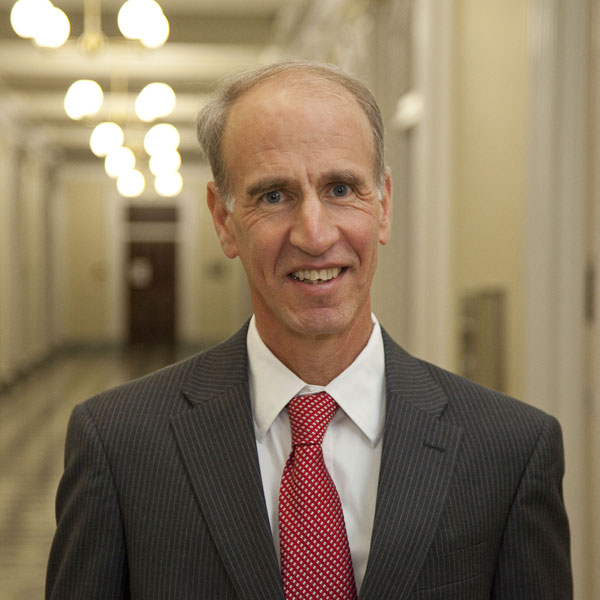
Recently, I was included as one of the White House Champions of Change on the topic of the recruitment and retention of girls and women in STEM fields. Of course there are many, many people who are champions for their efforts in this area, lots of them far more deserving than I am, but I am happy to use this occasion to share a few quick thoughts on this topic.
First, it is great to see computer science included by the White House in this event. Computing is a hugely important part of the STEM world in terms of its impact on our economy and our lives, and the fact that the greatest current and projected future demand for STEM jobs is in computing. Still, it is a relative newbie to the STEM table and it’s important that it has a seat.
- &lsaquo previous
- …
- 177
- 178
- 179
- 180
- 181
- 182
- 183
- 184
- 185
- …
- next &rsaquo
Twitter