Energy and Environment Latest News
2014: A Year of Action
Posted by on December 22, 2014 at 3:15 PM EDT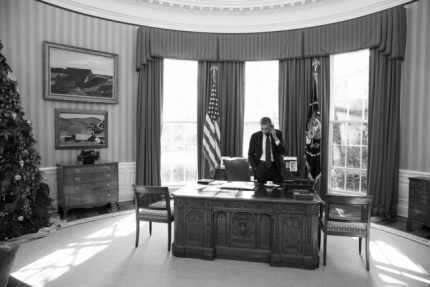
President Barack Obama talks on the phone at the Resolute Desk in the Oval Office. December 18, 2014. (Official White House Photo by Pete Souza)
In his State of the Union address this year, the President vowed that 2014 would be a year of action -- and he delivered on that promise.
As the year comes to a close, the results are crystal clear. The President and his Administration have taken more than 80 new executive actions this year to help grow the economy, create jobs, address the threat of climate change, and strengthen the middle class. And today, we’re releasing a year-end report detailing those actions.
Weekly Address: America’s Resurgence Is Real
Posted by on December 20, 2014 at 7:00 AM EDTIn this week’s address, the President reflected on the significant progress made by this country in 2014, and in the nearly six years since he took office.
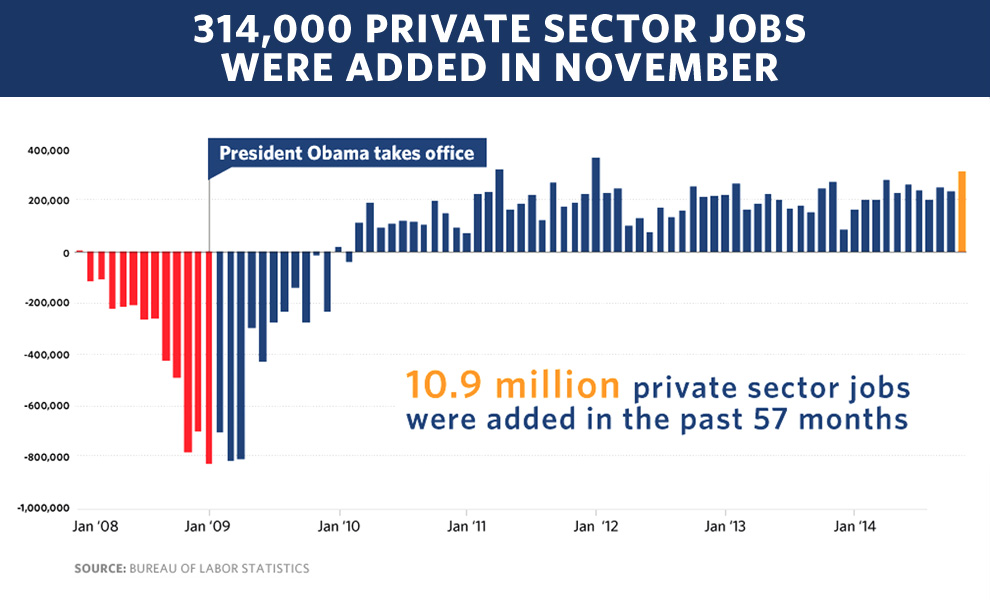
This past year has been the strongest for job growth since the 1990s, contributing to the nearly 11 million jobs added by our businesses over a 57-month streak. America is leading the rest of the world, in containing the spread of Ebola, degrading and ultimately destroying ISIL, and addressing the threat posed by climate change. And earlier this week, the President announced the most significant changes to our policy towards Cuba in over 50 years.
America’s resurgence is real, and the President expressed his commitment to working with Congress in the coming year to make sure Americans feel the benefits.
Dan Pfeiffer Joins Medium: "Breaking Down the 'Worst' Year in Washington"
Posted by on December 19, 2014 at 12:34 PM EDTToday, Senior Advisor Dan Pfeiffer joined the new publishing platform Medium -- authoring a post that reflects on the incredible amount of progress made in 2014 despite some claims that the President had "the worst year in Washington." Moving forward, he will continue to post important highlights, insights, and reflections on the President's agenda.
(For more posts from across the Administration, be sure to also follow President Obama and the White House on Medium, as well.)
In today's post, he reflects on 2014 as a year of real and meaningful progress for President Obama and the progressive agenda -- no matter what the critics have said. He goes on to note a few meaningful progress points from the year:
-
2014 has been the strongest year of job growth since the 1990s.
-
America's uninsured rate dropped to near-historic lows in 2014 -- In spite of the fact that this time a year ago, politicians and the press were predicting the demise of the Affordable Care Act.
-
The President made historic progress across the board on the central global challenge of the next century: Climate change and environmental protection.
-
President Obama's Executive Action to fix our immigration system is the most meaningful effort in decades to make the system fairer, more transparent, and more predictable.
-
In his six years in office, the President has reshaped the federal judiciary to include more women, minorities, gays, and lesbians, so it might resemble more closely the nation it serves.
 Learn more about , , , , , , , Economy, , Education, Energy and Environment, , Foreign Policy, Health Care, Homeland Security, Immigration, , , Taxes, Technology, Veterans, Women, Working Families
-
Watch: The President's Science Advisor Answers Your Questions About Climate Change
Posted by on December 18, 2014 at 2:50 PM EDTLast month, Dr. John Holdren -- the President's science advisor -- invited the public to ask him anything about climate change on social media using the hashtag #AskDrH.
Since then, he's gotten a lot of questions. Brandon, a seventh-grader, wanted to know if climate change will affect him during his lifetime. A number of people asked whether climate change is driving extreme events, like the heavy snowfall we've seen recently in Buffalo, New York. Some people wanted to know what Dr. Holdren is doing to prevent climate change himself.
And Dr. H answered. In a video series we're releasing today, Dr. Holdren answers some of the questions you asked about our climate, and explains some of the science behind how our planet is changing.
Learn more about Energy and EnvironmentSupporting Water Projects that Communities Want
Posted by on December 17, 2014 at 4:53 PM EDTEd. Note: This post introduces you to Lynda Hoffman, President of the Missouri and Associated Rivers Coalition (MOARC), a regional nonprofit promoting the beneficial use of water and related land resources.
In 2007, the Corps of Engineers had completed nearly 10 of 12 miles of channel modification for the Blue River when the City of Kansas City adopted a Green Solutions resolution recognizing the City’s water bodies as vital and valuable natural resources. Building on their strong foundation of partnership, the local and federal sponsors for the project worked together to rethink the work yet to be done on the channel. The result: in lieu of massive habitat-disrupting and expensive concrete structures, more habitat-friendly environmental features were incorporated into the remainder of the project, and at a cost savings of over $20 million. “Turning the Blue River Green” is a successful example of a locally led planning initiative and the construction of a federally authorized project coming together in an innovative way that achieved an outcome desirable to the local community and the Federal agencies involved. The Obama Administration’s Principles, Requirements and Guidelines (PR&G) for federal water investments are intended to support these locally led efforts.
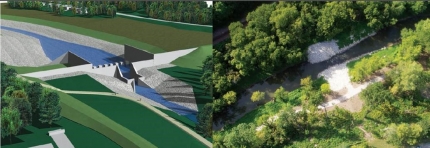
When a channel modification project along the Blue River in Kansas City began, community involvement helped replace the project's planned use of habitat-disrupting and expensive concrete structures (left) with more habitat-friendly environmental features that saved the project more than $20 million (right). Photos courtesy of USACE – Kansas City District.
As communities across the nation suffer effects of extreme weather and the resultant financial and societal costs become understood, local officials are leading efforts to prepare for the impacts of climate change. A group of policymakers in the central U.S. have formed a Heartland Climate Adaptation/Resilience Project to identify long-term effects and help communities get ready for and cope with increased flooding, water shortages and other potential consequences. Another promising initiative, the creation of a regional Resilience Working Group, resulted in the Greater Kansas City region being named a U.S. “Climate Action Champion” community by the Obama Administration. Smart local and regional planning such as this, when integrated with the decision-making processes for Federal investment, can lead to projects that are developed and implemented in a balanced manner, mindful of both economic and environmental benefits while also serving to enhance community resilience.
There are a lot of places in the Midwest that were founded as river towns, including Kansas City, whose ongoing identity will be forever entwined with its rivers. The Kansas and Missouri Rivers and others throughout this part of the country opened it to trade and settlement, first serving as navigable routes and then to meet developing municipal and industrial needs. There are many economic benefits derived from our waterways, like the transport of an abundant harvest from the nation’s bread basket. But there’s also potential harm from an ongoing flood threat that evolves over time due to several factors, including development trends and climate change. As a community threaded with rivers and streams, Kansas City recognizes that threat and through policy, planning and projects has taken steps such as their stream setback ordinance to reduce flood risk while also valuing waterways.
A saying often used in our region, “If you don’t like the weather, stick around, it’ll change,” may be truer than ever. In a study that looked at deviations from long-term trends, Kansas City was identified as the most populous city with the most unpredictable weather. Going forward it will be even more important for our local leaders to be able to work cooperatively with Federal agencies involved in managing water resources under a framework flexible enough to respond to evolving needs in a changing environment, but rigorous enough to produce repeatable results and supportive of informed decision-making that considers social, economic and environmental benefits.
Lynda Hoffman is President of the Missouri and Associated Rivers Coalition (MOARC)
Learn more about Energy and EnvironmentEmail: "What the President Just Did"
Posted by on December 16, 2014 at 7:08 PM EDTEarlier today, Secretary of the Interior Sally Jewell sent this message to the White House email list on President Obama's action to protect Bristol Bay. Didn't get it? Make sure you sign up for email updates here.
Just now, the President took action to protect a place called Bristol Bay, Alaska. Here's why that matters:
It places a national treasure -- and one of the nation's most productive fisheries -- off limits for oil and gas leasing. Alaskans have been fighting to preserve Bristol Bay for decades. Today, we got it done.
Bristol Bay helps to produce 40 percent of America's wild-caught seafood each year. It supports $2 billion every year in commercial fishing, and supports good jobs in sport-fishing and tourism.
These waters are beautiful and valuable, and today's action will ensure that future generations will be able to enjoy their bounty.
It's a big deal. Watch the President's announcement, and take a look at these photos of the place this Administration just took definitive action to protect:
 Learn more about Energy and Environment

- &lsaquo previous
- …
- 17
- 18
- 19
- 20
- 21
- 22
- 23
- 24
- 25
- …
- next &rsaquo
Related Videos
-
 May 09, 2014 9:21 AM
Inside the White House: Solar Panels
-
 September 01, 2016 9:25 PM
President Obama Delivers a Statement to the Press
White House Blogs
- The White House Blog
- Middle Class Task Force
- Council of Economic Advisers
- Council on Environmental Quality
- Council on Women and Girls
- Office of Intergovernmental Affairs
- Office of Management and Budget
- Office of Public Engagement
- Office of Science & Tech Policy
- Office of Urban Affairs
- Open Government
- Faith and Neighborhood Partnerships
- Social Innovation and Civic Participation
- US Trade Representative
- Office National Drug Control Policy