The White House

Office of the Press Secretary

Presidential Memorandum -- Waiver of Restriction on Providing Funds to the Palestinian Authority

MEMORANDUM FOR THE SECRETARY OF STATE

SUBJECT: Waiver of Restriction on Providing Funds to the Palestinian Authority

By the authority vested in me as President by the Constitution and the laws of the United States of America, including section 7040(b) of the Department of State, Foreign Operations, and Related Programs Appropriations Act, 2012 (Division I, Public Law 112-74) (the "Act"), I hereby certify that it is important to the national security interests of the United States to waive the provisions of section 7040(a) of the Act, in order to provide funds appropriated to carry out Chapter 4 of Part II of the Foreign Assistance Act, as amended, to the Palestinian Authority.

You are directed to transmit this determination to the Congress, with a report pursuant to section 7040(d) of the Act, and to publish this determination in the Federal Register.

BARACK OBAMA

The White House

Office of the Press Secretary

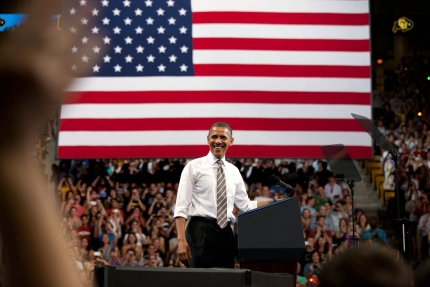
Remarks by the President to Students

University of Iowa
Iowa City, Iowa

1:19 P.M. CDT

THE PRESIDENT:  Hello, everybody!  (Applause.)  It is great to be back in Iowa City.  (Applause.)  I'm not going to give a long speech here.  I just want to say thank you to all the people who are taking an interest in this important issue.  I know we've got a lot of students here.  Everybody cares about making sure you guys can pay for college in an affordable way, so that's what I'm going to be talking about.

But I just want to tell all of you I couldn't appreciate you more, taking the time to come out, and I hope that -- how many seniors do we have here?  (Applause.)  All right.  Seniors, you've got just a few more weeks to go, so make sure to finish strong; don't goof off too much.  (Laughter.)

And I just want you to know that Iowa always feels like home to me, because I spend so much time here.  (Applause.)  So, all right, thank you, everybody.  I'm going to shake some hands.  Thanks, everybody.  (Applause.)

END               
1:20 P.M. CDT

President Obama Speaks on Student Loan Interest Rates in Iowa

April 25, 2012 | 29:32 | Public Domain

President Obama discusses the importance of a college education and why higher education should be affordable for all students willing to work hard, and calls on Congress to stop interest rates on federal Stafford loans from doubling in July.

Download mp4 (1044MB) | mp3 (68MB)

Read the Transcript

President Obama Speaks to Students in Iowa about Student Loan Rates

[[nid:145585]]

President Obama wrapped up a three-city tour in Iowa today by speaking to students at the University of Iowa about the best tool they’ve got for achieving the American promise: a college education.

This country has always made a commitment to put a good education within the reach of everybody who's willing to work for it. That’s part of what made us special. That’s what kept us at the forefront of business and science and technology and medicine. That’s a commitment that we need to reaffirm today.  

Now, here's the challenge we've got. Since most of you were born, tuition and fees at America’s colleges have more than doubled. And that forces students like you to take out more loans and rack up more debt. The average student who borrows to pay for college now graduates with about $25,000 in student loan debt. And in this state, it’s even higher. Americans now owe more on their student loans than they owe on credit cards.

And living with that debt means you’ve got to make some pretty tough choices. It might mean putting off buying a first home or chasing that great startup idea that you’ve got. Maybe you’ll have to wait a little bit longer to start a family or save for retirement. And when a big chunk of every paycheck goes towards loan debt, that’s not just tough on you, that’s not just tough on middle-class families -- that’s not good for our economy, because that money that could be going into businesses is going just to service debt.

To make matters worse, interest rates on federal Stafford loans are set to double in July, saddling more than 7 million students with an additional $1,000 in debt. Congress has the power to stop this from happening, however, and as he did in North Carolina and Colorado earlier this week, the President asked students to tell their members of Congress one thing: Don’t Double My Rate.

Raise your voice and reach out to your networks if you agree that student loan rates should not double on July 1.


Learn more:

Close Transcript

The White House

Office of the Press Secretary

Press Gaggle by Press Secretary Jay Carney Aboard Air Force One, 4/25/12

Aboard Air Force One
En Route Iowa City, Iowa   

10:38 A.M. CDT

MR. CARNEY:  Good morning, everyone.  Welcome aboard Air Force One as we make our way from Colorado to Iowa.  As you know, at the University of Iowa in Iowa City, the President will be delivering remarks on the subject of the absolute, essential need for Congress to take action to ensure that Stafford loan rates for students -- millions of students across the country do not double -- the interest rate on those loans does not double on July 1st.  So he will continue to make that case today at the University of Iowa.

He will also visit -- prior to delivering the remarks, he'll participate in a roundtable with five students who currently receive Stafford federal student loans -- five students from the university who -- seniors and juniors, I believe, the five of them are, studying in different fields, all of whom depend upon these loans to enable them to get the education they need to give them the best shot at a good economic future for themselves.

With that, I will take your questions. 

Q    Jay, does the President think that Democrats are under as much of a responsibility to extend the low rates as Republicans, since it was Democrats who basically built in the expiration date in the first place?

MR. CARNEY:  Well, he thinks every member of Congress should vote to extend to -- work together and then vote to extend the lower rates.  The fact of the matter is that up until we saw a bit of the dam breaking in the last several days, the opposition to doing this was on the Republican side.  But it should not be that way.  This is the kind of thing, as we've talked about all year in 2012, that should allow us to find bipartisan agreement so we can move forward.

I mean, there are -- even though it's an election year, there are a number of areas that we should be able to get things done on behalf of the American people, on behalf of the American economy. 

I saw some stray remark yesterday about someone suggesting that -- a Republican suggesting that the President should stop talking about the student loan issue and focus instead on the economy.  And I was just stunned by how narrow-minded those remarks were because this is absolutely about our economy.  There is no more essential element to a strong economic future for the American people and this nation than investments in education that allow Americans to compete for the best jobs of the 21st century -- because we're competing not among ourselves anymore but the Chinese and the Indians and the Brazilians and the Europeans and others.  
Q    Jay, when the Secret Service story first broke down in Cartagena, the President, as you'll recall, said that he would be angry if he found out that the allegations proved to be true.  So now that the Secret Service has decided the career fates of all 12 of these people, is he angry?

MR. CARNEY:  Yes.  I think he said as much in the interview he did with Jimmy Fallon last night.  But he also believes that the actions that -- of these individuals do not represent the Service as a whole, and as he said last night -- or yesterday afternoon on the interview that was broadcast last night -- that 99 percent of the men and women who work in the Secret Service are absolute professionals who do an extraordinary job protecting the President, protecting his family, protecting others.  And that job, as I pointed out, it's important to remember because it’s not just about protecting an individual or his or her family, it’s about protecting the presidency and it’s a vital function in our democracy.

Q    I didn't really see anger registered in what he said, the knucklehead comment and so forth, so have you seen him express anger about it?

MR. CARNEY:  Look, I think the President said that he -- if the accusations that had surfaced at the time turned out to be true, he would be angry.  And of course, he is angry that -- about what he made clear even on that Sunday in Colombia was inappropriate behavior, behavior that is not acceptable for people who work for the United States government, who are representing the American people abroad on trips of the President or other -- on trips by other government leaders, whether they're administration leaders or members of Congress.

Q    Does he believe that people in supervisory positions who have not been sanctioned so far ought to bear some responsibility for this?

MR. CARNEY:  I'm not going to comment any further on what remains -- I think it’s important to note that the Secret Service said that its investigation continues.  So questions about broader subjects that relate to this and the culture of the Service and sort of a higher altitude review I’ll leave to the Secret Service for now.  They continue to take the lead on this matter.

Q    -- have any other briefings from the director of the agency?

MR. CARNEY:  I know of none that are planned at the moment, but I wouldn’t rule it out.

Q    -- election results and reports this morning as we were heading to the plane about Newt Gingrich’s plans.  Does the President see that the general election campaign is sort of -- that we’re moving into that phase?  Does he have any reaction to Romney’s performance last night?  Will he address that at all today in his comments?  And will it affect how he begins talking to voters in the actual reelection campaign?

MR. CARNEY:  Specifically to the question about events yesterday and -- none of the conversations I had with him last night or this morning suggested that he was watching television or caught any remarks.  He’s certainly aware of it, and I think  -- I would point you to the campaign for a more detailed comment, but our position has always been that we’re observers of this process.  This President certainly knows from experience that primaries can take a certain amount of time.  This primary process has taken a certain amount of time.  Once it’s wrapped up, then clearly there will be -- and there seems to be a Republican nominee, then the President will engage in a debate --
 
Q    -- there’s a Republican nominee now, you’re saying?

MR. CARNEY:  I am reading your stories or the stories of your colleagues that suggest that, and there seems to be a general acknowledgment that the process has moved to that stage if not formally, then informally, that assessments are being made that the race is over on that side.

Q    And if you could segue from election to student loans   -- (laughter) -- I know it's all week --

MR. CARNEY:  -- because after all, that’s why we’re here.

Q    So President Obama won the youth vote with like a two-thirds margin in 2008.  Polls show he has a pretty strong lead in early polling now with 18 to 29.  Does President Obama believe that he is in danger of his support from young Americans eroding, and why?

MR. CARNEY:  I'm sorry?

Q    It's a question about whether -- does he feel like he has something to prove to younger voters in terms of his policies?

MR. CARNEY:  You're talking about campaign tactics and stuff, and I’ll refer you to the campaign for that.  The President is embarked on a trip here that is focused on a specific policy and a specific call to Congress to take action on a specific policy that affects young people, millions of them across the country.  I mean, that’s just a fact. 

And he has been calling in very clear terms on Congress to act on this measure, because failing to take action would result in interest rates on these student loans doubling, which would in turn have a very negative impact on millions of students across the country.  That’s bad for the students.  It’s bad for their families.  It’s bad for the economy in the near term and in the long term.  So these are very serious economic issues.

Q    Can you address the challenges that the President faces in making his case to young people this time around and engaging them not only in the political process but in recognizing his accomplishments over the last four years?  You know, there’s a widespread perception that in 2008, he energized the youth vote with this sort of one-time message that would be very difficult to replicate.  This is not an election, necessarily, about change, it's about here's what I've done and here's what we still have to do.  How do you engage the youth and what are your challenges there?

MR. CARNEY:  I appreciate the question.  There was no attempt even within it to pretend that it was anything but a campaign question so I’ll refer you to the campaign.  The President is focused on -- as President -- pursuing the policies that he thinks will help the American economy grow and help the American middle class stabilize and grow.  And that includes students across the country who depend on these loans, who depend on Pell grants, which would be slashed dramatically under the Republican budget. 

I want to note that while we have seen expressions of support for the President’s insistence that we take action to prevent these interest rates from doubling by Republicans, that is not reflected in their governing document, the Ryan/Republican budget, which would allow these rates to double, which would slash Pell grants, which would devastate other investments in education. 

So at a policy level, the President feels very strongly that his commitment to students and to education -- higher education as well as obviously primary and high school education -- is profoundly documented by the action he’s taken and the policies he’s supported.

Q    There are reports today that Iran is considering altering its nuclear program, perhaps allowing more U.N. inspectors in to avoid the tough EU sanctions.  Have you guys seen those reports?  Do you have any intel about it or any comment?

MR. CARNEY:  Well, I certainly don’t have any comment on intel.  But I would simply say that there’s a process in place through the P5-plus-1 talks, which have been through one round now and are scheduled to resume in Baghdad.  And that’s the forum in which to discuss steps forward.  But there are clear lines here about what actions the Iranians need to take.  They need to be serious in these negotiations about focusing on their nuclear program, on their weapons program. 

And the goal here is -- the policy of the United States is prevent Iran from acquiring a nuclear weapon.  The approach by all the nations involved in this process is focused on Iran forsaking its nuclear ambitions in a verifiable way, demonstrating that their intentions are not military in nature, and then moving forward.

So I'm not going to -- incremental proposals that are thrown out there outside of the process I'm not going to be able to focus on.  We're focused on holding the Iranians accountable, which the sanctions regime that is in place and the one that you mentioned that’s going to kick in is all about, and that doesn’t change.  Promises of better behavior down the road, given the past, won't change our position, and I don’t believe it will change anyone's position. 

But having said that, the first round of talks were promising, and the fact that there's a second round is also promising.  But we're very clear-eyed about this, very clear-eyed about Iranian behavior and the need for them to demonstrate their willingness to forsake their nuclear weapons ambitions through action and not just promises.

Q    And is the United States aware of any shift in position or tactics from the Iranians?

MR. CARNEY:  I just have no comment on that particular issue. 

Q    In the President's interview last night he suggested that in previous campaigns he's at least had some relationship with his opponents, some degree of contact.  And he said that he didn’t really have an occasion to get to know Governor Romney.  Do you expect that at some point he'll call Governor Romney to officially kick off this race?  Will he reach out and initiate contact in that way?

MR. CARNEY:  I have no -- necessarily any expectation of that.  I mean, you could ask the campaign.  I think he was responding to a question specifically, do you know Mitt Romney?  And he was being honest that while they had met, he did not know him well, because unlike in his race against Senator McCain -- he and Senator McCain had served in the Senate together, and he had served in the Senate with Secretary Clinton and then-Senator Biden -- Vice President Biden-- and others.  So he knew a lot of his opponents. 

He made the observation that within party primaries you’re more likely to know your primary opponents, but he was just making an observation.

Q    Can I ask a follow, too?  There’s a new ABC-Post poll out today on favorability ratings of the First Lady and Ann Romney and Hillary Clinton among others.  The First Lady has very high favorability ratings -- 69 percent.  Do you guys -- I mean, as she becomes more involved in the President’s reelection effort, is there any concern that as she kind of moves into that campaign role that she might lose some of that?

MR. CARNEY:  That’s a purely campaign-related question, and I’ll refer you to the campaign for that.

Q    Were you there when the yogurt got spilled?

MR. CARNEY:  I was within 10 or 15 feet, but I didn’t see it happen.

Q    Oh, you didn’t see it?

MR. CARNEY:  My understanding is that -- the young woman was on television this morning -- is that she placed her yogurt down on the ground because she wanted to shake hands with the President, and there was sort of a press against that ropeline, and somebody kicked the yogurt, and there was a spoon in it that kind of flipped and a little -- but she was extraordinarily -- I didn’t actually see it, but I heard about it, she talked about it on the Today Show this morning, I think, and she was very gracious.

Q    I’d ask the campaign but they’re not on this trip so -- so much of 2008 was big college rallies -- 8,000 people in a stadium, 10,000 people in a stadium.  Has the President talked at all yesterday or this morning about being back out there with students in a big room, whether it reminds him of 2008?  Sort of how it feels compared to doing smaller policy events?

MR. CARNEY:  Well, I would simply say, setting aside the campaign nature of the question, the President really enjoys getting out of Washington and meeting with Americans across the country.  He always enjoys meeting with students at universities, which he’s done throughout his time in office.  And there’s nothing new about that as it relates to this trip.

I mean, young Americans have enormous amounts of enthusiasm and hope and energy about their own personal futures, about the country’s future.  And there’s no question that -- and anxiety about their futures and the economy.  And I think the President believes that -- and he's not unique in this and he wouldn’t suggest he was -- but that’s why you get involved in politics, because it’s as much about the future as the present day.  And students and Americans who are younger than that even, than college students, really are -- those who engage in -- take public office and engage in policy debates and try to get things done are motivated by a desire to make the future better for younger Americans.  And I think the President always feels that especially keenly when he is with college students or younger Americans.

Q    -- foreign leader calls during the course of this trip?  Any developments on Syria or North Korea that you can share with us?

MR. CARNEY:  Well, I mean, there’s various things in the news.  I don’t have anything -- the President obviously gets his briefings and was making some calls from Air Force One, but not foreign leaders.
 
Q    Has he responded at all to the Mad Cow scare?  There was a report today that South Korean retailers are going to stop importing U.S. beef.  Has he been in touch with Secretary Vilsack?  Is he following that at all?

MR. CARNEY:  I don’t believe he's been in touch with Secretary Vilsack.  He's certainly aware of the incident.  I would refer you to the Department of Agriculture and note what Secretary Vilsack has said, which is that American beef and dairy are safe, and the Agricultural Department has obviously been very focused on looking into this matter.  But they have all the details.

Q    Jay, can you tell us anything that we haven’t been told yet about the trip to Georgia on Friday?  And also, specifically, do you recall when the last time the President and the First Lady traveled together on an official trip?

MR. CARNEY:  I would have to take the question about the last time they were together on an official trip.  I mean, I know I’ve been on them, so it's happened in my time here.  I don’t know what we put out about the Georgia visit.  It relates to veterans.  But I’ll see what more we can preview.

Q    That would be great.

Q    Thanks.

MR. CARNEY:  Thanks a lot.

END
10:56 A.M. CDT

Watch: President Obama "Slow Jams" the News

On Tuesday, President Obama stopped by Late Night with Jimmy Fallon, where he had a message for Congress: This is not the time to make school more expensive for our young people. Or, as rapper Black Thought of house band The Roots put it, "If Congress doesn't act, it's the students who pay."

President Obama: College Is the Best Investment You Can Make

President Obama at the University of Colorado Coors Event Center

President Barack Obama delivers remarks on interest rates on student loans at the University of Colorado Coors Event Center in Boulder, Colo., April 24, 2012. (Official White House Photo by Chuck Kennedy)

If Congress doesn't act, more than 7.4 million students with federal student loans will see their interest rates double on July 1 of this year. President Obama believes that this is unacceptable: Higher education cannot be a luxury in this country. It’s an economic imperative that every family must be able to afford. 

On Tuesday, the President visited universities in Colorado and North Carolina to talk with students about the importance of keeping interest rates on student loans low so that more Americans can get a fair shot at an affordable college education that will provide the skills they need to find a good job, and a clear path to middle class. President Obama also paid a visit to Late Night with Jimmy Fallon, which was taping at the University of North Carolina at Chapel Hill, where he "slow jammed" the news, explaining, "Now is not the time to make school more expensive for our young people."

The White House

Office of the Press Secretary

President Obama to Participate in Roundtable with Iowa Students

This afternoon, the President will visit the University of Iowa in Iowa City to deliver remarks as part of a concerted effort to get Congress to prevent interest rates on student loans from doubling in July. Prior to delivering remarks in the Field House, the President will participate in a roundtable with five students currently receiving Stafford federal student loans.  The roundtable is pooled press and the following students will be participating in the discussion:
 
Myranda Burnett, Junior
Myranda Burnett is a junior at the University of Iowa majoring in Therapeutic Recreation.  Burnett is from Burlington, Iowa and is the oldest of four children.  She will be the first in her family to receive a degree from a college or university.  Burnett is using Stafford federal student loans to help pay for her schooling and will be negatively impacted if her interest rates double next year.  Besides being a student, Burnett is the executive secretary for the National Residence Hall Honorary organization and works as a desk clerk at Rienow Residence Hall.  She is also recently engaged and is planning to get married in 2014 after she and her fiancé finish school. 
 
Blake Anderson, Junior

Blake Anderson is a junior at the University of Iowa majoring in Finance.  Anderson is from Eldridge, Iowa, a town about an hour away from Iowa City.  Anderson is the youngest of three children and all of his family members have attended a four year university.  Anderson is using Stafford federal student loans to help pay for his schooling in addition to holding a part time job on campus.  He is planning to graduate a semester early in order to keep his student loans as low as possible. 
 
Jordan Garrison-Nickerson, Sophomore
Jordan Garrison-Nickerson is a sophomore at the University of Iowa with a double major in accounting and communications and a minor in environmental science.  Nickerson is from West Des Moines and was raised by a single mother, who is currently unemployed.  Nickerson would have been unable to attend college without Stafford federal student loans. 
 
Marissa Boles, Senior
Marissa Boles is a senior at the University of Iowa majoring in Psychology.  Boles is from Melcher-Dallas, a rural community in southern Iowa.  While going to college was a challenge financially, she knew she needed an education.  Boles took out Stafford federal loans to help pay for her education and has worked part time for three of her four years at school.  After graduation, Boles hope to continue her work as a para-educator in the child psychology unit of the local hospital and eventually go to graduate school. 
 
Martin Lopez, Sophomore
Martin Lopez is a sophomore at the University of Iowa, majoring in Social Work.  Lopez was born in Chicago and raised in Nichols, Iowa, a town near West Liberty.  Lopez is very active on campus, serving as president of his fraternity, a Peer Leader for the Iowa Edge program and a Resident Mentor for Upward Bound.  Lopez took out Stafford federal student loans to help pay for his education.  He is the oldest of four siblings and his attendance at the University of Iowa would not be possible without financial aid. 

The White House

Office of the Press Secretary

Remarks by the President--Boulder, Colorado

University of Colorado
Boulder, Colorado

7:20 P.M. MDT

THE PRESIDENT:  Hello, Boulder!  (Applause.)  How's it going, Buffaloes?  (Applause.)  Well, you guys are just happy because school is almost out, isn’t it?  (Laughter.)  

Please give Daniel a big round of applause for that great introduction.  (Applause.)  I just saw Daniel over at The Sink.  (Applause.)  I bought some pizza.  And I heard a rumor that Robert Redford used to work there.

AUDIENCE:  Yess!

THE PRESIDENT:  So that's just a sign -- always be nice to your server because you never know where they’ll end up.  (Laughter.)  I will say that I was shaking hands with folks outside and a young woman -- she got very excited and spilled yogurt on me.  (Laughter.)  More hazardly, she spilled yogurt on the Secret Service, which you -- (laughter) -- the agent just stood there, just looking at her.  (Laughter.)  

I want to thank the Chancellor of UC Boulder, Phil DiStefano.  Give him a big round of applause for having me here today.  (Applause.)  We've got the Lieutenant Governor of Colorado, Joe Garcia, in the house.  (Applause.)  And I want to thank you for being indoors when it is gorgeous outside.  (Applause.) 

Now, I've just come from the University of North Carolina Chapel Hill -- (applause.)  I was talking to another good-looking group of students.  Jimmy Fallon and I taped his show there tonight -- make sure to tune in.  (Laughter.)  But we saved the prime-time event for Boulder.  (Applause.)   

And I’ve come here to talk to you about what most of you are focused on every day -- at least you're supposed to be -- and that is studying and college.  Look, college isn’t just the best investment you can make in your future -- it is the best investment that you can make in your country’s future.  I believe that.  (Applause.) 

And by the way, I just want to say, all of you who have seats, feel free to sit down.  (Laughter.)  Because it's hot in here and I don't want folks dropping off.  (Laughter.)  There you go, make yourself comfortable.  Take a load off.  (Applause.)   

So I'm proud of all of you for doing what it takes to make this investment in a college education because it has never been more important.

In today’s economy, there's no greater predictor of individual success than a good education.  Right now, the unemployment rate for Americans with a college degree or more is about half the national average.  Their incomes are twice as high as those who don’t have a high school diploma.  Higher education, whether it's a four-year college or two years at a community college, is the clearest path we've got to the middle class.

Now, I know that those of you who are about to graduate -- (applause) -- you're pretty cheerful about that, huh?  (Laughter.)  I know those of you who are about to graduate sometimes are wondering what’s in store for your future.  Because not even four years ago, just as the global economy was about to enter into freefall, you were still trying to find your way around campus.  And today, our economy is recovering, but it's not yet fully recovered from the worst financial crisis and economic crisis that we've experienced since the Great Depression. 

Our businesses have added more than 4 million jobs over the past two years.  (Applause.)  But there are still too many Americans who are out there looking for a job or trying to figure out how to pay the bills and cover the mortgage.  There are too many folks who still lack the basic security that has always been at the heart of the American promise, but has been slipping away for more than a decade now, even before the recession hit. 

But here's the thing.  I want all of you to know that the degree you earn from Colorado is going to be the best tool that you've got to achieve the American promise.  (Applause.)  By far. That basic idea that if you work hard, no matter where you come from, no matter what you look like, no matter what the circumstances of your birth, if you work hard you can do well enough to raise a family and own a home, send your own kids to college, put a little bit away for retirement.  That idea that each generation has a little more opportunity than the last. 

I can tell you that now as a parent.  When I look at Malia and Sasha -- sometimes I coach Sasha's basketball games, and if she scores a basket I am so excited, compared to when I used to score a basket.  (Laughter.)  It’s the hope that all your parents have for you -- that your own kids will surpass you; that they're going to be able to shine as bright as they can imagine.  And that's the dream that your parents have for you.

And keeping that promise alive, that's the defining issue of our time.

AUDIENCE MEMBER:  We believe in you!  (Applause.) 

THE PRESIDENT:  I believe in you.  I believe in you.  (Applause.)  I believe in you. 

And I don’t want this to be a country where a shrinking number of Americans are doing really, really well while a growing number are struggling to get by.  (Applause.)  That's not the future I want for you.  That's not the future I want for my daughters.  I want this forever to be a country where everybody gets a fair shot, everybody is doing their fair share, everybody plays by the same set of rules.  (Applause.)  That’s the America I know.  That's the America I love.

It's a big and bold and generous America.  It's not a cramped America.  It's not an America that says, set your sights lower.  And that's the America that's within our reach.

You know, I think back sometimes to my own circumstances.  My grandfather had the chance to go to college because this country decided that every returning veteran of World War II should be able to go to school.  (Applause.)  And then my mother was able to raise two kids by herself while she was going to school because she was able to get grants and work her way through school.  (Applause.)  And then I'm only standing here today, and Michelle is only where she is today, because scholarships and student loans gave us a shot at a great education.

We didn’t come from well-to-do backgrounds.  We didn’t have famous families.  But it wasn’t just that we worked hard.  It was also that somebody made an investment in us.  (Applause.)  That's what America did for us. 

This country has always made a commitment to put a good education within the reach of everybody.  Everybody who's willing to work for it, we've said, you know what, you've got a shot.  That’s what makes us special.  That’s what makes us exceptional.
That's what kept us at the forefront of business and science and technology and medicine.  And that’s the commitment that we've got to reaffirm today.  (Applause.)  That's what we believe in. 

But I don't need to tell all of you that it's gotten harder. Since most of you were born, tuition and fees at American colleges have more than doubled.  And that forces students like you to take out more loans and rack up more debt.  The average student who borrows to pay for college now graduates about $25,000 in student loan debt.  Not good.  Americans now owe more on their student loans than they do on their credit cards.

And living with that kind of debt means some pretty tough choices when you’re first starting out.  It means putting off buying your first house.  Or it means maybe you can't start up that business right away that you've got this great idea for.

When I was over at The Sink I was talking to three business majors, and they all had these business ideas.  But it's tougher if you've got all this loan that you're already thinking about the minute you get out of school.  Maybe you’ve got to start a family a little bit later.  It takes you a longer time to save for retirement.  And when a big chunk of every paycheck goes towards loan debt, that’s not just tough on you.  It's not just tough on your families.  It’s painful for the whole economy because that's money that could be going into the economy and could be going into new businesses and could be helping businesses grow. 

And I want to point out -- listen, I know about this firsthand.  Michelle and I, we know about this firsthand.  This is not something I read in a briefing book.  (Laughter.)  This is not some abstract idea for us.  We’ve been in your shoes.  When we graduated from college and law school, we had a mountain of debt, both of us.  That means when we got married, we got poorer together.  (Laughter.)  We added our assets together, and they were zero.  (Laughter.)  And then we added our liabilities together, and they were a lot.  (Laughter.) 

We paid more for our student loans than we paid for our mortgage each month when we first bought our small condo in Chicago.  And we were lucky to land good jobs with a steady income, but we only finished paying off our student loans about eight years ago.  Think about that.  I’m the President of the United States and -- (laughter and applause) -- so here I am, and we were writing those checks every month.  And that wasn’t easy, especially when we had Malia and Sasha, because at that point, we’re supposed to be saving for their college educations, and we’re still paying off on our college educations.  So I've been in your shoes.  I know what I am talking about here.  This is not something that I just read about. 

So we've got to make college more affordable for you.  (Applause.)  We cannot price the middle class out of a college education.  When most new jobs in America require more than a high school diploma, higher education -- whether at a four-year college, at a two-year program -- it can't be a luxury.  It's an economic imperative for every family in America.  And every family in America should be able to afford it. 

As long as those young people are willing to put in the work, as long as you're willing to study hard and take advantage of this opportunity, then we've got to make sure it's there for you.  (Applause.)
 
Now, I'm going to be asking for your help, but let me tell you what I've already done on this issue, Colorado, because I think it's important to know that we haven’t just been talking the talk -- we've been walking the walk -- to try to help make college more affordable.

Before I took office, we had a student loan system where tens of billions of taxpayer dollars were going to subsidize banks in the student loan program instead of going to students.  So we changed it.  We cut out the middleman.  We said, why do we need the banks?  They're not taking a risk.  These are federally guaranteed loans; let’s give the money directly to students.  (Applause.) 

And I have to tell you, there were folks in Washington who fought us tooth and nail because they wanted to protect the status quo.  One of them, when they heard that we wanted to take this business away from the banks, they said, this is "an outrage."  But the real outrage was letting these banks keep these subsidies while students were working two or three jobs just to try to pay tuition. 

So we kept at it, and we kept at it, and we won that fight. And today, that money is going directly to where it should have been going in the first place, and that's helping millions of young people afford a college education.  (Applause.) 

And then last fall, I acted to cap student loan payments faster, so that nearly 1.6 million students who make their payments on time, they have the option of only paying 10 percent of their monthly income towards loans once they graduate.  And that means if you decide to be a teacher, or you decide to be a social worker, or you're going into a profession that doesn’t  pay a lot of money, you still have that option, because you know that your monthly payment will be manageable.  (Applause.)  And that's important.  (Applause.) 

And then we decided we've got to make sure every student has access to a simple fact sheet on student loans and financial aid, so you can have all the information you need to make intelligent choices on your own about how to pay for college.  So some of you know we created this new Consumer Finance Protection Bureau.  It's a watchdog for consumers.  (Applause.)  And one of their mandates is to focus on student loans.  And so they've produced a website and fact sheets called “Know Before You Owe” -- “Know Before You Owe” -- which is something I wish Michelle and I knew about, wish we had had.   

So we've done those steps to help provide you good information and to make sure that we've expanded access to Pell grants and student loans.  But that's not enough.  It's not enough just to increase student aid.  We can’t keep on subsidizing skyrocketing tuition, or we're just going to run out of money.  We’ll just run out of money.  (Applause.) 

So what I said to colleges and universities is, you guys have to do your parts to keep costs down.  (Applause.)  And I've told Congress, steer federal aid to those schools that keep tuition affordable and provide good value and serve their students well.  We’ve put colleges on notice:  If you can’t show us that you’re making every effort to keep tuition from going up, then funding from taxpayers will go down.  You've got to make an effort.  (Applause.)  We’ve got to hold colleges accountable if they don’t.  (Applause.) 

Of course, public universities like this one also understand that states have to do their part, state legislators have to do their part in making higher education a priority.  (Applause.)  Last year, over 40 states cut their higher education spending. 

AUDIENCE:  Booo --

THE PRESIDENT:  Not good.  These budget cuts have been one of the biggest factors in your tuition going up.  So we’re challenging states to take responsibility.  We told them, if you can bring -- find new ways to bring down costs of college, make it easier for students to graduate, we’ll help you do it. 

So that’s what we’ve already done.  We’ve helped families, helped more young people afford a higher education.  We’re offering incentives to states and colleges and universities to keep costs down.  And now, guess what, Congress has to do their part.  (Applause.)  Congress has to do their part.  (Applause.) 

They need to extend the tuition tax credit that we put in place when I first came into office that saves middle-class families thousands of dollars.  They need to safeguard aid for low-income students, so that today’s freshmen and sophomores know they’re going to be able to count on it.  Our Pell grants have to be there for students.  They need to give more young people the chance to earn your way through college by doubling the number of work-study jobs over the next five years.  (Applause.) 

And then there's something that they’ve got to do right now. They have to prevent the interest rates on federal student loans from shooting up and shaking you down.  And that’s where you come in.  (Applause.) 

All right.  Now, five years ago, Congress cut the rates on federal student loans in half.  That’s five years ago.  Not the current Congress, Congress five years ago.  (Laughter.)  On July 1st of this year, two months from now, that rate cut expires.  I want everybody to understand this.  Interest rates on those loans will double overnight, starting on July 1st, if Congress does not act.  And for each year that Congress does not act, the average student with these loans is going to rack up an additional $1,000 in debt.  So this is money out of your pocket.  It’s basically a $1,000 tax hike for more than 7 million students across America  -- almost 170,000 students here in Colorado alone. 

Now, I just want to see a show of hands because I want to make sure I’m not misinformed here.  How many of you can afford to pay an extra $1,000 right now?  I didn’t think so.  So stopping this should be a no-brainer.  Helping more of our young people afford college should be at the forefront of America’s agenda.  It shouldn’t be a Democratic or a Republican issue.  Think about it.  (Applause.)  This wasn’t a partisan issue in the past.  The Stafford loans, that’s named after a Republican senator.  Pell grants, they’re named after a Democratic senator.

AUDIENCE MEMBER:  America!

 THE PRESIDENT:  America.  (Laughter.)  That’s what we’re supposed to be thinking about. 

Look, when Congress cut these rates five years ago, 77 Republicans in the House of Representatives voted for it.  Of course, a couple hundred Democrats voted for it, but that’s okay. It was a bipartisan effort.  Today you’ve got Republicans who run Congress, and they’re not saying whether or not they’re going to stop your rates from doubling.  Some have hinted that they’d only do it if we cut things like aid for low-income students instead. So think about this.

AUDIENCE:  Booo --

THE PRESIDENT:  They'll say, we’ll keep your rates low as long as we’re messing with folks who need them even more.  Does that make sense to you?

AUDIENCE:  No!

THE PRESIDENT:  I want to read a quote.  This is from a Republican congresswoman.  I didn’t really understand this.  (Laughter.)  I’m quoting her.  She said that she has "very little tolerance for people who tell me they graduate with debt… because there’s no reason for that."  She said, students who rack up student loan debt are just sitting on their butts, having opportunity "dumped in your lap."

AUDIENCE:  Booo --

THE PRESIDENT:  You guys can Google her or what have you, but -- (laughter) -- now, think about that.  Think about that.  I can tell you, Michelle and I, we didn’t take out loans because we were lazy.  (Laughter.)  You didn’t take out loans because you’re lazy.  You don’t take out loans lightly.  You don’t say to yourself, man, this is great, I’m going to be really in debt.  (Laughter.)  I’m thrilled.  You did it because the cost of college kept on going up, and you’re trying to graduate. 

And if these guys were serious about making college more affordable, then they wouldn’t be voting to cut financial aid in their -- their budget, if you look at their budget, what it means is you’re going to be cutting aid for 10 million college students by an average of more than $1,000.  They certainly wouldn’t let student rates double overnight if they really cared about this issue. 

They say that, well, we’ve got to do it because we’ve got to bring down the deficit.  Now, first of all, these guys ran up the deficit.  (Applause.)  Remember, these are the same folks who voted in favor of two wars without paying for it, and big tax cuts without paying for it.  They just voted to keep billions of dollars of taxpayer subsidies to big oil companies who are raking in record profits.  They just voted to let millionaires and billionaires keep paying low tax rates -- lower tax rates than middle-class workers.  They just voted to give an average tax cut of at least $150,000 to the wealthiest Americans -- folks like me who don’t need it, weren’t asking for it.  And the way they pay for it is to cut things like education and job training that give students opportunities to work and succeed.  So they can’t be too serious about deficits. 

I mean, do we want to keep tax cuts for the wealthiest Americans who don’t need them, didn’t ask for them, the country can’t afford it?  Or do we want to make sure that everybody pays their fair share, and make sure that young people are able to afford to go to college?  (Applause.) 

Do we want to keep giving taxpayer giveaways to big oil?  Or do we want to invest in clean energy and do we want to make sure that we're rebuilding this country?  (Applause.)  And make sure that we can keep interest rates on millions of students affordable?  We need to be investing in the things that build America over the long term.  Things like education and science, a caring for our veterans, and a strong military.  (Applause.)  And we can’t have it both ways.  We've got to make choices.

In America, we admire success.  We aspire to it.  I want everybody here to do great, be rich, go out and start a business. That's wonderful.   We work and we hustle, you study hard to get your degree -- because you believe in success and individual initiative.  But America is not just about a few people doing well.  America is about everybody having the chance to do well.  (Applause.)  That’s what the American Dream is all about.  (Applause.)   

Some of us had parents or grandparents who said, maybe I can’t go to college, but some day my son can go to college.  Maybe I can’t start my own business, but some day my daughter, she can start her own business.  Maybe I’m an immigrant and I won't have every opportunity, but I believe that in this country, is this place, this is a place where no matter who you are or what you look like, or where you come from or what your last name is, you can make it if you try.  That's what America is about.  (Applause.)  That's who we are.  That's who we are.  (Applause.)   
So let me just be clear here.  We need to send a message to folks who don’t seem to get this that "setting your sights lower," that’s not an education plan.  "You’re on your own" -- that’s not an economic plan.  We can’t just cut our way to prosperity. 

Earlier generations made investments necessary to build a strong middle class.  Somebody started this university.  Somebody gave us a chance.  Somebody made the investment in us because they helped to forge America’s leadership in things like science and technology and manufacturing.  That’s what previous generations did, and now it’s our turn.  Somebody here might be discovering the cure for cancer.  Somebody here might be getting the formula for fusion.  Somebody here might be inventing the next great American industry.  But that’s only going to happen if we understand that we’re in this together. 

And that’s why I need your help.  I’m asking everybody who’s here and anybody who’s watching, anybody who’s following online, you need to send a message to your member of Congress.  Tell them you’re not going to set your sights lower.  Tell them you’re not going to settle for something less.  You call them, you email them, you write on their Facebook page, tweet.  (Laughter.)  We’ve got, actually, a hashtag that I want everybody to use -- #dontdoublemyrate.  It’s pretty -- everybody, I want you to repeat that.

AUDIENCE:  Dontdoublemyrate.

THE PRESIDENT:  Dontdoublemyrate.

AUDIENCE:  Dontdoublemyrate.  I asked students at North Carolina to do this earlier today and they got it trending worldwide for a while.  So let’s see if you can do better -- (applause) -- because we’ve got to keep the heat on.  Your voice matters.  You’ve got to stand up.  You’ve got to be heard.  You’ve got to be counted.  You’ve got to tell them now is not the time to double your interest rates on student loans.  Now is the time to double down on the investments in a strong and a secure middle class, and double down on an America that’s built to last. 

You, me, all of us, we’re here because somebody, somewhere -- starting with our parents or our grandparents or our great grandparents -- they made an investment not just in themselves, but in each other and in the future of our country.  And now it’s our turn.  It’s our turn to keep that promise alive. 

And that’s what drives me every single day.  I used to -- when I was running for this office, I said to people, look, I will not be a perfect man or a perfect President, but here’s what I can do:  I can work every single day as hard as I know how to make sure that you’ve got a chance, to make sure you can live out your hopes and your dreams.  And I’m not about to quit now.  We don’t give up here in America.  We get up.  We get each other’s back.  We help each other get ahead.  We work together.  (Applause.)   

And if you all are willing to join me, I guarantee you not only will we stop these interest rates from going up, but we’re going to remind the rest of the world just why it is that America is the greatest nation on Earth.  (Applause.) 

God bless you.  God bless the United States of America.  (Applause.) 

END                
7:52 P.M. MDT

President Obama Speaks on Student Loan Interest Rates in North Carolina

April 24, 2012 | 38:53 | Public Domain

President Obama discusses the importance of a college education and why higher education should be affordable for all students willing to work hard, and calls on Congress to stop interest rates on federal Stafford loans from doubling in July.

Download mp4 (1331MB) | mp3 (89MB)

Read the Transcript

Remarks by the President on College Affordability -- University of North Carolina

University of North Carolina
Chapel Hill, North Carolina

1:13 P.M. EDT

THE PRESIDENT:  Thank you!  (Applause.)  Hello, North Carolina!  (Applause.)  What’s up, Tar Heels?  (Applause.)

Now, first of all, I want to thank Domonique for that unbelievable introduction.  Wasn’t she good?  (Applause.)  You can tell she will be an outstanding teacher. 

AUDIENCE MEMBER:  I love you, President Obama!

THE PRESIDENT:  I love you back, I do.  (Applause.)  Love North Carolina.  I love North Carolina.  (Applause.)  I do.  Every time I come down to this state I just love it that much more.  (Applause.)  I said a while back, the thing about North Carolina is even the folks who don't vote for me are nice to me.  (Laughter.)  I can't say that about everyplace.  (Laughter.)   

Now, I want to issue a quick spoiler alert:  Later today, I am getting together with Jimmy Fallon -- (applause) -- and the Dave Matthews Band -- (applause) -- right here on campus.  We’re going to tape Jimmy’s show for tonight -- so I want everybody to tune in, make sure it has high ratings.  (Laughter.)  It's a Dave Matthews fan right here.  

We've got some wonderful people who are here who are doing a great job for you guys.  First of all, your Governor, Bev Perdue, is in the house.  Give her a big round of applause.  (Applause.)  There she is.  We've got your Congressman, Dave Price -- Congressman David Price.  (Applause.)  Congressmen GK Butterfield.  (Applause.)  Congressman Brad Miller.  (Applause.)  Your Mayor, Mark Kleinschmidt.  (Applause.)  Chancellor of UNC, Holden Thorp.  (Applause.)  

AUDIENCE MEMBER:  Four more years!  Four more years! 

THE PRESIDENT:  It is great to be back on the Lady Tar Heels’ home court.  (Applause.)  This is an arena with some serious hoops history.  I know the men’s team used to play here back in the day.  I just want to remind you right off the bat -- I picked UNC to win it all in March Madness.  (Applause.)  Want to point out.  And if Kendall hadn’t gotten hurt -- (laughter)  -- who knows where we might have been.

I saw McAdoo, by the way, at the airport.  He came by and said hello, which I was excited -- so I just want you to know I have faith in you guys.  (Applause.)                    

Now, it’s always good to begin with some easy applause lines -- talk about the Tar Heels.  (Laughter.)  But the reason I came to Chapel Hill today is to talk about what most of you do here every single day -- and that's study, I assume.  (Laughter.)  Higher education is the single most important investment you can make in your future.  (Applause.)  So I'm proud of all of you for doing what it takes to make that investment -- for the long hours in the library -- I hope -- (laughter) -- in the lab, in the classroom.  This has never been more important.

Whether you're here at a four-year college or university, or you're at a two-year community college, in today’s economy, there's no greater predictor of individual success than a good education.  (Applause.)  Right now, the unemployment rate for Americans with a college degree or more is about half the national average.  The incomes of folks with a college degree are twice as high as those who don’t have a high school diploma.  A higher education is the clearest path into the middle class.  (Applause.)

Now, I know that those of you who are about to graduate are wondering about what’s in store for your future.  Not even four years ago, just as the global economy was about to enter into freefall, you were still trying to find your way around campus.  And you’ve spent your years here at a time when the whole world has been trying to recover, but has not yet fully recovered from the worst economic crisis since the Great Depression, the worst economic crisis in most of our lifetimes -- and that includes your teachers. 

Our businesses have added more than 4 million jobs over the past two years, but we all know there’s still too many Americans out there looking for work or trying to find a job that pays enough to cover the bills and make the mortgage.  We still have too many folks in the middle class that are searching for that security that started slipping away years before the recession hit. 

So we’ve still got a lot of work to do to rebuild this economy so that it lasts, so that it’s solid, so that it’s firm.  But what I want you to know is that the degree you earn from UNC will be the best tool you have to achieve that basic American promise -- the idea that if you work hard, you can do well enough to raise a family and own a home, send your own kids to college, put a little away for retirement.  (Applause.)  That American Dream is within your reach.  (Applause.) 

And there’s another part of this dream, which is the idea that each generation is going to know a little bit more opportunity than the last generation.  That our kids -- I can tell you now as a parent -- and I guarantee you, your parents feel this about you -- nothing is more important than your kid’s success.  You want them to do better than you did.  (Applause.)   You want them to shoot higher, strive more, and succeed beyond your imagination.   

So keeping that promise alive is the defining issue of our time.  I don’t want this to be a country where a shrinking number of Americans are doing really, really well, but a growing number of people are just struggling to get by.  That’s not my idea of America.  (Applause.)  I don’t want that future for you.  I don’t want that future for my daughters.  I want this forever to be a country where everybody gets a fair shot and everybody is doing their fair share, and everybody is playing by the same set of rules.  (Applause.)  That’s the America I know and love.  That’s the America within our reach.

I think back to my grandfather.  He had a chance to go to college because this country decided every returning veteran of World War II should be able to afford it, should be able to go to college.  (Applause.)  My mother was able to raise two kids by herself because she was able to get grants and work her way through school.  (Applause.)  I am only standing here today, Michelle is only who she is today -- (applause) -- because of scholarships and student loans.  That gave us a shot at a great education.  We didn’t come from families of means, but we knew that if we worked hard we’d have a shot.

This country has always made a commitment to put a good education within the reach of all who are willing to work for it.  That’s what makes us special.  That’s what made us an economic superpower.  That’s what kept us at the forefront of business and science and technology and medicine.  And that’s a commitment we have to reaffirm today in 2012.  (Applause.) 

Now, everybody will give lip service to this.  You'll hear a lot of folks say, yes, education is important -- it’s important.  (Laughter.)  But it requires not just words but deeds.  And the fact is, that since most of you were born, tuition and fees at America’s colleges have more than doubled.  And that forces students like you to take out a lot more loans.  There are fewer grants.  You rack up more debt.  Can I get an "amen"?

AUDIENCE:  Amen!

THE PRESIDENT:  Now, the average student who borrows to pay for college now graduates with about $25,000 in student loan debt.  That’s the average -- some are more.  Can I get an "amen" for that?

AUDIENCE:  Amen!

THE PRESIDENT:  Yes -- because some folks have more debt than that. 

AUDIENCE MEMBER:  Amen!  (Laughter and applause.) 

THE PRESIDENT:  Americans now owe more on their student loans than they do on their credit cards.  And living with that kind of debt means that this generation is not getting off to the same start that previous generations -- because you’re already loaded up with debt.  So that means you’ve got to make pretty tough choices when you are first starting out.  You might have to put off buying a house.  It might mean that you can’t go after that great idea for a startup that you have, because you’re still paying off loans.  Maybe you’ve got to wait longer to start a family, or save for retirement. 

When a big chunk of every paycheck goes towards loan debt, that’s not just tough on you, that’s not just tough for middle-class families, it’s not just tough on your parents -- it’s painful for the economy, because that money is not going to help businesses grow.  I mean, think about the sooner you can start buying a house, that’s good for the housing industry.  The sooner you can start up that business, that means you’re hiring some folks -- that grows the economy.

And this is something Michelle and I know about firsthand.  I just wanted everybody here to understand this is not -- I didn’t just read about this.  (Laughter and applause.)  I didn’t just get some talking points about this.  I didn’t just get a policy briefing on this.  Michelle and I, we’ve been in your shoes.  Like I said, we didn’t come from wealthy families. 

So when we graduated from college and law school, we had a mountain of debt.  When we married, we got poorer together.  (Laughter and applause.)  We added up our assets and there were no assets.  (Laughter.)  And we added up our liabilities and there were a lot of liabilities, basically in the form of student loans.  We paid more in student loans than we paid on our mortgage when we finally did buy a condo.  For the first eight years of our marriage, we were paying more in student loans than what we were paying for our mortgage.  So we know what this is about. 

And we were lucky to land good jobs with a steady income. But we only finished paying off our student loans -- check this out, all right, I’m the President of the United States -- (applause) -- we only finished paying off our student loans about eight years ago.  (Laughter.)  That wasn’t that long ago.  And that wasn’t easy, especially because when we had Malia and Sasha, we’re supposed to be saving up for their college educations, and we’re still paying off our college educations.

So we have to make college more affordable for our young people.  That’s the bottom line.  (Applause.)  And like I said, look, not everybody is going to go to a four-year college or university.  You may go to a community college.  You may go to a technical school and get into the workforce.  And then, it may turn out that after you’ve had kids and you’re 35, you go back to school because you’re retraining for something new.  But no matter what it is, no matter what field you’re in, you’re going to have to engage in lifelong learning.  That’s the nature of the economy today.  And we’ve got to make sure that’s affordable. 

That’s good for the country; it’s good for you.  At this make-or-break moment for the middle class, we’ve got to make sure that you’re not saddled with debt before you even get started in life.  (Applause.)  Because I believe college isn’t just one of the best investments you can make in your future -- it’s one of the best investments America can make in our future.  This is important for all of us.  (Applause.) 

We can’t price the middle class out of a college education.  Not at a time when most new jobs in America will require more than a high school diploma.  Whether it’s at a four-year college or a two-year program, we can’t make higher education a luxury.  It’s an economic imperative.  Every American family should be able to afford it.  (Applause.) 

AUDIENCE MEMBER:  Amen!

THE PRESIDENT:  So that’s why I’m here.  Now, before I ask for your help -- I’ve got something very specific I’m going to need you to do.  But, North Carolina, indulge me.  I want to briefly tell you what we’ve already done to help make college more affordable, because we’ve done a lot.

Before I took office, we had a student loan system where tens of billions of taxpayer dollars were going to banks, not students.  They were processing student loan programs except the student loans were federally guaranteed so they weren’t taking any big risks, but they were still taking billions of dollars out of the system.  So we changed it. 

Some in Washington fought tooth and nail to protect the status quo, where billions of dollars were going to banks instead of students.  And they wanted to protect that.  They wanted to keep those dollars flowing to the banks. 

One of them said -- and I’m going to quote here because it gives you a sense of the attitudes sometimes we’re dealing with in Washington.  They said, it would be "an outrage" -- if we changed the system so that the money wasn’t going through banks and they weren’t making billions of dollars of profits off of it -- said it was "an outrage." 

And I said, no, the real outrage is letting these banks keep these subsidies without taking any risks while students are working two or three jobs just to get by.  That’s an outrage.  That’s an outrage.  (Applause.) 

So we kept at it, we kept it at -- we won that fight.  Today, that money is going where it should be going -- should have been going in the first place -- it’s going directly to students.  We’re bypassing the middleman.  That means we can raise Pell grants to a higher level.  More people are eligible. More young people are able to afford college because of what we did.  (Applause.)  Over 10 years, that’s going to be $60 billion that’s going to students that wasn’t going to students before.  (Applause.)

Now, then, last fall, I acted to cap student loan payments faster, so that nearly 1.6 million students who make their payments on time will only have to pay 10 percent of their monthly income towards loans once they graduate.  (Applause.)  Now, this is useful -- this is especially helpful for young people who decide, like Domonique, to become teachers, or maybe they go into one of the --

AUDIENCE MEMBER:  Social work.

THE PRESIDENT:  -- social work or one of the helping professions.  (Applause.)  And they may not get paid a lot of money, but they’ve got a lot of debt.  And so being able to cap how much per month you’re paying as a percentage of your income gives you a little bit more security knowing you can choose that profession.

And then we wanted every student to have access to a simple factsheet on student loans and financial aid, so you can have all the information you need to make your own choices about how to pay for college.  And we set up this new consumer watchdog called the Consumer Financial Protection Bureau -- (applause) -- and so they’re now putting out this information.  We call it “Know Before You Owe.”  Know before you owe.  It’s something Michelle and I wish we had had when we were in your shoes -- because sometimes we got surprised by some of this debt that we were racking up.

So that’s what we’ve done.  But it’s not enough just to increase student aid.  We can’t keep subsidizing skyrocketing tuition or we’ll run out of money.  And colleges and universities, they’ve got to do their part also to keep college costs down.  (Applause.)  So I’ve told Congress to steer federal aid to those schools that keep tuition affordable, that provide good value, that serve their students well.  And we’ve put colleges on notice:  If you can’t stop tuition from just going up every single year a lot faster than inflation, then funding you get from taxpayers, at least at the federal level, will go down -- because we need to push colleges to do better, and hold them accountable if they don’t.  (Applause.)

Now, public universities know well, and Governor Perdue knows well -- states also have to do their part by making higher education a higher priority in their budgets.  (Applause.)  I know that Bev is fighting hard to make tuition affordable for North Carolina families.  That’s a priority for her.  But last year, over 40 states cut their higher education spending.  And these budget cuts have been among the largest factors in tuition increases at public colleges over the past decade.  So we’re challenging states to take responsibility.  We told them, if you can find new ways to bring down the cost of college and make it easier for students to graduate, then we’ll help you do it.

But I want everybody here, as you’re thinking about voting, make sure you know where your state representative and your state senator stands when it comes to funding higher education.  (Applause.)  They’ve got to be responsible.  They’ve got to be accountable as well to prioritize higher education.  (Applause.)  

All right.  So helping more families, helping more young people afford a higher education; offering incentives for states and colleges and universities to keep their costs down -- that’s what we’ve been doing.  Now Congress has to do their part. 

They need to extend the tuition tax credit that we put in place back when I came into office.  It’s saving middle-class families thousands of dollars.  (Applause.)  Congress needs to safeguard aid for low-income students, like Pell grants, so that today’s freshmen and sophomores know that they’ll be able to count on it.  (Applause.)  That’s what Congress has to do.  Congress needs to give more young people the chance to earn their way through college by doubling the number of work/study jobs over the next five years.  (Applause.)  That's what Congress needs to do. 

And then there's one specific thing -- and now this is where you come in -- there's one specific thing that Congress needs to do right now to prevent the interest rates on student loans, federal student loans, from shooting up and shaking you down.  So this is where you come in.  I want to explain this, so everybody listen carefully.

Five years ago, Congress cut the rate on federal student loans in half.  That was a good thing to do.  But on July 1st -- that’s a little over two months from now -- that rate cut expires.  And if Congress does nothing, the interest rates on those loans will double overnight. 

So I’m assuming a lot of people here have federal student loans.  The interest rates will double unless Congress acts by July 1st.  And just to give you some sense of perspective -- for each year that Congress doesn’t act, the average student with these loans will rack up an additional $1,000 in debt -- an extra thousand dollars.  That’s basically a tax hike for more than 7 million students across America -- more than 160,000 students here in North Carolina alone.  Anybody here can afford to pay an extra $1,000 right now?

AUDIENCE:  No!  (Laughter.) 

THE PRESIDENT:  I didn’t think so.  So stopping this from happening should be a no-brainer.  Helping more of our young people afford college, that should be at the forefront of America’s agenda.  It shouldn’t be a Republican or a Democratic issue.  (Applause.)  This is an American issue. 

The Stafford loans we’re talking about, they’re named after a Republican senator.  The Pell grants that have helped millions of Americans earn a college education, that’s named after a Democratic senator.  When Congress cut those rates five years ago, 77 Republicans in the House of Representatives voted for it -- along with a couple hundred Democrats -- (laughter) -- including the Democrats who are here.  (Applause.) 

So this shouldn’t be a partisan issue.  And yet, the Republicans who run Congress right now have not yet said whether or not they’ll stop your rates from doubling.  We’re two months away.  Some have hinted that they’d only do it if we cut things like aid for low-income students instead.  So the idea would be, well, all right, we’ll keep interest rates low if we take away aid from other students who need it.  That doesn’t make sense. 

One Republican congresswoman said just recently -- I’m going to quote this because I know you guys will think I’m making it up -- (laughter).   

AUDIENCE MEMBER:  We trust you.  (Laughter.)

THE PRESIDENT:  No, no, no.  She said she had "very little tolerance for people who tell me they graduate with debt because there’s no reason for that." 

AUDIENCE:  Booo --

THE PRESIDENT:  I’m just quoting here.  I’m just quoting.  She said, students who rack up student loan debt are just sitting on their butts, having opportunity "dumped in your lap."

AUDIENCE:  Booo --

THE PRESIDENT:  I mean, I’m reading it here, so I didn’t
make this up.  Now, can you imagine saying something like that?  Those of you who have had to take out student loans, you didn’t do it because you’re lazy.  You didn’t do it lightly.  You don’t like debt.  I mean, a lot of you, your parents are helping out, but it’s tough on them.  They’re straining.  And so you do it because the cost of college keeps going up and you know this is an investment in your future. 

So if these folks in Washington were serious about making college more affordable, they wouldn’t have voted for a budget that could cut financial aid for tens of millions of college students by an average of more than $1,000. 

AUDIENCE MEMBER:  Absolutely!  (Laughter.)

THE PRESIDENT:  They certainly wouldn’t let your student loan rates double overnight.  So when you ask them, well, why aren’t you making this commitment?  They say, well, we got to bring down the deficit.  Of course, this is the deficit they helped run up over the past decade.  (Applause.)  Didn’t pay for two wars.  Didn’t pay for two massive tax cuts.  And now this is the reason why you want students to pay more?

They just voted to keep giving billions of dollars in taxpayer subsidies to big oil companies that are raking in record profits. 

AUDIENCE:  Booo --

THE PRESIDENT:  They just voted to let millionaires and billionaires keep paying lower tax rates than middle-class workers and their secretaries.

AUDIENCE:  Booo --

THE PRESIDENT:  They even voted to give an average tax cut of at least $150,000 to folks like me, the wealthiest Americans -- a tax cut paid for by cutting things like education and job training programs that give students new opportunities to work and succeed.

Now, that’s their priorities.  And that doesn’t make any sense.  Do we want to keep tax cuts for the wealthiest Americans who don’t need them and didn’t ask for them?  Or do we want to make sure that they’re paying their fair share?  (Applause.)   Do we want to keep subsidizing big oil, or do we want to make sure we’re investing in clean energy?  (Applause.)  Do we want to jack up interest rates on millions of students, or do we want to keep investing in things that will help us and help them in the long-term -- things like education and science, and a strong military and care for our veterans?  (Applause.)  We can’t do both.  We can’t have it both ways.  We’ve got to make a choice about what our priorities are.  (Applause.)

You know, I’ve said this before, but I’m just going to keep on repeating it:  In America, we admire success.  We aspire to it.  I want everybody to be rich.  I want everybody to work and hustle and start businesses and study your tails off to get there.  (Laughter.)  But America is not just about a few people doing well.  America is about giving everybody a chance to do well.  (Applause.)  Everybody -- not just a few -- everybody.  (Applause.)  That’s what built this country.  That’s what the American Dream is all about. 

A lot of us had parents or grandparents who said, maybe I can’t go to college, but some day my son, he’ll go to college and I’ll be so proud of him.  A lot of us had parents or grandparents who said, maybe I can’t start my own business, but maybe some day my daughter, she’s going to start her own business, she’s going to work for herself.  (Applause.)  A lot of us had parents or grandparents who said, I may be an immigrant, but I believe that this is a country where no matter what you look like and where you come from, no matter what your name is, you can make it if you try.  (Applause.) 

North Carolina, that’s who we are.  That’s our values. That’s what we’re about.  So, no, "set your sights lowe" -- that’s not an education plan.  "You’re on your own" -- that’s not an economic plan.  We can’t just cut our way to prosperity. 

Previous generations made the investments necessary for us to succeed, to build a strong middle class, to create the foundation for America’s leadership in science and technology and medicine and manufacturing.  And now it’s our turn.  We’ve got to do the right thing.  I want one of you to discover the cure for cancer, or the formula for fusion, or the next game-changing American industry.  (Applause.)  And that means we’ve got to support those efforts. 

So if you agree with me, I need your help.  I need you to tell your member of Congress, we’re not going to set our sights lower.  We’re not going to settle for something less.  Now, all of you are lucky, you already have three congressmen who are on board.  So don’t -- you don’t need to call them.  (Laughter and applause.)  They’re already doing the right thing.  But I’m asking everyone else who’s watching or following online -- call your member of Congress.  Email them.  Write on their Facebook page.  Tweet them -- we’ve got a hashtag.  (Laughter.)  Here’s the hashtag for you to tweet them:  #dontdoublemyrate.  (Applause.)  All right?  I’m going to repeat that -- the hashtag is #dontdoublemyrate.  You tweet -- everybody say it just so everybody remembers it. 

AUDIENCE:  Don’t double my rate.

THE PRESIDENT:  Don’t double my rate -- it’s pretty straightforward.

Your voice matters.  So stand up.  Be heard.  Be counted.  Tell them now is not the time to double interest rates on your student loans.  Now is the time to double down on smart investments to build a strong and secure middle class.  Now is the time to double down on building an America that lasts.

AUDIENCE:  Absolutely!

THE PRESIDENT:  You -- absolutely.  (Applause.)  

You and me, all of us here, every single one of us -- we’re here only because somebody, somewhere, felt responsibility not just for themselves, but they felt responsibility for something larger.  It started with them feeling responsible for their families.  So your parents sacrificed, your grandparents sacrificed to make sure you could succeed.  But then they thought bigger than that.  They thought about their neighborhood, they thought about their community, they thought about their country.  Now --

AUDIENCE MEMBER:  The planet.

THE PRESIDENT:  They thought about the planet.  And now it’s our turn to be responsible.  It’s our turn to keep that promise alive. 

And no matter how tough these times have been, no matter how many obstacles that may stand in our way, I promise you, North Carolina, there are better days ahead.  (Applause.)  We will emerge stronger than we were before.  Because I believe in you.  I believe in your future.  I believe in the investment you’re making right here at North Carolina.  (Applause.)  That tells me that you share my faith in America’s future.  And that’s what drives me every single day -- your hopes, your dreams.  And I’m not quitting now because, in America, we don’t quit.  (Applause.)  We get each other’s backs.  We help each other get ahead. 

And if we work together, we’ll remind the world just why it is that America’s the greatest nation on Earth.  (Applause.)

Thank you, everybody.  God bless you.  God bless America.  (Applause.)

END               
1:48 P.M. EDT

Close Transcript

The White House

Office of the Press Secretary

Remarks by the President to College Reporters

Via Telephone, Aboard Air Force One, En Route Boulder, Colorado

4:05 P.M. EDT

        THE PRESIDENT:  Hey, everybody.  Thanks for being on the call.  And first of all, let me apologize if the connection sounds fuzzy.  As was just mentioned, I’m joining you guys on Air Force One.

        I’m just leaving North Carolina; I was at UNC-Chapel Hill.  Now I’m on my way to the University of Colorado at Boulder.  And tomorrow we’re going to be at the University of Iowa in Iowa City.  And what we’re doing is going to schools to talk to students directly about the critical importance of the possibility that 7.4 million students with federal student loans would see their interest rates double on July 1st unless Congress steps up and does what it needs to do. 

        I’ve always believed that we should be doing everything we can to help put higher education within reach for every single American student -- because the unemployment rate for Americans with at least a college degree is about half the national average.  And it’s never been more important.  Unfortunately, it’s also never been more expensive.  And most of you guys I’m sure have reported about this and know this -- students who take out loans to pay for college graduate owing an average of $25,000 a year.  And I know what this is like, because when Michelle and I graduated from college and law school we had enormous debts, and it took us a lot of years to pay off.  So that’s probably why I feel this thing so personally.

        For a lot of working families, the idea of owing that much money means higher education is simply out of reach for their children.  And for the first time now we’ve got Americans owing more debt on their student loans than they do on their credit cards. 

        The key point here is, is that in America, higher education can’t be a luxury.  It’s an economic imperative that every family has got to be able to afford.  We’ve already taken some important steps to make college more affordable.  So, for example, we extended Pell grants to 3 million more students, and we signed a tax credit worth up to $10,000 to help middle-class families cover the cost of tuition.  We’ve eliminated a major expense for young people by allowing young adults to stay on their parent’s health insurance plans until they’re 26. 

        But there’s clearly more work to be done.  And that’s why I’m going to colleges across the country.  I want to talk to students right now about how we can make higher education more affordable, and what’s at stake right now if Congress doesn’t do something about it.

        So the key point I want to make:  If Congress doesn’t act on July 1st, interest rates on Stafford loans, on student loans from the federal government will double.  Nearly 7.5 million students will end up owing more on their loan payments.  And that would be, obviously, a tremendous blow.  And it’s completely preventable. 

        And for some time now, I’ve been calling on Congress to take steps to make higher education more affordable, to prevent these interest rates from doubling, and to extend the tuition tax credit that has saved middle-class families millions of dollars, but also, to double the number of work/study jobs over the next five years. 

        And instead, over the past few years, Republicans in Congress have voted against new ways to make college more affordable for middle-class families, even while they’re voting for huge tax cuts for millionaires and billionaires -- tax cuts that, by the way, would have to be paid for by cutting things like education and job-training programs that give students new opportunities to work and succeed. 

        So the bottom line here is we can’t just cut our way to prosperity.  Making it harder for our young people to afford higher education, allowing them to earn their degrees -- that’s nothing more than cutting our own future off at the knees.  And Congress has to keep interest rates on student loans from doubling, and they need to do it now. 

        And I have to say, from my perspective, this is a question of values.  We can’t let America become a country where a shrinking number of people are doing really well, a growing number of people struggle to get by, and you’ve got fewer ladders for people to climb into the middle class and to get opportunity.  We’ve got to build an economy where everybody is getting a fair shot, everybody is doing their fair share, everybody is playing by the same set of rules.  That’s ultimately how the middle class gets stronger.  And that’s an economy that’s built to last. 

        So I’m going to take this issue to every part of the country this year.  I’m going to keep focusing on it until Congress passes legislation to keep interest rates low and to continue to give students the chance to get the college education they need for the jobs of today, but also for the jobs of tomorrow. 

        And part of the reason I wanted to be on this call is to let you know, very personally, I need your help on this.  I need you all to tell your readers and your listeners why they’ve got to speak up, why they’ve got to speak out.  Let Congress know that they need to do the right thing.  And for those of you on Twitter, use the hashtag #dontdoublemyrate.  That’s #dontdoublemyrate. 

        Because we don’t want Congress to double the interest rates on so many students.  We need to reward hard work and responsibility.  And part of that is keeping interest rates on student loans low so more Americans get a fair shot at an affordable college education, the skills they need to find a good job, a clear path to the middle class that’s not blocked by a mountain of debt.  And the time to act is right now, and I’m going to need your help getting that message out.

        So thanks so much to all of you for being on the call.  And thanks for taking the time to shine a light on this important issue.  And I know that our team is going to be on the phone call after I hang up.  They can answer a bunch of specific details that you may have.

        Talk to you soon.  Bye-bye.

END 4:14 P.M. EDT