Small Business Administration Stands Ready to Help After Hurricane Sandy

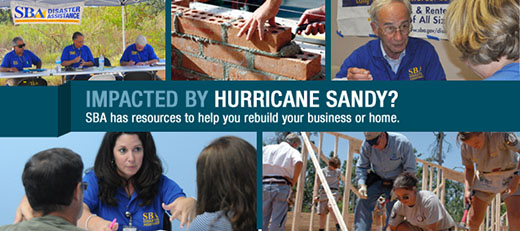
Were you affected by Hurricane Sandy? As Small Business Administration Administrator Karen G. Mills explains, “Getting businesses and communities up and running after a disaster is our highest priority at SBA,” which is why the Small Business Administration has resources to help you rebuild your business or your home.

Businesses of any size, as well as homeowners and renters in areas within a disaster declaration (New York, New Jersey, or Connecticut),  may be eligible to apply for SBA disaster assistance.

Businesses and private non-profit organizations of any size may borrow funds to repair or replace disaster damaged or destroyed real estate, machinery and equipment, inventory, and other business assets, or to make improvements that lessen the risk of property damage by future disasters of the same kind. And Disaster loans are available for homeowners and renters to repair or replace disaster damaged or destroyed real estate or personal property. 

President Obama Gets Update on Storm Relief at FEMA

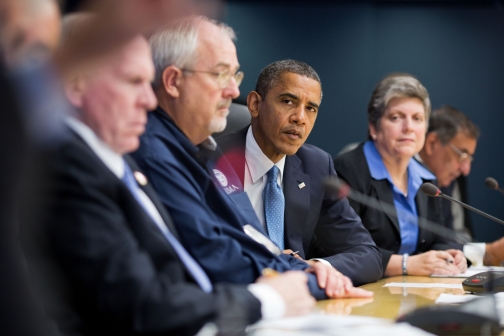
President Obama at FEMA Briefing Nov 3, 2012

President Barack Obama receives a briefing about the ongoing response to Hurricane Sandy, at FEMA headquarters in Washington, D.C., Nov. 3, 2012. Seated, from left, are: FEMA Administrator Craig Fugate; Homeland Security Secretary Janet Napolitano; and Defense Secretary Leon Panetta. November 3, 2012. (Official White House Photo by Pete Souza)

Following a briefing with FEMA leaders and Cabinet officers on Saturday in Washington DC, President Obama stressed the importance of making sure all those who have been impacted by Hurricane Sandy know that help is available for them, and asked all Americans to spread the word that anyone looking for assistance -- from housing to childcare, medicine and a whole range of support -- should call 800-621-FEMA.

The President reiterated that making sure making sure those who suffered loss get the resources they need to rebuild and recover is his number one priority, and outlined the steps being taken to restore normalcy in the region:

Number one, that it is critical for us to get power back on as quickly as possible. And just to give people an example of the kind of work we're doing -- the military, DOD, thanks to the work of Leon and others, have been able to get military transport facilities to move cherry-pickers and personnel from as far away as California to get that equipment into the area so we can start getting some of the power back on as quickly as possible. It is a painstaking process, but we're making progress.

 Number two, we're getting assets in to pump as much water out as possible.  Lower Manhattan obviously is a particularly acute example, but there are problems with flooding that are affecting substations throughout the region. That's going to continue to be a top priority.

 Number three, making sure that people's basic needs are taken care of.  As we start seeing the weather get a little bit colder, people can't be without power for long periods of time, without heat for long periods of time. And so what we're doing is starting to shift to identify where we can have temporary housing outside of shelters so people can get some sense of normalcy. They can have a hot meal; they can have the capacity to take care of their families as their homes are being dealt with.

 Number four, debris removal still important. Number five, making sure that the National Guard and other federal assets are in place to help with getting the transportation systems back up and running -- that's going to be critical.

Weekly Address: Recovering and Rebuilding After the Storm

In this week’s address, President Obama thanks the brave first responders and National Guardsmen for their tireless work following one of the worst storms in our nation’s history, and reassures the millions of Americans affected by Hurricane Sandy that their country will be there for them during the long road to recovery. 

Transcript  |  Download mp4  |  Download mp3

Related Topics: Homeland Security

Weekly Wrap Up: “What’s Brightest in America”

Here's the week in review of the federal response to Hurricane Sandy:

Sunday: President Obama traveled to the Federal Emergency Management Agency (FEMA) headquarters in Washington D.C. to meet with FEMA Administrator Craig Fugate, FEMA Deputy Administrator Richard Serino, and the FEMA regional directors, to ensure federal resources were pre-positioned and plans were in place to support state and local response efforts.

Monday: The President convened a meeting in the White House Situation Room, and received updates from FEMA and the National Hurricane Center on the ongoing response to Hurricane Sandy. Following the briefing, the President urged residents in the path of Hurricane Sandy to follow the directions of their state and local officials.

Watch the President’s full remarks here.

How to Help the Survivors of Hurricane Sandy

Recovery and cleanup in the wake of Hurricane Sandy has now started along much of the East Coast. As survivors of the storm begin to deal with the aftermath of the giant storm, people across the country are asking what they can do to offer aid to their fellow Americans, and the federal governent remains committed to providing all available resources to support affected areas, as directed by President Obama.

We've put together this page to help you find the information you're looking for, whether you want to get help, or get involved in the recovery process.

President Obama Tours Storm Damage in New Jersey

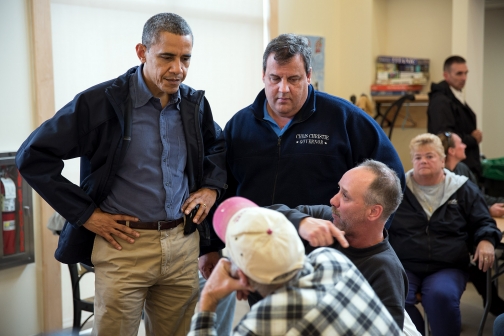
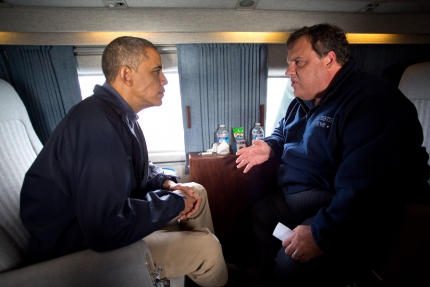
President Obama and Gov. Christie Survey Storm Damage

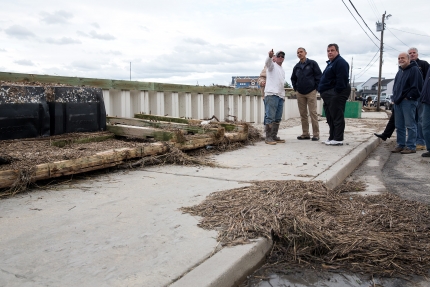
President Barack Obama and New Jersey Gov. Chris Christie talk with citizens who are recovering from Hurricane Sandy, while surveying storm damage in Brigantine, N.J., Oct. 31, 2012. (Official White House Photo by Pete Souza)

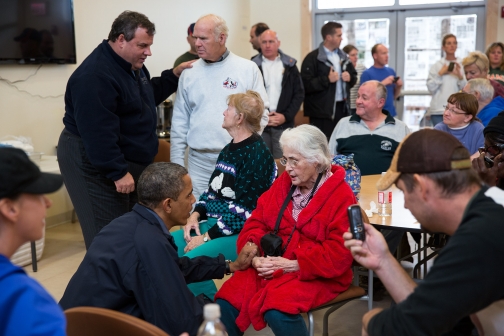
Yesterday, the President was in New Jersey to witness first-hand the devastation of Hurricane Sandy, and comfort the Americans affected by the storm. With New Jersey Governor Chris Christie, he surveyed the damage from Marine One, walked the streets of Brigantine, and visited a community center now serving as shelter for displaced residents.

After speaking with residents and hearing their stories, the President spoke, alongside Governor Chris Christie, FEMA Administrator Craig Fugate, and other officials, to reassure those affected by the storm of recovery, and pledge the full support of the federal government every step of the way. He reminded the American people of our remarkable ability to come together as a country when we go through tough times, and the importance of never leaving anybody behind:

And when you see folks like that respond with strength and resilience, when you see neighbors helping neighbors, then you're reminded about what America is all about.  We go through tough times, but we bounce back.  And the reason we bounce back is because we look out for one another and we don’t leave anybody behind. And so my commitment to the people on this block, the people in this community, and the people of this state is that that same spirit will carry over all the way through until our work is done.

Take a look at the President’s tour of New Jersey:

  • President Obama at FEMA Briefing

    President Obama listens to Transportation Secretary Ray LaHood in a FEMA briefing on Hurricane Sandy (All official White House Photos by Pete Souza)

    1 of 11
  • President Obama Greets New Jersey Gov. Chris Christie

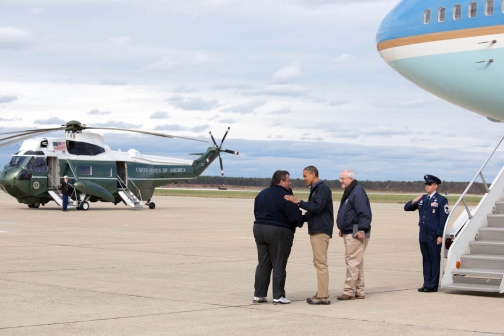
    President Barack Obama and FEMA Director Craig Fugate greet New Jersey Gov. Chris Christie on the tarmac of Atlantic City International Airport in Atl

    2 of 11
  • Marine One and Nighthawk Two

    Marine One, carrying President Barack Obama and New Jersey Gov. Chris Christie, and a second helicopter fly over storm damage near Atlantic City, NJ

    3 of 11
  • President Obama and Gov. Christie Look at Storm Damage

    President Barack Obama and New Jersey Gov. Chris Christie look at storm damage along the coast of New Jersey on Marine One

    4 of 11
  • President Obama Looks at the Storm Damage

    President Barack Obama looks at the storm damage as he and New Jersey Gov. Chris Christie make an aerial tour from Marine One near Seaside Heights, NJ

    5 of 11
  • President Obama Talks with Local Residents

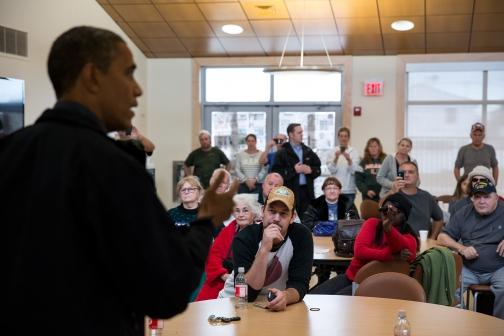
    President Barack Obama talks with local residents at the Brigantine Beach Community Center, currently a shelter for those displaced by Hurricane Sandy

    6 of 11
  • President Obama and Gov. Christie at the Brigantine Beach Community Center

    President Barack Obama and New Jersey Gov. Chris Christie talk with local residents at the Brigantine Beach Community Center

    7 of 11
  • President Obama and Gov. Christie Talk with Local Residents

    President Barack Obama and New Jersey Gov. Chris Christie talk with local residents at the Brigantine Beach Community Center

    8 of 11
  • President Obama and Gov. Christie Survey Storm Damage

    President Barack Obama and New Jersey Gov. Chris Christie talk with citizens who are recovering from Hurricane Sandy

    9 of 11
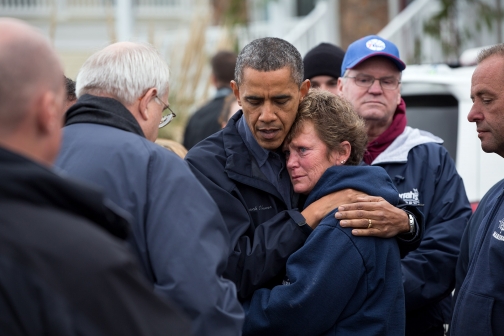
  • President Obama Comforts Donna Vanzant

    President Barack Obama hugs Donna Vanzant, the owner of North Point Marina, as he tours damage from Hurricane Sandy

    10 of 11
  • President Obama, Gov. Chris Christie, and FEMA Administrator Craig Fugate

    President Barack Obama, New Jersey Gov. Chris Christie, FEMA Administrator Craig Fugate, and others make a statement after touring storm damage

    11 of 11
Related Topics: Homeland Security, New Jersey

President Obama in New Jersey: "We Are Here for You"

President Obama Comforts Donna Vanzant

President Barack Obama hugs Donna Vanzant, the owner of North Point Marina, as he tours damage from Hurricane Sandy in Brigantine, N.J., Oct. 31, 2012. (Official White House Photo by Pete Souza)

Two days after Hurricane Sandy made landfall in southern New Jersey, President Obama was on hand to witness the devastation, comfort residents, and pledge the full support of the federal government in the recovery effort.

Across the state, the storm damaged homes, flooded communities, and left more than 2 million people without power. The President and New Jersey Governor Chris Christie surveyed the effects of the hurricane from Marine One, then walked the streets of Brigantine, a town near Atlantic City. The two leaders also visited a community center now serving as a shelter for displaced residents.

"One of our challenges now is to get back to normalcy," said Gov. Christie. "And so the things we need to do is to make sure that we get power restored as quickly as possible; make sure that people have clean drinking water, and waste water treatment plants are working; hospitals are taken care of the way they need to; and that we get kids back to school. And so, I discussed all those issues today with the President, and I’m pleased to report that he has sprung into action immediately to help get us those things."

President Barack Obama and New Jersey Gov. Chris Christie (October 31, 2012)

President Barack Obama and New Jersey Gov. Chris Christie talk as they fly over the coast of New Jersey on Marine One, Oct. 31, 2012. (Official White House Photo by Pete Souza)

President Obama outlined the steps being taken by federal emergency responders. Even before the storm hit, FEMA and other groups were able to preposition supplies like water, food, and power generators. Now more than 2,000 FEMA personnel are on the ground in the state, and the President promised that the recovery effort would continue. 

"Number one, and most important, our hearts go out to the families who have lost loved ones," he said. "For those like the people I just had the chance to meet on this block and throughout New Jersey and throughout the region whose lives have been upended, my second message is we are here for you, and we will not forget; we will follow up to make sure that you get all the help that you need until you've rebuilt."

Update: Check out a slide show of images from today's visit.

Related Topics: Homeland Security, New Jersey

How to Help the Survivors of Hurricane Sandy

Recovery and cleanup in the wake of Hurricane Sandy has now started along much of the East Coast. As survivors of the storm begin to deal with the aftermath of the giant storm, people across the country are asking what they can do to offer aid to their fellow Americans, and the federal governent remains committed to providing all available resources to support affected areas, as directed by President Obama.

We've put together this page to help you find the information you're looking for, whether you want to get help, or get involved in the recovery process.

Help Others+

FEMA offers this list of suggestions for people who want to help storm survivors and affected areas:

  • Cash is the most efficient method of donating. Cash offers voluntary agencies the most flexibility in obtaining the most-needed resources and pumps money into the local economy to help businesses recover. Remember, unsolicited donated goods such as used clothing, miscellaneous household items, and mixed or perishable foodstuffs require helping agencies to redirect valuable resources away from providing services to sort, package, transport, warehouse, and distribute items that may not meet the needs of disaster survivors.
  • At the national level, many voluntary-, faith- and community-based organizations are active in disasters, and are trusted ways to donate to disaster survivors. In addition to the national members, each state has its own list of voluntary organizations active in disasters. If you’d like to donate or volunteer to assist those affected by Sandy, these organizations are the best place to start.
  • Give blood. Numerous blood drives have been canceled as a result of the storm and the Red Cross has a need for blood donations. To schedule a blood donation or for more information about giving blood or platelets, visit redcrossblood.org or call 1-800-RED CROSS (1-800-733-2767).
  • Affiliate with existing non-profit organizations before coming to the disaster area. Immediately following a disaster, a community can become easily overwhelmed by the amount of generous people who want to help. Contacting and affiliating with an established organization will help to ensure that you are appropriately trained to respond in the most effective way.
  • Be safe. Do not self deploy until a need has been identified and the local community impacted has requested support. Wait until it is safe to travel to volunteer sites and opportunities have been identified. Once assigned a position, make sure you have been given an assignment and are wearing proper safety gear for the task.
  • Be patient.  Recovery lasts a lot longer than the media attention. There will be volunteer needs for many months, often years, after the disaster - especially when the community enters the long-term recovery period.

For more, check out this volunteering resource page from FEMA.

Get Help+

If you live in an area affected by the storm, there are a number of resources available to help you get the recovery assistance you need.

Safety is a primary issue when you're recovering from a disaster. Follow these tips to help ensure your safety and cope with the disaster. If you aren't able to return home, states, tribes, localities, and the Red Cross continue to operate emergency shelters along the East Coast. Here's how to find shelter:

  • Monitor conditions in your area; find shelter; and let others know you are safe, with the Red Cross Hurricane App.
  • Download the FEMA app to find a map with open shelters and open FEMA Disaster Recovery Centers.
  • Call the Red Cross at 1-800-RED-CROSS (1-800-733-2767).
  • Search for shelters via text message: text: SHELTER and your ZIP code to 43362 (4FEMA). For example: Shelter 01234 (standard rates apply).

Resources+


President Obama Meets with Damien and Glenda Moore

President Barack Obama meets privately with Damien and Glenda Moore at a FEMA Disaster Recovery Center tent in Staten Island, N.Y., Nov. 15, 2012. The Moore’s two small children, Brandon and Connor, died after being swept away during Hurricane Sandy. (Official White House Photo by Pete Souza)

Update on Hurricane Sandy

President Barack Obama receives an update from officials via video teleconference on the ongoing response to Hurricane Sandy

President Barack Obama receives an update from officials via video teleconference on the ongoing response to Hurricane Sandy, in the Situation Room of the White House, Oct. 30, 2012. Pictured, from left, are: John Brennan, Assistant to the President for Homeland Security and Counterterrorism; Tony Blinken, National Security Advisor to the Vice President; David Agnew, Director for Intergovernmental Affairs; Alyssa Mastromonaco, Deputy Chief of Staff for Operations; and Chief of Staff Jack Lew. October 30, 2012. (Official White House Photo by Pete Souza)

As Hurricane Sandy continues to track westward, federal response teams are already providing assistance for those affected by the storm.

This morning, President Obama convened a video-teleconference in the White House Situation Room with his team to receive the latest update on Sandy’s impact and the work being done to help communities begin the recovery process.

Overnight, at the requests of the governors, the President approved major disaster declarations for New Jersey and New York, making additional federal support for state and local efforts available, as well as direct federal assistance to affected individuals in declared counties.

For the latest information about recovery efforts, visit FEMA.gov and keep checking back at WhiteHouse.gov.

Update:

This afternoon, President Obama traveled to the Washington headquarters of the U.S. Red Cross where he offered another update about federal efforts to assist with the recovery and clean up from Hurricane Sandy.

The remnants of Sandy continue to track westward, however, and to begin, he spoke directly to those who live in areas still in the path of the storm.

“This storm is not yet over.  We’ve gotten briefings from the National Hurricane Center.  It is still moving north,” he said. “There are still communities that could be affected.  And so I want to emphasize there are still risks of flooding, there are still risks of down power lines, risks of high winds.  And so it is very important for the public to continue to monitor the situation in your local community, listen to your state and local officials, follow instructions.  The more you follow instructions, the easier it is for our first responders to make sure that they are dealing with true emergency situations.”
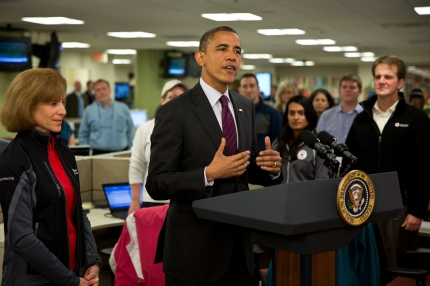
President Barack Obama delivers remarks at the Red Cross (October 30, 2012)

President Barack Obama delivers remarks during his visit to the Disaster Operation Center at the Red Cross national headquarters in Washington, D.C., Oct. 30, 2012. (Official White House Photo by Pete Souza)

There are still millions of people without power and many whose neighborhoods have been damaged or destroyed by water, heavy winds, and falling trees. The President promised to bring the full weight of federal resources to bear in helping those victims recover.

“There are places like Newark, New Jersey, for example, where you’ve got 80, 90 percent of the people without power,” he said. “We can't have a situation where that lasts for days on end.  And so my instructions to the federal agency has been, do not figure out why we can't do something; I want you to figure out how we do something.  I want you to cut through red tape.  I want you to cut through bureaucracy.  There’s no excuse for inaction at this point.  I want every agency to lean forward and to make sure that we are getting the resources where they need -- where they're needed as quickly as possible.”

Watch the full remarks here.
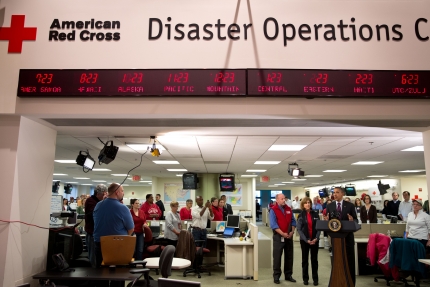
President Obama delivers remarks during his visit to the Disaster Operation Center at the Red Cross

President Barack Obama delivers remarks during his visit to the Disaster Operation Center at the Red Cross national headquarters in Washington, D.C., Oct. 30, 2012. (Official White House Photo by Pete Souza)

President Obama Urges Caution for Those in the Path of Hurricane Sandy

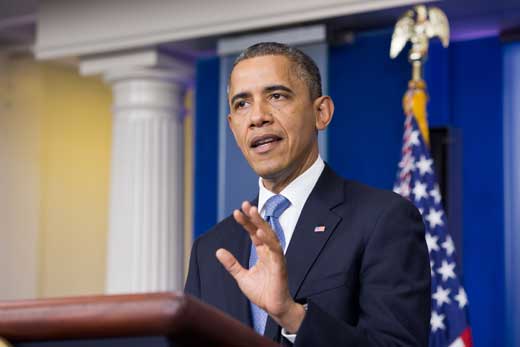
President Obama talks to employees at FEMA

President Barack Obama delivers a statement after receiving an update on the ongoing response to Hurricane Sandy, in the Brady Press Briefing Room at the White House, Oct. 29, 2012. (Official White House Photo by Chuck Kennedy)

Communities up and down the East Coast of the United States are beginning to feel the impact of Hurricane Sandy. Today, President Obama convened a meeting in the White House Situation Room to receive updates from FEMA and the National Hurricane Center.

Following that briefing, the President discussed how federal emergency response teams are moving resources into place to ensure that potentially affected areas have the food, water, and disaster relief supplies they need to begin recovery

“Obviously, everybody is aware at this point that this is going to be a big and powerful storm,” the President said. “And all across the Eastern seaboard, I think everybody is taking the appropriate preparations."

Related Topics: Homeland Security