
Energy and Environment Latest News
We Can Clean the Air, Create Jobs and Power the Economy at the Same Time
Posted by on October 27, 2011 at 4:25 PM EDTEditor's Note: This blog introduces readers to Ralph Izzo, Chairman, President and CEO of Public Service Enterprise Group.
As one of the largest electricity generators in the U.S., we, at Public Service Enterprise Group (PSEG), believe that EPA's air pollutant regulations should be viewed as an opportunity to modernize the nation's electric power infrastructure. PSEG has been a long-time advocate of these Clean Air Act regulations and has put its money where its mouth is, investing over one and a half billion dollars in improvements to its coal-fired plants. These regulations will not only improve air quality for our nation's citizens, but will also create jobs and an active marketplace for emissions trading.
Frankly, action is long overdue. The air pollutant regulations proposed by EPA are in response to the D.C. Circuit's rejection of two rules (the Clean Air Interstate Rule (CAIR) and the Clean Air Mercury Rule) originally proposed by the Bush Administration. Thus, these regulations do not come out of the blue. The regulatory process for regulating toxic air emissions commenced over two decades ago, and the court concluded CAIR was "fundamentally flawed" in 2008.
For our part at PSEG, we believed it made good business sense to be proactive in positioning our generation fleet to meet what the rules would require. During the past five years, we have invested more than $2 billion to replace inefficient, older generating units and upgrade our existing facilities in New Jersey, New York, Connecticut, and Pennsylvania. These air quality standards are achievable with the appropriate investment. For example, nearly 60 percent of all coal-fired boilers that submitted data to EPA are currently achieving the Utility Toxics Rule's proposed mercury standards. Existing pollution control technologies have demonstrated their mettle, and they need to be further deployed throughout the nation.
Our experience shows that it is possible to clean the air, create jobs, and power the economy at the same time. For example, our New Jersey coal plants with their various pollution-control systems have been able to reduce, by over 90 percent, emissions of mercury, acid gases and soot. Installing the systems created approximately 1,600 construction jobs and enabled us to add dozens of full-time positions. We are proud of these results and proud to have facilities that are among the cleanest coal stations in America.
Reliability is a critical consideration at all times in the electric power industry. We believe our industry is capable of meeting these clean air rules while maintaining electric system reliability. The U.S. bulk power system, at an aggregate level, has adequate spare capacity to absorb potential retirements. Many of the uncontrolled units, which are most likely to retire, are smaller, inefficient units and companies are already making retirement decisions independent of the Utility Toxics Rule due to fundamental economics. Moreover, the electric industry has a proven track record of adding additional generating capacity and transmission solutions when and where needed and of coordinating effectively to address reliability concerns.
The Clean Air Act gives affected sources three years from the issuance of the final rules to comply with the regulations. Further, if there are isolated reliability issues in areas of heavy demand as a result of implementing the air regulations affecting the electric sector, existing risk management procedures under the Clean Air Act, the Federal Power Act, and other statutes already provide EPA, the Department of Energy, the Federal Energy Regulatory Commission, and the President with tools to address unforeseen impacts on electric system reliability on an individual basis.
Simply put, the time is overdue to implement the Clean Air Act Amendments of 1990. Doing so will help provide much needed certainty to invest in capital-intensive projects such as power plants that operate for 40 years or longer. Having these regulations in place will make it clear what the energy industry needs to do. In contrast, any significant delay for these rules will only perpetuate uncertainty where clarity is needed. The time for action is now.
Ralph Izzo is Chairman, President and CEO of Public Service Enterprise Group
Learn more about Energy and EnvironmentLeading the World in Transparency in Natural Resource Revenues
Posted by on October 25, 2011 at 4:23 PM EDTOver the last two and a half years, President Obama has placed a high priority on making government more effective, transparent, and responsive to the needs of citizens. Nowhere is transparency more important than in the management, development, and collection of revenues from energy and minerals in our public lands and oceans. Oil, gas, coal, renewable fuels, and minerals that the Department of the Interior oversees belong to every American, and every American deserves a fair return from development. That is why we have strengthened our royalty and revenue collection program; proposed to bring oil and gas royalty rates on public lands in line with those on private lands; strengthened requirements in energy leases to encourage timely exploration and development; and taken a number of other steps that will help guarantee the taxpayer a full and fair return from their resources.
A critical component of our reform efforts is the President's commitment to implementing what is known as the Extractive Industries Transparency Initiative (EITI). This international initiative sets a global standard for managing revenues from natural resources, and I am honored to serve as the official representative of the United States.
In many ways, the U.S. is now among the world leaders in transparency for royalty and revenue collections. By playing a central role in EITI, we can share best practices that will help governments, companies, and civil societies around the world manage their resources responsibly. U.S. companies, in particular, will benefit from improved disclosure policies around the world that will allow them to compete on a level playing field in a healthy marketplace.
Our work under this initiative is only beginning, and I look forward to working closely with industry, stakeholders, and the public on EITI as we move forward.
For more information about the United States Open Government National Action Plan, click here.
Learn more about , Energy and Environment, Foreign PolicyLeading by Example: GSA Electrifies the Fleet; Delivers First Electric Vehicle to Navy
Posted by on October 25, 2011 at 3:30 PM EDTIn 2009, when President Obama issued his Executive Order 13514 challenging the Federal Government to lead by example by improving energy, environmental, and economic performance, GSA answered the call. As the federal government's fleet operator, we have leveraged our portfolio to drive cost-saving, fuel efficient initiatives across the federal government. Each year, we have procured thousands of fuel efficient vehicles to replace older, less efficient ones. We also continue to improve management of about two-thirds of the Federal fleet, while directly increasing the fuel efficiency of the vehicles we own and lease to federal agencies— about 210,000 vehicles in total.
In fiscal year 2010, GSA successfully doubled the federal hybrid fleet, without increasing the total number of vehicles overall, resulting in a fleet fuel efficiency improvement equivalent to reducing petroleum consumption by an estimated 7.7 million gallons of gasoline or 385,000 barrels of oil. To build on this, in May we launched our electric vehicle pilot to integrate these advanced vehicles and infrastructure into the federal government fleet for the first time. Last week, GSA delivered the pilot program's first plug-in electric vehicle to the Department of the Navy.

Navy receives the first Federal plug-in electric.
The Department of the Navy has been a leader in energy security and their Chevy Volt will be one of many vehicles incorporated into the electric vehicle fleet. As vehicles for GSA's electric vehicle pilot begin to roll off the assembly line, we will continue deliveries to the 20 Federal agencies across the country participating in our pilot. As we help agencies move toward the President's goals to reduce petroleum consumption and achieve 100% advanced fuel vehicle purchases by 2015, we are also supporting the President's plan to put one million advanced vehicles on the road by that same date. Annually, the plug-in electric vehicles in our pilot are expected to save nearly 29,000 gallons of gas, reduce GHG emissions by 257 metric tons, and save taxpayer dollars in avoided fuel costs.
In just over two years, we have procured vehicles that were on average nearly 25 percent more fuel-efficient than the vehicles they replaced. Currently, roughly 50 percent of GSA's 210,000 leased vehicles are alternative fuel vehicles. Our commitment doesn't stop here. The President also directed GSA to develop and distribute a Vehicle Allocation Methodology (VAM), a standard way to ensure that each vehicle in an agency's fleet is correctly sized and is appropriate for accomplishing the agency mission. The VAM will help agencies identify opportunities to incorporate alternative fuel vehicles and identify and eliminate unnecessary vehicles from their fleets.
GSA will continue to lead the Federal Government toward more sustainable fleet solutions that cut our petroleum use and save tax payer dollars for a cleaner, more secure energy future.
To learn more on GSA's fleet management initiatives, check out this year's annual GreenGov Symposium, to be held in Washington, D.C. this Monday, October 31st through November 2nd.
Michael J. Robertson is Chief of Staff of the U.S. General Services Administration
Learn more about Energy and EnvironmentComing Soon to a Delivery Route Near You: Cleaner Trucks
Posted by on October 21, 2011 at 4:15 PM EDTHTUF is a good example of the successful public-private partnerships that this Administration looks to foster. For the conference attendees, the "ride and drive" convoy was an opportunity to show off and try out fuel efficient and all-electric trucks of all shapes and sizes, many rolling through streets across the country today and others destined for tomorrow's delivery routes. For me, it was an exciting look at cutting-edge technologies and a reminder of the value of policies that foster this innovation.

CEQ Deputy Director Gary Guzy in the driver's seat of a hydraulic hybrid garbage truck.
From day one, the Administration has supported investments in breakthrough clean energy technologies that will reduce air pollution, address climate change, improve our nation's energy security, help our industry outcompete the rest of the world, and drive long-term economic growth. For example:
- Thanks to investments in clean energy, the U.S. is on track to produce 40% of the world's batteries for advanced vehicles by 2015, a major leap from producing just 2% of the world's batteries prior to the Recovery Act.
- A Presidential Memorandum issued this May directs agencies to implement government-wide fleet management practices that will ensure the Federal Government is leading by example, purchasing 100% alternative fuel vehicles by 2015 and reducing oil consumption by 30% by 2020.
- Through public-private partnerships like the National Clean Fleets Partnership and EPA's SmartWay program, the Administration is helping large companies and the trucking industry reduce diesel and gasoline use in their fleets and incorporate electric vehicles, alternative fuels, and fuel-saving measures.
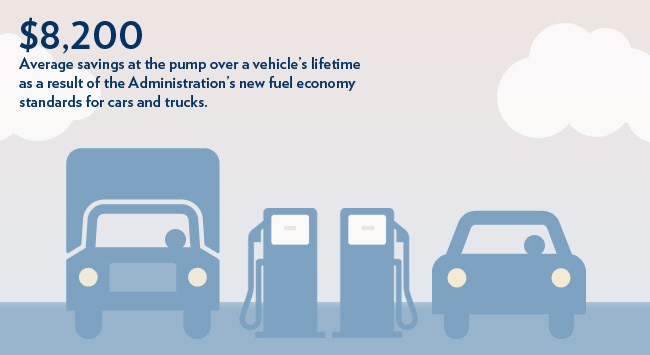
- This summer, the Administration finalized first-ever fuel efficiency and greenhouse gas standards for heavy duty trucks. This is on top of the President's announcement of a framework for proposed fuel efficiency and greenhouse gas standards for cars and light trucks that would double the efficiency of our light duty vehicle fleet by 2025.
With investment in technology innovation and standards that level the playing field for cleaner technologies to compete, the streets of our cities and towns will begin to look more like last week's convoy in Baltimore. Among the trucks on parade were class 8 tractor trailer hybrids, a class 8 fuel cell truck, hydraulic hybrid garbage trucks (interesting side note: EPA played a lead role in developing this technology), all-electric delivery vans and buses, hybrid work trucks, and bucket trucks with electrified boom lifts that eliminate the need to leave engines idling.
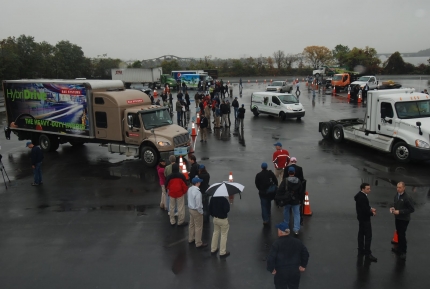
Some of the hybrid, electric, and other advanced-technology trucks on display at the Hybrid Truck Users Forum 2011 "ride and drive" convoy. Photo courtesy of CALSTART.
Not only will weekly garbage pick-up bring less pollution to your neighborhood, but many of the cutting edge technology innovations will find their way into other applications – in our cars, small trucks, and even our military vehicles. If you wondered why the U.S. Army co-sponsored a hybrid truck event, it's because the technology being tested in delivery trucks today can help reduce fuel use on the battlefield tomorrow. Announcing the Department of Defense Operational Energy Strategy recently, the Deputy Secretary of Defense Bill Lynn, explained the impact of our military's fuel dependence:
[T]he costs of that energy use aren't just financial, they are strategic and tactical. All too often those costs can be measured in lives lost moving and guarding fuel on the battlefield. These risks and costs associated with our energy use mean that we must change the way we manage energy on the battlefield, and strive to reduce demand at all levels of our forces.
Finally, last week's technology showcase wasn't just a window into America's future; it was a glimpse of the future of transportation worldwide and the business opportunities for U.S. industry. Demand is growing across the globe for cleaner transportation options that use less fuel and create less pollution, and U.S. companies are positioning themselves to lead this market. At the conference last week, CALSTART kicked off a U.S.-China Clean Truck Technology Forum to help connect clean truck and bus technology firms with partners in China. This project is funded by a grant from the Department of Commerce's International Trade Administration, which looks for opportunities to translate American business leadership into trade opportunities abroad.
As the President said on his first Earth Day in office,
Now, the choice we face is not between saving our environment and saving our economy. The choice we face is between prosperity and decline. We can remain the world's leading importer of oil, or we can become the world's leading exporter of clean energy. We can allow climate change to wreak unnatural havoc across the landscape, or we can create jobs working to prevent its worst effects. We can hand over the jobs of the 21st century to our competitors, or we can confront what countries in Europe and Asia have already recognized as both a challenge and an opportunity: The nation that leads the world in creating new energy sources will be the nation that leads the 21st-century global economy.
We can be that nation, and from the leadership and innovation on display last week, I'd say we are on the road to get there.
Drew McConville is Deputy Associate Director for Energy & Climate Change at the White House Council on Environmental Quality
Learn more about Energy and EnvironmentPresident Obama Honors 2011 Citizens Medal Recipients
Posted by on October 20, 2011 at 6:27 PM EDT
President Barack Obama delivers remarks at the 2011 Presidential Citizens Medal ceremony in the East Room of the White House, Oct. 20, 2011. (Official White House Photo by Pete Souza)
Today, President Obama recognized the 13 recipients of the Presidential Citizens Medal, one of the highest honors a civilian can receive. The award is given to Americans who have "performed exemplary deeds of service for their country or their fellow citizens." At a ceremony in the East Room, the President praised the honorees' commitment to service:
The 13 Americans that we honor today have all faced that … moment when you see a neighbor in need and you have to ask yourself the question. They come from different backgrounds and they’ve devoted their lives to different causes, but they are united by the choice that they’ve made. They could have made excuses for doing nothing. Instead, they chose to help.
This year’s winners truly included Americans from all walks of life. John Keaveney, a Scottish immigrant, served two tours in Vietnam before coming back to establish a home for homeless and disabled veterans with addiction and mental health problems. Janice Langbehn of Lacey, Washington went to court to fight for hospital visitation rights for same-sex couples after being denied the chance to say goodbye as her partner of 18 years lay dying in a hospital.
Dr. Michelle Martin, a Los Angeles resident, founded an organization that connects kids in underserved communities with instruments and music lessons after watching gang members stop to watch a young boy play his violin at the farmer’s market. Roberto Perez is an ordained Methodist pastor who counsels inmates and is president of a nonprofit organization that has taught more than 7 million people to read worldwide.
The 13 people chosen to receive this year’s medal were nominated by the public, and then carefully selected by the White House. Click here to learn more about the recipients and to watch a video showing their reactions to the news they’d been chosen. President Obama explained that the nomination process was not an easy one:
I’m happy to say that there was a pretty stiff competition for these medals. Citizens … submitted nearly 6,000 nominations online, and it took us four months to select the winners. In the end, these 13 individuals were chosen not just for the work they do, but for the example that they set.
The honorees, their families, and the people who nominated them attended the ceremony this afternoon, followed by a reception in the State Dining Room.
Learn more about Civil Rights, Education, Energy and Environment, Poverty, Service, Veterans, Women, Working FamiliesClean Tech LiveChat with Richard Kauffman this Thursday
Posted by on October 19, 2011 at 5:27 PM EDTEd. Note: Cross-posted from Energy.gov
On Energy.gov, we’ve been showcasing a series of stories about innovations from our National Laboratories that have been successfully commercialized – and how they impact Americans’ lives. During 2010 alone, our National Laboratories engaged in more than 13,500 technology transfer transactions – from licensing lab-developed technologies to using lab resources to drive industry innovation and commercial success.
But to ensure American leadership in emerging energy technologies, we must address the financial and deployment obstacles facing renewable energy.
On Thursday, October 20th, at 2:00 p.m. EDT, please join Richard Kauffman, Senior Advisor to the Secretary of Energy, for a live discussion about the challenges and opportunities of renewable energy innovation and deployment.
Kauffman recently joined the Energy Department from the private sector, where he served as the Chief Executive Officer of Good Energies, a global investor in renewable energy and energy efficiency technologies. Regarded as one of the country’s leading experts on private sector investment in clean energy, Kauffman is looking forward to working with the business community to break down financial obstacles that stand in the way of deploying clean technologies.
You can submit your questionsand ideas about renewable innovation and deployment to Richard Kauffman in advance of the event through email, Twitter or Facebook, by:
• Sending an email to newmedia@hq.doe.gov;
• Tweeting your question to @energy with the hashtag #energymatters; or
• Leaving a question for Kauffman at Facebook.com/energygov.You’ll also be able to send him questions live during the event using the above methods or by visiting Energy.gov.
The United States can transform our energy future, but we must address market obstacles facing new technologies. We hope to see you online on Energy.gov this Thursday at 2:00 p.m. EDT to discuss what can be done.
Learn more about Energy and Environment
- &lsaquo previous
- …
- 104
- 105
- 106
- 107
- 108
- 109
- 110
- 111
- 112
- …
- next &rsaquo
Related Videos
-
 May 09, 2014 9:21 AM
Inside the White House: Solar Panels
-
 September 01, 2016 9:25 PM
President Obama Delivers a Statement to the Press
White House Blogs
- The White House Blog
- Middle Class Task Force
- Council of Economic Advisers
- Council on Environmental Quality
- Council on Women and Girls
- Office of Intergovernmental Affairs
- Office of Management and Budget
- Office of Public Engagement
- Office of Science & Tech Policy
- Office of Urban Affairs
- Open Government
- Faith and Neighborhood Partnerships
- Social Innovation and Civic Participation
- US Trade Representative
- Office National Drug Control Policy