
Energy and Environment Latest News
The Land and Water Conservation Fund and the Wilderness Act Turn 50
Posted by on September 3, 2014 at 11:50 AM EDTFifty years ago today, President Lyndon Johnson signed two landmark bills, ushering in a new era of conservation.
The Land and Water Conservation Fund Act codifies the simple premise that when we take something from the earth, we have a responsibility to give something back. Using revenues from offshore oil and gas development, the Land and Water Conservation Fund has made critical investments in nearly every county in the United States. The LWCF has been used to increase access to the outdoors for hunting, fishing, and other recreation, to protect iconic places like National Parks and Civil War battlefields, and to advance over 40,000 local projects.
Thanks to the Wilderness Act, more than 109 million acres of wild land have received our country’s strongest protections, ensuring that future generations can continue to enjoy these places as they are today, and as they were hundreds of years ago. Designated wildernesses promote clean air and water, provide habitat for iconic wildlife, and protect places of incomparable natural beauty for all Americans to experience and enjoy.
But more than that, these laws protect what the novelist Wallace Stegner called “the geography of hope,” a vision of the American continent in all its vastness, its wildness, its natural power. “Something will have gone out of us as a people if we ever let the remaining wilderness be destroyed,” Stegner wrote in 1960. “We need wilderness preserved — as much of it as is still left, and as many kinds — because it was the challenge against which our character as a people was formed.”
Learn more about Energy and EnvironmentHappy 98th Birthday to the National Park Service
Posted by on August 25, 2014 at 12:29 PM EDT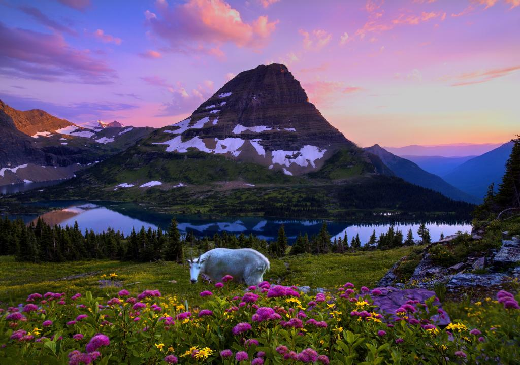
From our spacious skies and fruited plains to our purple mountain majesties, the United States boasts some of the world's most breathtaking natural lands. On August 25, 1916, President Woodrow Wilson created the National Park Service to formally protect and preserve these lands so people all over the world could experience America's historic beauty and heritage for years to come.
Today, the National Park Service manages 401 national parks and memorials, which supported 238,000 jobs and pumped more than $26 billion into local economies last year. In fact, for every $1 we invest in our national parks, our economy sees $10 in return.
Take a glimpse at what the National Park Service has been working to preserve for 98 years, and follow the National Park Service and the U.S. Department of Interior on Twitter to see more of what makes America so beautiful.
Learn more about Energy and Environment,Modernizing the National Environmental Policy Act: Taking Steps to Improve Efficiency
Posted by on August 22, 2014 at 10:30 AM EDTThe President takes seriously the need for efficient permitting and decision making by Federal agencies. This week, the Council on Environmental Quality (CEQ) is releasing for comment draft Programmatic NEPA Guidance to improve the efficiency and timeliness of Federal agencies’ environmental reviews under the National Environmental Policy Act (NEPA).
Since it was signed into law in 1970, NEPA has been a cornerstone of our Nation’s modern environmental protections, ensuring that Federal agencies make informed and transparent decisions when evaluating actions that could have an impact on the environment. NEPA also ushered in a new era of citizen participation in government, providing the public with transparent information about how proposed Federal agency actions will affect their communities and environment.
The draft Programmatic NEPA Guidance is part of the Administration’s broader efforts to expedite, modernize, and reinvigorate Federal agency implementation of NEPA. Specifically, the draft guidance will clarify opportunities to conduct efficient and thorough environmental reviews; assist agency decision makers and the public in understanding the environmental impacts from proposed large-scope Federal actions and activities; and encourage a more consistent approach to programmatic NEPA reviews.
Since President Obama took office, CEQ has taken a series of actions to ensure that NEPA reviews are timely, informative, and useful for advancing decisions that result in better outcomes for our communities and environment. These efforts include:
· providing new resources to assist Federal agencies in improving the efficiency of environmental reviews;
· working with Federal agencies through a pilot program to identify innovative approaches that reduce the time and costs required for effective implementation of NEPA regulations;
· improving conflict resolution practices; and
· integrating and aligning the NEPA environmental review process with other Federal and State environmental reviews.
Programmatic reviews assess the environmental impacts of actions associated with broad Federal programs or policies, avoiding repetitive analyses that would occur if each action were analyzed individually. Programmatic reviews may be followed by site-specific reviews, a process known as tiering, or they may serve as stand-alone NEPA reviews.
CEQ will continue to work to identify new ways to increase efficient agency decision making while reducing environmental impact. To view the draft guidance, visit www.whitehouse.gov/administration/eop/ceq/initiatives/nepa/programmatic-reviews.
Horst Greczmiel is Associate Director for NEPA Oversight at the White House Council on Environmental Quality.
Learn more about Energy and EnvironmentEnvironmental Educators and Students Honored at White House Ceremony
Posted by on August 14, 2014 at 4:47 PM EDTThis week, we welcomed outstanding students and teachers from across the country to the White House for the Presidential Environmental Education Awards National Recognition Ceremony. We were wowed by their smarts, their ingenuity, and their commitment to environmental issues.
Climate change and environmental problems are some of the greatest challenges of our time. Climate impacts threaten lives and livelihoods — from more frequent and intense drought, storms, fires, and floods to higher insurance premiums, property taxes, and food prices. Current and future generations of public servants, scientists, educators, and entrepreneurs will have to work together to solve these problems.
Fortunately for all of us, these impressive students and teachers are doing great work, and the President’s Environmental Education Awards honor that spirit. Since 1971, the President has joined with EPA to recognize the importance of environmental education in protecting our nation’s air, water, land, and ecology. One outstanding student project and up to two outstanding teachers can be selected from each EPA region for national recognition.
When Deepika Kurup of New Hampshire came face-to-face with a lack of access to clean drinking water in India, she took action, building water purifiers that use a chemical reaction catalyzed by sunlight to kill common bacteria. Meanwhile, students in California created “Donate, Don’t Dump,” a campaign to get surplus and short-dated food from grocers, growers, and food companies to the hungry rather than sent to landfills. The campaign has grown into a teen-run nonprofit with 20 chapters in 4 states and 4,000 members.
Learn more about Energy and EnvironmentU.S.-Africa Leaders Summit: Climate Change Makes Sustainable Development Crucial to Africa
Posted by on August 5, 2014 at 4:03 PM EDTThis week, more than 40 heads of state and government from across Africa are joining President Obama in Washington for the first-ever U.S.-Africa Leaders Summit. Since 2000, the continent has seen enormous progress. Rates of extreme poverty and hunger are down. The number of new HIV infections in sub-Saharan Africa dropped by almost 40 percent between 2001 and 2012. Access to education and health care is on the upswing.
As a result, Africa today is a continent of opportunity. Six of the 10 fastest-growing economies are on the African continent, driven by a rising middle class and a generation of optimistic young people. By 2035, the continent will have a working-age population bigger than that of China or India.
This is the time for the United States and African leaders to look beyond the crises of the moment to the opportunities the next 10 to 15 years have in store — which is why the theme of this week’s Leaders Summit is “Investing in the Next Generation.”
A key part of that agenda hinges on helping African nations develop sustainable economies whose future growth is not constrained by the threat of climate change and environmental degradation. That’s why the Leaders Summit highlights the ways that the United States and Africa are partnering to address both the drivers and impacts of climate change.
Learn more about , Energy and EnvironmentJohn Podesta: "The Cost of Inaction"
Posted by on August 5, 2014 at 1:55 PM EDTToday, John Podesta, Counselor to the President, sent the following message to the White House email list. Want to be on the list? Sign up for updates.
The facts are in. The science is definitive. The question is no longer whether climate change is happening, but whether we can afford not to act.
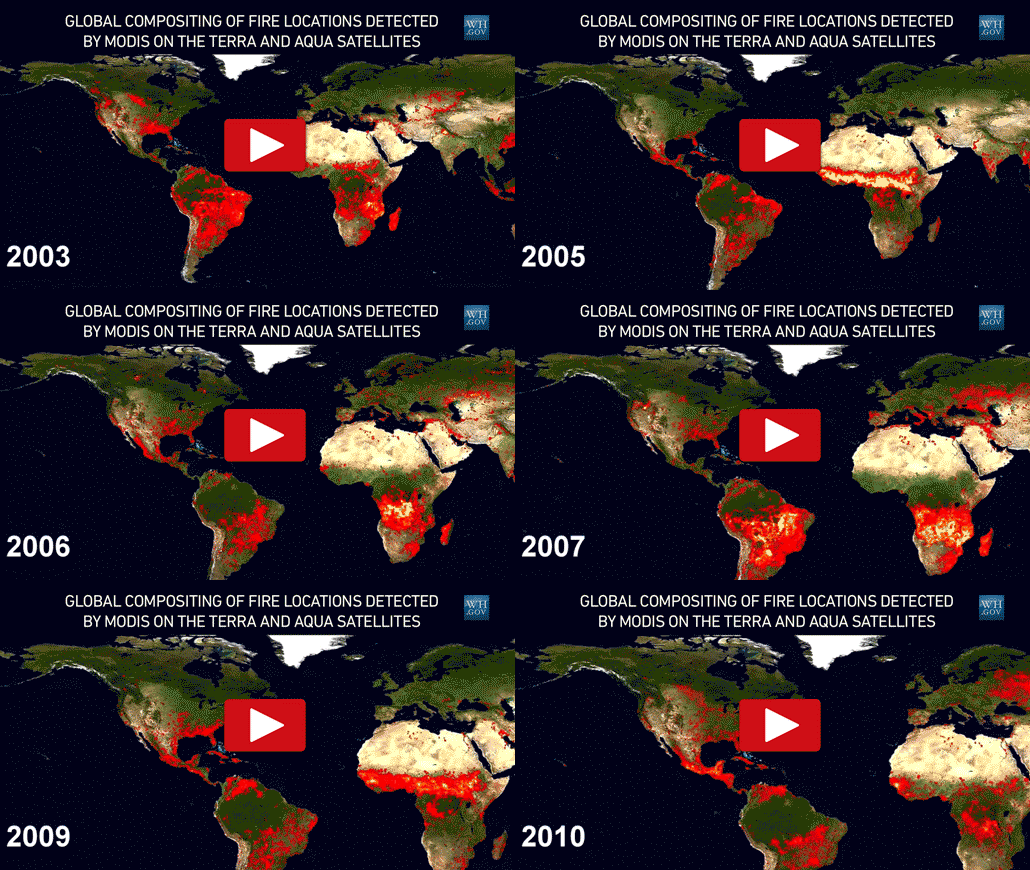
In the western United States, changes in our climate are fueling wildfire seasons that are longer and more intense -- putting people, communities, and businesses at risk.
As we're seeing right now, wildfires unquestionably have devastating impacts on the lives of many Americans. This weekend, California declared a state of emergency as two major wildfires scorched acres of land, threatening towns and forcing many to evacuate. These are just two of the 14 fires that are currently burning throughout the state.
Make no mistake: The cost of inaction on wildfires and climate change is too high a price for Americans to pay, particularly when we have a chance to address this right now.
 Learn more about Energy and Environment
- &lsaquo previous
- …
- 26
- 27
- 28
- 29
- 30
- 31
- 32
- 33
- 34
- …
- next &rsaquo
Related Videos
-
 May 09, 2014 9:21 AM
Inside the White House: Solar Panels
-
 September 01, 2016 9:25 PM
President Obama Delivers a Statement to the Press
White House Blogs
- The White House Blog
- Middle Class Task Force
- Council of Economic Advisers
- Council on Environmental Quality
- Council on Women and Girls
- Office of Intergovernmental Affairs
- Office of Management and Budget
- Office of Public Engagement
- Office of Science & Tech Policy
- Office of Urban Affairs
- Open Government
- Faith and Neighborhood Partnerships
- Social Innovation and Civic Participation
- US Trade Representative
- Office National Drug Control Policy