Energy and Environment Latest News
FACT CHECK: All-of-the-Above Approach to American Energy
Posted by on February 29, 2012 at 4:37 PM EDTLately, there have been a lot of misleading claims about gas prices. As middle class families are struggling with high prices at the pump, a result of increased global oil prices, politicians have renewed their promises for $2 gas and their misleading claims about who is to blame. One thing is clear, cheap political points and false debates won’t bring down the price of gasoline.
The fact is, oil is bought and sold in a world market. And just like last year, the biggest thing that’s causing the price of oil to rise right now is instability in the Middle East.
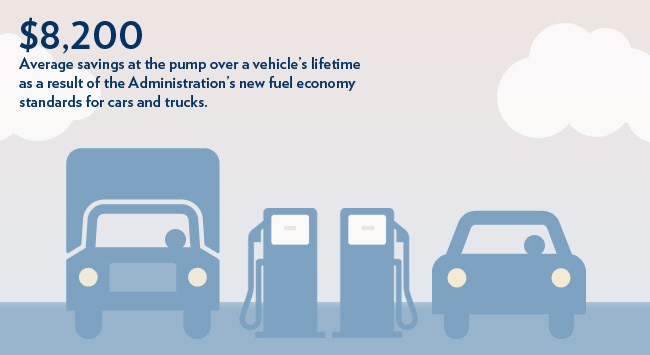
The truth is that there is no silver bullet to address rising gas prices in the short term, but there are steps we can take to ensure the American people don’t fall victim to skyrocketing gas prices over the long term. That’s why since taking office the President has been focused on a sustained, “all-of-the-above” approach to developing new domestic energy sources, expanding oil and gas production, and reducing our reliance on foreign oil, most notably through the historic fuel economy standards the President has established, which will nearly double the efficiency of the vehicles we drive and save families $1.7 trillion at the pump. It’s true that in the near term, the U.S. will continue to rely on responsibly produced oil and gas, but over the long term, the Obama administration is committed to a policy that allows us to transition from oil towards cleaner alternatives and energy efficiency. This strategy is a win-win scenario. A win for the economy. A win for energy security. And a win for the environment. Despite the facts, Republicans have continued to ratchet up the rhetoric, distorting facts and in some cases pushing complete falsehoods for short term political gains.
Here are some of the claims that have been made recently, and the reality that the politicians making those claims fail to acknowledge.
Learn more about Energy and EnvironmentBy the Numbers: $4 Billion
Posted by on February 25, 2012 at 8:30 AM EDT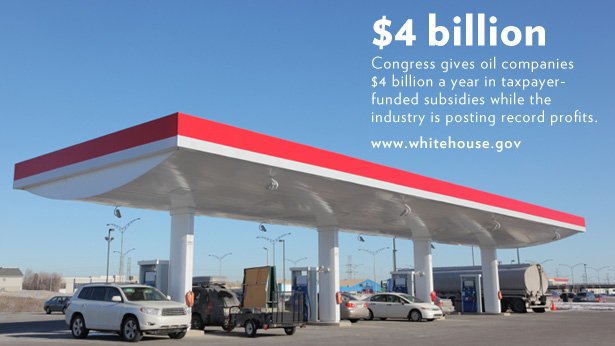
Oil companies receive $4 billion every year in taxpayer-funded subsidies, despite continually bringing in record high profits. Meanwhile, gas prices are on the rise—just like they were this time last year—and the same people funding those subsidies are paying more at the pump for the gas they need to get to school and work.
 As the President explained in his weekly address, there are no quick fixes to this problem. But we can develop a strategy to take control of our energy future and avoid gas spike prices down the line.
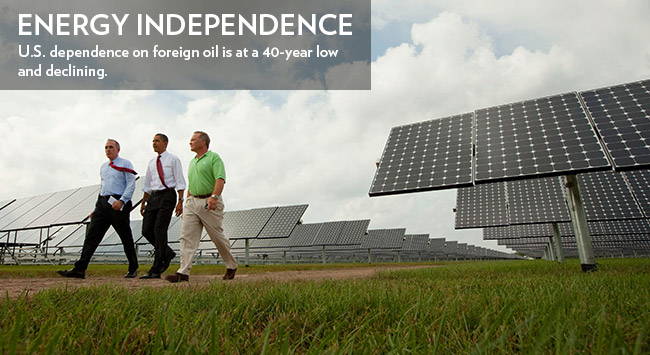
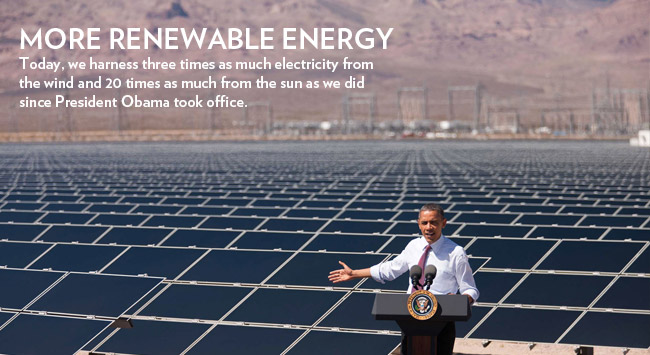
In his State of the Union, President Obama introduced an all-of-the-above strategy that develops every available source of American-made energy. This includes everything from tapping our offshore oil supplies and vast natural gas reserves, to doubling down on clean energy resources like wind and solar power, to developing new technologies that help us use less energy altogether.
But we need the right incentives in place to help put this strategy in place. Instead of $4 billion in yearly taxpayer-funded subsidies to the oil industry, we should renew tax credits that encourage new investments in clean energy.
Want to know more about President Obama’s blueprint for an America built on homegrown energy? Here’s everything you need to know.
Learn more about Economy, Energy and EnvironmentWeekly Address: An All-Of-The-Above Approach to American Energy
Posted by on February 25, 2012 at 6:30 AM EDTPresident Obama talks about how important it is to embrace an all-of-the-above approach to addressing our nation’s energy challenges.
Transcript | Download mp4 | Download mp3
Learn more about Economy, Energy and EnvironmentWeekly Wrap Up: "Sweet Home Chicago"
Posted by on February 24, 2012 at 7:07 PM EDTA quick look at the week of February 20th on WhiteHouse.gov:
Your Voice, Your $40: On Wednesday, the President signed the Middle Class Tax Relief and Job Creation Act of 2012, which extends the payroll tax cut and emergency jobless benefits through the end of the year. He credits the Americans who added their voices to the debate by letting their representatives know what $40 means to them—“This got done because of you…You made it clear that you wanted to see some common sense in Washington.”
President Obama, In Performance: Some huge names in music—Mick Jagger and B.B. King, among others—joined the President and the First Lady for a night of blues on Tuesday as part of the PBS “In Performance at the White House” series. By now, we’re no strangers to the President’s impressive pipes, and he certainly held his own against the music legends as he sang a few lines of “Sweet Home Chicago.”
New Museum on the Block: Tourists and locals alike appreciate Washington, D.C.’s museums. In 2015, a new one will open its doors—the Smithsonian National Museum of African American History and Culture. The President, who was accompanied by the First Lady at the future museum’s ground breaking on Wednesday morning, remarked that, “This museum should inspire us…It should stand as proof that the most important things rarely come quickly or easily. It should remind us that although we have yet to reach the mountaintop, we cannot stop climbing.”
CC2C: Dr. Jill Biden and Labor Secretary Hilda Solis hit the road this week for their three-day “Community College to Career” bus tour to highlight the integral role community colleges play in developing a flexible, highly-skilled 21st century workforce.
Welcome to Miami: President Obama visited the Sunshine State on Thursday and stopped at the University of Miami to check out their Industrial Assessment Center (IAC)—a smart and important piece of the administration’s “all-of-the-above” approach to domestic energy sources. He also spoke to the Hurricanes about securing a future for America built on home-grown energy, and his blueprint to help us get there.
By the Numbers: 55
Posted by on February 24, 2012 at 5:44 PM EDT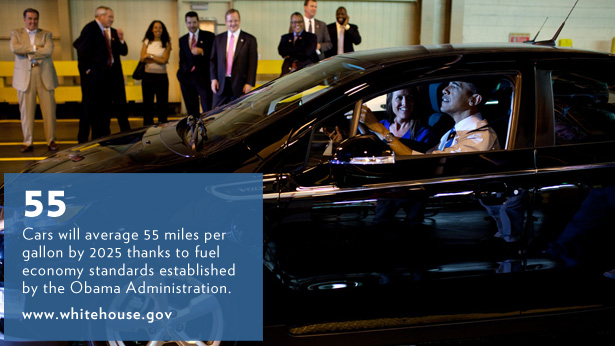
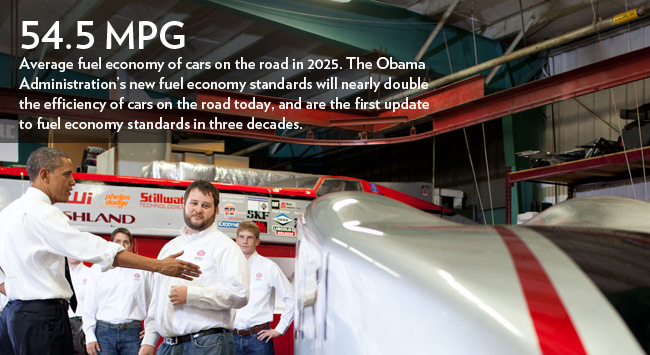
Thanks to fuel economy standards established by the Obama Administration, cars and trucks on the road in 2025 will average 55 miles per gallon of gas. These tougher fuel standards will reduce our oil consumption by more than 2 million barrels a day, but we have to do more.
In his State of the Union, President Obama introduced an all-of-the-above strategy that develops every available source of American-made energy. This includes everything from tapping our vast natural gas reserves, to doubling down on clean energy resources like wind and solar power, to developing new technologies that help us use less energy altogether. The President’s strategy will help us depend less on imported oil that’s subject to annual price spikes and create job jobs for American workers.
And, as the President explained at the University of Miami on Thursday, we need the right incentives in place to help put this strategy in place. Instead of $4 billion in yearly taxpayer-funded subsidies to the oil industry—which is reaping record profits—we should renew tax credits that encourage new investments in clean energy.
Want to learn more about President Obama’s blueprint for an America built on homegrown energy? Here’s everything you need to know.
Learn more about Economy, Energy and EnvironmentPresident Obama Highlights Smart Energy Training at University of Miami
Posted by on February 24, 2012 at 1:09 PM EDTEd note: this post originally appeared on energy.gov
During his visit to Florida yesterday, President Obama highlighted the University of Miami's Industrial Assessment Center (IAC) as a smart and important piece of the administration's "all-of-the-above" approach to domestic energy sources.
In September of last year, the Energy Department gave 24 universities a total of $30M in grants to help train the next generation of industrial energy-efficiency experts. Each school will receive $200,000 to $300,000 per year for up to 5 years to train students on core energy management concepts. The teams conduct energy assessments in a broad range of manufacturing facilities, which prepare students to compete in today's economy while helping local companies and factories reduce energy waste, save money, and become more competitive.
As President Obama said yesterday, "We're taking a step that will make it easier for companies to save money by investing in energy solutions that have been proven here at the University of Miami -- new lighting systems; advanced heating and cooling systems that can lower a company's energy bills and make them more competitive."
Since the Industrial Assessment Center program began in 1976, university teams have conducted more than 15,000 energy assessments at U.S. manufacturing plants nationwide. To date, more than 3,000 students have graduated from the Industrial Assessment Center program, with more than 60 percent going on to careers in the energy industry. Critically, these assessments have helped save over 530 trillion BTUs of energy -- enough to meet the energy needs of 5.5 million American homes -- and have helped participating manufacturers save more than $5.6 billion in energy costs.
- &lsaquo previous
- …
- 89
- 90
- 91
- 92
- 93
- 94
- 95
- 96
- 97
- …
- next &rsaquo
Related Videos
-
 May 09, 2014 9:21 AM
Inside the White House: Solar Panels
-
 September 01, 2016 9:25 PM
President Obama Delivers a Statement to the Press
White House Blogs
- The White House Blog
- Middle Class Task Force
- Council of Economic Advisers
- Council on Environmental Quality
- Council on Women and Girls
- Office of Intergovernmental Affairs
- Office of Management and Budget
- Office of Public Engagement
- Office of Science & Tech Policy
- Office of Urban Affairs
- Open Government
- Faith and Neighborhood Partnerships
- Social Innovation and Civic Participation
- US Trade Representative
- Office National Drug Control Policy