Health Care Blog
Another Legal Victory for Health Reform
Posted by on November 8, 2011 at 1:17 PM ESTToday, the Affordable Care Act scored another win in court when the District of Columbia Circuit Court of Appeals ruled that the law is constitutional. In upholding the constitutionality of the law, Judge Laurence H. Silberman reaffirmed that Congress has the constitutional authority “to forge national solutions to national problems” like the need to provide affordable, quality health care to all Americans.
The ruling is yet another victory for the millions of Americans who are already benefitting from the law including the parents of children with preexisting conditions, women getting mammograms with no out-of-pocket cost, seniors saving hundreds of dollars on their prescription drugs, and one million young adults now newly insured through their parent’s plan.
The ruling also marks the third time a federal appeals court has ruled in favor of the law. Previously, the Sixth Circuit Court of Appeals and the Fourth Circuit Court of Appeals dismissed opponents’ cases against the law.
The Administration has also asked the Supreme Court to hear these cases. We’re confident that, like today, we will prevail. Here’s why:
- The Affordable Care Act, through the individual responsibility requirement, will require everyone, if they can afford it, to carry some form of health insurance since everyone at some point in time participates in the health care system, and incurs costs that must be paid for. For the 83% of Americans who have coverage and who are already taking responsibility for their health care, their insurance premiums will decrease over time. Only those who are able to pay for health insurance will be responsible for obtaining it and new tax credits and other provisions in the law will make health insurance affordable for middle class families. That’s why the Congressional Budget Office estimated that only 1 percent of all Americans would pay a penalty for not having health insurance in 2016.
- Opponents of reform wrongly claim that Congress exceeded its authority in regulating when and how people pay for health care. Those who claim that the “individual responsibility” provision exceeds Congress’ power to regulate interstate commerce are simply wrong. People who make a decision to forego health insurance do not opt out of the health care market. Their action is not felt by themselves alone. Instead, when they become ill or injured and cannot pay their bills, their costs are shifted to others. Those costs – $43 billion in 2008 alone – are borne by doctors, hospitals, insured individuals, taxpayers and small businesses throughout the nation.
- Additionally, banning insurance companies from discriminating against people with preexisting conditions helps to ensure that every American who can afford it has insurance. We don’t let people wait until after they’ve been in a car accident to apply for auto insurance and get reimbursed, and we don’t want to do that with health care. If we’re going to outlaw discrimination based on pre-existing conditions, people should not be allowed to game the system and raise costs on everyone else.
Stephanie Cutter is Assistant to the President and Deputy Senior Advisor
Learn more about Health CareProtecting Historic Progress on Clean Air
Posted by on November 7, 2011 at 11:33 AM ESTPresident Obama believes that American families should never be asked to choose between the health of their children and the health of the economy. That is a false choice. Four decades of success under the Clean Air Act have shown clearly that strong environmental protections and a strong economy can go hand in hand.
To build on the tremendous success of the Clean Air Act, the Obama Administration has taken the most significant steps in a generation to reduce harmful pollution and promote public health. The new standards that we have issued or proposed – to curb interstate pollution, reduce mercury exposure, and make our cars more fuel efficient, just to name a few – will result in significant economic and health benefits each year.
Just over forty years ago, the Senate did something that would be almost unthinkable today: It passed major legislation by a unanimous vote. That legislation was the Clean Air Act of 1970, signed by President Richard Nixon. Two decades later, the Clean Air Act Amendments of 1990 were passed, again with large bipartisan majorities in both houses of Congress, and signed by President George H. W. Bush.
But today, Republicans in Congress are trying to use our current economic climate as an excuse to roll back clean air protections that Americans have counted on for decades. Senator Rand Paul (R-KY) is currently leading an effort to block the Cross-State Air Pollution Rule (CSAPR) that would save tens of thousands of lives each year. In doing so, Senator Paul is using the Congressional Review Act to repeal this important rule and prohibit the Environmental Protection Agency from protecting American families from cross-state pollution in the future.
Let’s be clear – this brazen effort doesn’t just undermine the public health, it also undermines the judgment of the courts. In 2008, the U.S. Court of Appeals for the Washington, D.C. Circuit found critical flaws in the Bush Administration’s efforts on interstate air pollution and directed the EPA to issue a replacement rule as quickly as possible. After seeking and incorporating extensive input from the public, the states, environmental and public health groups, as well as industry, the EPA finalized the Cross-State Air Pollution rule in July of this year.
Announcing the Winners of the Apps Against Abuse Technology Challenge
Posted by on November 2, 2011 at 11:11 AM ESTEd note: This blog was cross-posted from the 1 is 2 Many initiative.
Last July, I wrote about a new and innovative effort to help address sexual assault and dating violence. While women of any age can be targets of this kind of abuse, young women aged 16-24, experience the highest rates of rape and sexual assault, and 1 in 5 will be a victim of sexual assault during college. Many of these assaults occur when the offender, often an acquaintance, has targeted and isolated a young woman in vulnerable circumstances. Moreover, sixty percent of college students who have been in an abusive relationship say no one helped them.
Working with the Office of the Vice President and the White House Office of Science and Technology, we launched the Apps Against Abuse technology challenge – calling on software innovators to harness the power of mobile technology to help prevent dating violence and abuse by keeping young adults connected to trusted friends and providing easy access to important resources for help including local police and abuse hotlines.
Today, we are pleased to announce the winners of the challenge: “Circle of 6” and “On Watch.” Prototypes of the two winning applications were selected from a pool of over 30 entries submitted to Challenge.gov.
Vice President Biden applauded the winning applications earlier today during a conference call with hundreds of college and university officials to discuss ongoing efforts to help better prevent and respond to sexual assault and violence on campuses across the country. He encouraged the college and university leaders to make students on their campuses aware of the applications when they become available for download in 2012.
The winning applications are described below. They will be available for free public download beginning in early 2012. We will highlight these applications on www.hhs.gov/open, as soon as they become available and will work with other federal agencies to help spread the word about their availability.
Improving Health Disparities Data for a Healthier Nation
Posted by on November 2, 2011 at 10:15 AM ESTThis year we have achieved important milestones in our commitments to reduce racial and ethnic health disparities, including the release of Healthy People 2020 and the National Prevention Strategy, as well as the launch of the HHS Action Plan to Reduce Racial and Ethnic Health Disparities.
On Monday, we achieved yet another milestone, by implementing an important provision of the Affordable Care Act that will improve the collection of data on HHS-sponsored surveys. With this advance, we as a nation can better understand and target health disparities and ultimately move toward eliminating them.
Learn more about Health CareText4baby Shows Promising Results for Moms
Posted by on November 2, 2011 at 8:01 AM ESTText4baby, a free health education text messaging service for pregnant women and new moms, is reaching its primary target audience of medically underserved women and achieving a number of its health education goals, according to a preliminary assessment presented at the American Public Health Association annual meeting this week. The program, made possible through a broad, public-private partnership, is the first free mobile health information service in the United States and is an important example of leveraging widely used technology—in this case, cell phones—in new ways to improve the lives of Americans. Pregnant and new moms who sign up for text4baby (by texting BABY or BEBE to 511411) receive three text messages per week containing health tips and resources.
The study by the National Latino Research Center at California State University and the University of California, San Diego, showed “very high satisfaction with the service, increase in users’ health knowledge, improved interaction with healthcare providers, improved adherence to appointments and immunizations, and increased access to health resources.” The study consisted of interviews with 38 text4baby users and a survey of 122 text4baby users, all in San Diego County. Participants rated text4baby as an 8.5 out of 10 overall, and indicated that:
- 81% have an annual household income under $40,000
- 65% are either uninsured or enrolled in California’s Medicaid program
- 63% said the service helped them remember an appointment or immunization that they or their child needed
- 75% said they learned a medical warning sign they didn’t know previously
- 71% talked to their doctor about a topic they read on a text4baby message
- 39% called a service or phone number they received from a text4baby message (this rose to 53% among individuals without health insurance)
There is much more work to be done to fully understand the impact of text4baby and services like it. To that end, a number of additional evaluation efforts are in the works, including a nationwide evaluation by the Department of Health and Human Services. (From the beginning, U.S. Government participation in text4baby has focused on both the immediate impact the messages could have in improving the lives of women and their babies and on deepening our understanding of the potential of technology to improve health knowledge and behaviors.) Still, these survey results from San Diego County are encouraging news for those who seek to change health knowledge and behaviors via mobile technology.
Text4baby has reached nearly 250,000 people in the U.S., an extraordinary accomplishment especially for a service that requires each person to subscribe. This reach is due primarily to an impressive grass roots movement—facilitated by the National Healthy Mothers, Healthy Babies Coalition, the CTIA Wireless Foundation, Voxiva, and Johnson & Johnson—to make pregnant women, new moms, and the service providers who work with them, aware of text4baby as a free resource. Soon Public Service Announcements supported by the CTIA Wireless Foundation will be made available around the country, which will help even more moms learn about text4baby.
Also, the winners of the text4baby State Enrollment Contest were announced today, representing the states that made the most progress in connecting pregnant women and moms to critical health information via text4baby over the past few months. Congratulations to Delaware, New Hampshire, and North Carolina!
Hillary Chen is a Senior Advisor to the Deputy Director for Policy at OSTP
Learn more about Health Care, TechnologyDrug Shortages Have Reached a "Critical Level"
Posted by on November 1, 2011 at 1:45 PM ESTBonnie Frawley is a pharmacy manager for Brigham & Women's Hospital in Boston, and drug shortages have become a too frequent fact of her work life.
She says the situation has reached a "critical level" and that it affects patient care, "sometimes on a daily basis."
Watch as she describes why we can't wait to help our nation's hospitals -- and how the President Obama's executive order will bring attention to the issue and mean fewer drug shortages.
Learn more about Economy, Health Care
- &lsaquo previous
- …
- 104
- 105
- 106
- 107
- 108
- 109
- 110
- 111
- 112
- …
- next &rsaquo
From the Press Office
Related Videos
-
 December 13, 2016 5:04 PM
Signing Ceremony for the 21st Century Cures Act
-
 December 10, 2016 5:00 AM
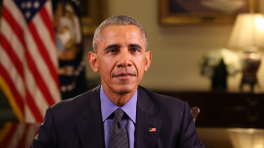
Weekly Address: It’s Time to Get Covered on the Health Insurance Marketplace