

Latest News
Making Catholic School: A 'Second Home for Students'
Posted by on January 25, 2012 at 1:30 PM EST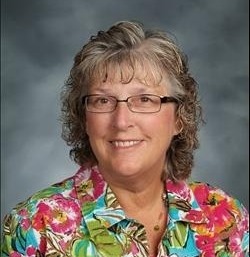 I believe that every child is unique and should be treasured. We have a diverse population at St. James the Less, and I work with our staff to develop the potential and the promise that each student possesses. Our children come from Vietnam, Cambodia, China, Russia, Kenya, Nigeria, Ghana, Mexico, El Salvador, Puerto Rico and all parts of the United States. We have children of all faiths, income levels, academic levels, and family structures. I believe that we are a window to the world and this gift of diversity allows us to relate to everyone as brothers and sisters in Christ.
 I believe Catholic schools should be a second home to their students. At St. James, I have worked with our staff to create that family atmosphere. One eighth grader told me; “It may sound weird to hear an eighth grader say they love to come to school. But I do because here, there is no chaos. I know that the teachers and you will be here every day. I will have class, get lunch and someone will help me with whatever I need.” Our faith calls us to open our arms and our hearts to the children under our care.
I have come to realize that this concept of home must extend to the wider parish community. Eight years ago, our pastor, at that time, began with one Spanish Mass and an attendance of 50. This has grown to two Masses and attendance of over 500. At that same time, we made a conscious decision to dedicate ourselves to find ways to incorporate Latinos students into St. James the Less Catholic School. As the parish grew, we also grew from two Latino students to 250 this school year. As a staff, we prepared for this by taking Spanish language and culture classes. We have added two English as a Second Language(ESL) teachers, as well as provided staff development on best practices for teaching ESL students. We revised our forms and all types of communication to be bilingual. We hired three bilingual staff members. Spanish language began to be taught to all students. Spanish was taught to English speakers to broaden their knowledge and Spanish for our Spanish speakers to help them retain their culture. Our efforts became the bridge for the integration of our new students into the St. James the Less Catholic family.
Start Over? Rebuild? Yes We Did
Posted by on January 25, 2012 at 1:30 PM EST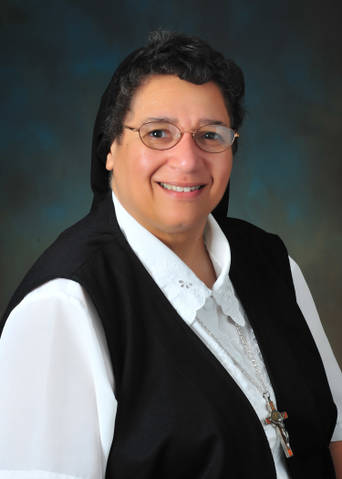 I have always loved God and trusted that “I can do all things through Christ who strengthens me”. On August 28, 2005, my faith in God, my strength, and my desire to face reality were challenged by Hurricane Katrina. After looking at the news the day before, and realizing we may be asked to evacuate again, I thought of our 35 new computers that had just been set up and spent the morning making sure they were well covered with plastic. Everything else seemed to be in place and protected. We had several thousands of dollars of new text books but they were well protected in the bottom lockers, on the first floor of the main building. After a final walk though, I went home to pack one or two sets of clothes and prepared to get up early the next morning to leave New Orleans for one or two days until the weather cleared up.
Within the next two weeks, we to visited our beloved St. Mary’s Academy (SMA), a private, Catholic all girls’ college preparatory school founded (1867) and administered by the Sisters of the Holy Family. Upon arriving, the city had an awful smell, and gave me an eerie feeling. There were no cars, no people, and no sounds. The biggest shocker of all was when I exited to Chef Menteur Highway, where our Motherhouse and St. Mary’s Academy had taken on seven feet of water. Everything was brown giving the impression that a bomb had been dropped. At that time the city was talking about making our area green space. They felt it was too risky to rebuild. Too risky? – What would become of our girls?
Collaboration in Catholic Education
Posted by on January 25, 2012 at 1:30 PM EST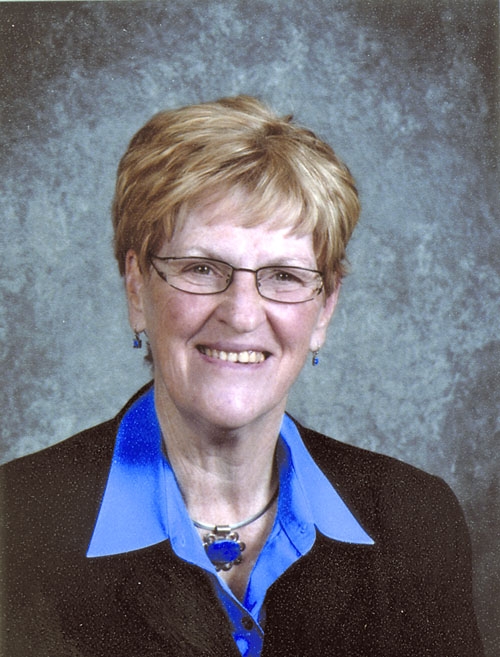 Through the years, I have watched the role of the leader in a Catholic school evolve. In the beginning, leaders were managers, who made decisions and told others what to do, how to do it, and when to do it.
Today, thankfully, leadership is about collaborating and working toward a common goal. In my 50 years of working in Catholic education, I have learned that when leaders bring people together and ask them to assist in reaching a goal that they are happy to share their own wealth of knowledge and skills. The diversity of the group strengthens the process and leads to better decisions.
In the end the winners of this collaborative process are the children we serve. Good leadership and good decisions bring about the change needed to make our students successful inside and outside of the classroom. Over the years I’ve seen Catholic education free children from the limitations of every type of poverty -- material or spiritual. In addition to helping children succeed academically, we teach them that it is Christ who gives meaning to their lives. From that simple truth students learn to respect the dignity of every single person. We can’t make real progress as a society or have justice without this.
Overcoming Economic Defecits to Provide Educational Opportunities
Posted by on January 25, 2012 at 1:30 PM EST
I have always embraced the challenge to effect change in the lives of the young people whose parents make the choice and sacrifice to send them to Catholic school. The privilege of educating the young men at All Hallows is extremely rewarding. Is there anything more satisfying than having a senior on his way to college with a full academic scholarship thank you for providing him with the means (education) to no longer be a part of a nightmare but have the opportunity to live the American dream?
My role as president of All Hallows High School, a Catholic high school in the poorest Congressional District (16th) in the United States, gives new meaning to multi-tasking. Our enrollment has been steadily rising over the past 10 years – up 42% to 660! Tuition is a relatively low $5700 but 78% of our families need assistance. Within the context of our spiritual base as a Catholic school sponsored by the Congregation of Christian Brothers, we offer an education that is a proven success. Graduation rate and college acceptance varies from 98% - 100%.
When All Hallows was founded in 1909 the motto, Pro Fide et Patria, was selected. It is a privilege to see these dual and complementary purposes carried out every day. Poverty is an obstacle for many of our students and their families but it is never accepted as an excuse for failure at All Hallows. As a Catholic school we are fortunate to be able to work within a context that recognizes the spiritual dimension of each person. With a personal greeting and handshake each morning and afternoon, each student knows that he is valued at All Hallows. He also knows that we will take every reasonable measure to make certain that he is physically and emotionally prepared for school.
A Special Message on National Gay-Straight Alliance Day
Posted by on January 25, 2012 at 8:00 AM ESTSince taking office, President Obama and his Administration have taken many steps to ensure that all students are safe and healthy and can learn in environments free from discrimination, bullying and harassment.
Bullying is an epidemic that has gone ignored for too long, and far too many of our young people are targeted and harassed based on their actual or perceived sexual orientation, gender identity, or gender expression. But across the country, Gay-Straight Alliances and other similar student groups are taking important steps to address these issues.
Last year, President Obama, First Lady Michelle Obama, and others welcomed students, parents, and teachers in addition to non-profit leaders, advocates, and policymakers to the White House for a Conference on Bullying Prevention. Also last year, Secretary of Education Arne Duncan wrote a “Dear Colleague” letter to school districts across the country in support of Gay-Straight Alliances. And today, on the occasion of the first-ever National Gay-Straight Alliance Day, Secretary Duncan has taped a video message to students, teachers, and allies to re-emphasize the Obama Administration’s commitment to safe schools for all students.
Learn more about Civil RightsA Comprehensive Funding Approach to Public Safety in Tribal Communities
Posted by on January 23, 2012 at 8:03 PM ESTThis is cross-posted from The Justice Blog:
Last week, the Justice Department announced the posting of the Coordinated Tribal Assistance Solicitation (CTAS), a comprehensive grant solicitation to support improvements to public safety, victim services and crime prevention in American Indian and Alaska Native communities.
More than $101.4 million is available through the 2012 CTAS. This year, funding can be used to conduct comprehensive planning, enhance law enforcement, bolster justice systems, support and enhance tribal efforts to prevent and control juvenile delinquency and strengthen the juvenile justice system, prevent youth substance abuse, serve victims of crimes like domestic violence and sexual assault, as well as support other crime-fighting efforts.
CTAS is a critical part of the Justice Department’s ongoing initiative to increase engagement, coordination and action on public safety in tribal communities. This is the third year for CTAS, which provides tribal governments and tribal consortia with a single application to reach all of the department’s grant-making components, including the Office of Justice Programs, the Office of Community Oriented Policing Services, and the Office on Violence Against Women. It allows these grant-making components to assess the totality of the public safety needs of each tribe or tribal consortia. The FY 2012 CTAS reflects improvements developed as a result of tribal consultations, listening sessions, and other feedback.
On the Reservation and Beyond
Posted by on January 20, 2012 at 9:00 AM EST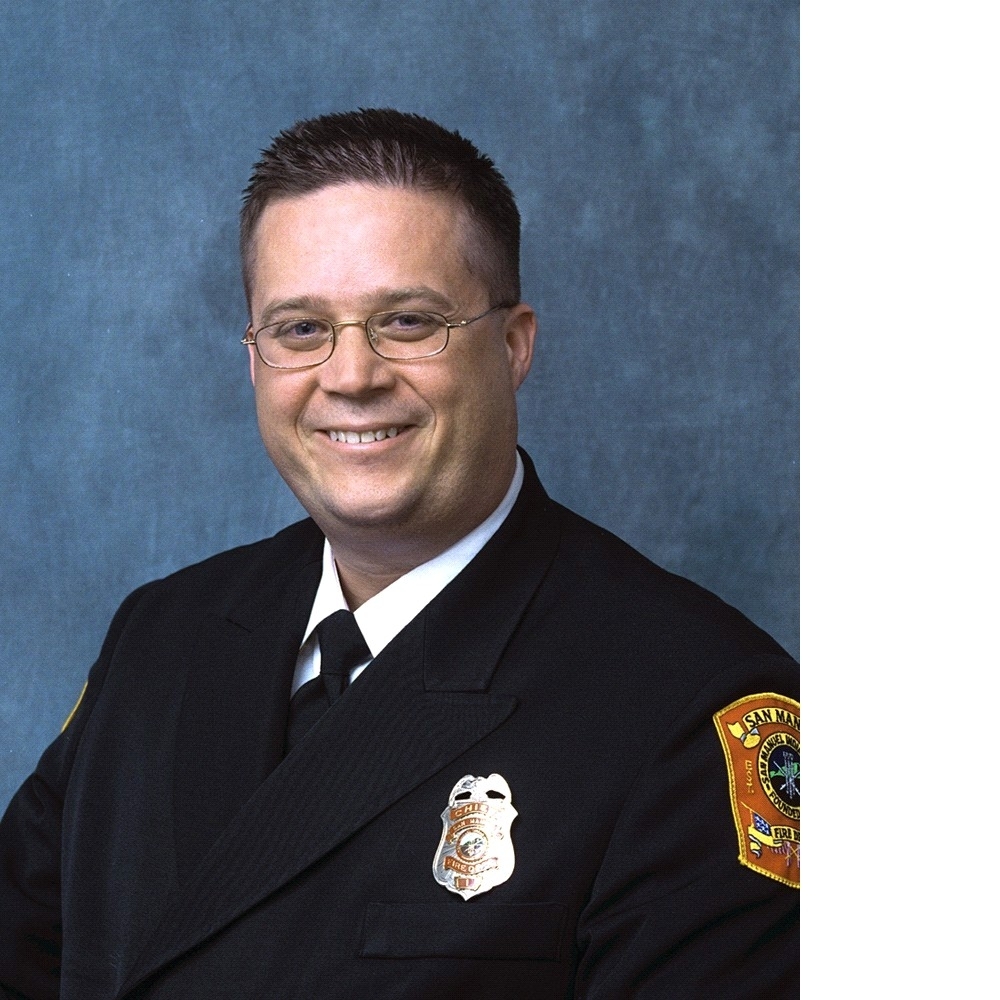 As a representative of the San Manuel Band of Mission Indians of southern California, I am honored to be recognized as a “Champion of Change.” In my decade of service for the Tribe I have seen much change as San Manuel has established many departments not only Fire in fewer than two decades; a notable accomplishment when considering that counties and municipalities have historically taken 50 to 100 years to develop similar services. Chief among these accomplishments has been its investment in a safe community for all who live, visit and work on the reservation some 70 miles from Los Angeles. As one of the oldest established communities in the San Bernardino Valley, the people of San Manuel have managed their land since the establishment of the reservation in 1891; a steep terrain which is crisscrossed by earthquake faults lying in the path of floods and wildfires. Therefore, when the tribal government began to develop needed services, fire and emergency response was of paramount priority. In my role as fire chief I am humbled and honored to be part of a community wide effort that is bourn from the experience of generations of tribal members who built and safeguarded their reservation despite many challenges and limited resources.
Unlike many reservations across America which are rural, San Manuel interfaces directly with two cities: San Bernardino and Highland. Throughout its history, the people of San Manuel have worked together with their neighbors to build their community seeking to find common ground based on mutual respect while building a self sufficiency. It was in this spirit that I came to work for the Tribe in 1999 to develop and lead all emergency and preparedness activities for the Tribe. Previous to working for San Manuel, I had served numerous roles including: Paramedic-Engineer for the California Department of Forestry and Fire Protection; paramedic program liaison for Crafton Hills College; federal disaster team member (responding to the World Trade Center after the 9-11 attacks, and the gulf region for Hurricane Katrina in 2005); President and Engineer for a local volunteer fire department, flight paramedic, and Special Projects Officer for the California National Guard’s California Cadet Corps. The position with San Manuel was rare opportunity indeed, and for the next 4 years, I and the community worked diligently to organize the resources and personnel needed to constitute a fully operational Fire Department that met all necessary requirements to join the state’s mutual aid response and protect both San Manuel and the communities of California.
In Case of Emergency: A Journalist's Perspective
Posted by on January 20, 2012 at 9:00 AM EST In March 2008, John D. Solomon launched his blog “In Case of Emergency, Read Blog: A Citizen’s Eye View of Public Preparedness” as research for a book he was writing on preparedness for emergencies from the vantage point of a father-husband-and son interested in helping safeguard his family and community. www.incaseofemergencyblog.com
“I am going through the preparedness process from the first person point of view of an average citizen which I am,” John wrote in his first blog posting. “We are now in the pro-am Wikipedia era of preparedness where the public has both a major responsibility and role in their own preparedness. The fact is that post-9/11 emergency preparedness is such a new and multi-disciplinary area that there really aren’t any experts in all of it. We’re all learning together. I hope this blog will contribute to that important education process.”
Six months later, John was diagnosed with leukemia. Many months in the hospital and multiple rounds of chemotherapy followed, as did his blogging. John reported from conferences he’d helped to organize as well as those he had not; posted interviews and was interviewed; devised legislation to incentivize the sale of emergency supplies via “tax holidays”; evaluated how government and non-profit disaster relief organizations were using social media tools; celebrated others’ initiatives by calling them to the attention of policy makers; conducted contests to foster citizen preparedness; and videotaped leaders in the preparedness community for their tips on readiness for his series “What Should I Tell the Public?” including one with FEMA Administrator Craig Fugate, which they filmed just two months before John’s untimely death in November 2010.
- &lsaquo previous
- …
- 170
- 171
- 172
- 173
- 174
- 175
- 176
- 177
- 178
- …
- next &rsaquo
Twitter