The White House

Office of the Press Secretary

Fact Sheet: Administration Releases Final Version of Financial Aid Shopping Sheet

Earlier this year, at the University of Michigan, President Obama outlined the steps that his Administration is taking to make college more affordable and to ensure that students “know before they owe.”
 
Today, as part of that ongoing effort, the Administration unveiled the final version of the model financial aid award letter, or “Shopping Sheet” — an individualized standard financial aid letter that will help students understand their costs before making the final decision on where to enroll.  The shopping sheet will allow students to easily compare aid packages offered by different institutions. To develop the Shopping Sheet, the U.S. Department of Education partnered with the Consumer Financial Protection Bureau (CFPB), a new independent agency established in the wake of the financial crisis.
 
Too often, students and families face the daunting task of deciding where to enroll, whether to write a check, or whether to sign for a student loan, without a clear explanation of what the costs mean, or how these costs compare to other colleges they are considering.  As a result, too many students leave college with debt that they didn’t understand at the time that they entered school.  While many financial aid award letters provide this information, some can be confusing, lacking clear distinctions between grants and loans, as well information about post-graduate outcomes associated with the institution. These obscurities make the task of comparison-shopping for the most affordable and appropriate college even more difficult.
 
The Shopping Sheet makes clear the costs and responsibilities of student loans upfront – before students have enrolled – outlining their total estimated annual costs, institutional rates of completion and default, and information about a student’s potential monthly loan payments after graduation.  Ultimately, this tool provides students and their families with useful information that can help them make a more informed decision about where to attend college and to help them better understand the debt burdens that may be face after graduation.
 
Secretary Duncan today will publish an open letter to college and university presidents, asking them to adopt the Shopping Sheet as part of their financial aid awards starting in the 2013-14 school year. Additionally, colleges who agree to the Principles of Excellence for Serving Military and Veterans will begin using this form during the 2013-14 school year. Institutions of higher education interested in adopting the Shopping Sheet may contact the Department of Education at ShoppingSheet@ed.gov for additional information.
 
While states and colleges share responsibility to keep down the rising cost of college, improved consumer disclosures can ensure that students and families make wise decisions when investing in higher education.  To learn more about President Obama’s comprehensive proposal to make college more affordable, please visit: http://obamawhitehouse.archives.gov/the-press-office/2012/01/27/fact-sheet-president-obama-s-blueprint-keeping-college-affordable-and-wi
 

The White House

Office of the Press Secretary

New White House Report Highlights the Effects of the President’s Proposal for Middle Class Tax Cuts

WASHINGTON -- Today, the White House released a new report by the National Economic Council highlighting how President Obama’s proposal to keep taxes from rising for 98 percent of families will help the middle class, and outlining what the effects would be if Congress fails to act to extend these tax cuts.  The report can be found HERE.

The White House

Office of the Press Secretary

Remarks by the President at a Campaign Event

Private Residence
Piedmont, California

5:30 P.M. PDT

THE PRESIDENT:  Well, to Wayne and Quinn and all of you who are here, thank you.  I have fond memories of being here.  It was, I think, just as spectacular a day, it was just as beautiful.  And I think Alice Waters was cooking.  And part of the reason I remember that is because I’ve got a staff guy, Marvin Nicholson -- some of you know Marvin -- Marvin doesn’t believe in eating vegetables.  (Laughter.)  So he’s still traumatized by -- (laughter) -- I’m just saying, I was mentioning the last time we were here and Alice Waters was cooking and -- yes.  (Laughter.)  Marvin’s general palate runs between hotdogs and hamburgers, so -- and pizza.  (Laughter.)  That’s true.  So
-- chicken tenders.  (Laughter.)

Anyway, we had a wonderful time then, and so many of you have been friends and supporters ever since.  And so I’m grateful to all of you. 

Because this is a more intimate setting, I’m not going to give a long speech.  What this gives me an opportunity to do is really have a conversation with you, and I want to save as much time as possible for questions and answers and comments that all of you may have.  But let me just summarize a little bit about what I’m seeing out there. 

First of all, obviously, yesterday I spent time in Aurora, Colorado, after the terrible tragedy that they went through.  And I spent time with the families, and the medical staff, the first responders.  And sometimes when bad things happen, horrible things happen, I think it’s easy for us to slip into despair.  And yet if you had spent some time, like I did, with those people, who had faced down just unimaginable pain with strength and grace, it would make you extraordinarily optimistic about America. 

And one of the messages that I tried to deliver -- because if you're just paying attention to debates in Washington, sometimes you feel as if the country is constantly arguing and everybody is down and out -- when you travel the country and you meet people, Americans are strong and they are resilient and they are optimistic, and they are confident about their future and their kids' futures. 

They recognize that there's dysfunction in Washington and they'd like to see it changed.  And they recognize that the economy is not working for everybody the way it should and they'd like to see that changed.  But they understand as well as anybody that we are incredibly blessed with a country that is the closest thing to, I think, a form of government that allows all of us to achieve and live out our dreams.  And they are thankful for it every day and all they want to see is that their leadership reflect the same decency and common sense that they try to apply every single day in their lives.

Now, obviously we've gone through, since I last saw you, the worst financial crisis and the worst economic crisis since the Great Depression.  The good news is that we’ve made progress since that time -- added 4.5 million new jobs, half a million new manufacturing jobs.  Even the weakest sectors of the economy, like housing, are starting to pick up again.  And so we are in a much better position now, in part because of the work that my administration has done -- saving the auto industry and stabilizing the financial system -- we’re in a much stronger position now than we were the day I was sworn in.

The bad news is we’ve still got some headwinds.  There are still millions of people who are out of work, millions of people whose homes are underwater.  And people are still wondering, how do we get back to an economy where the middle class is growing and the economic growth translates into broader opportunity for everyone; where America is competitive in a global economy and hard work and responsibility pay off.

And this election, in some ways, is going to be more important than 2008, because I think right now we’ve got as clear a choice as we’ve seen in our lifetimes.  You’ve got one side that believes that the way we’re going to grow the economy and broaden opportunity is through additional tax cuts, $5 trillion worth, mostly going to folks who don’t need those tax cuts and really aren’t asking for them, and then if you combine that with stripping away regulations on Wall Street or on polluters or on insurance companies, that somehow that will unleash the free market and everybody will be better off.  That’s the theory.

It’s a theory we tested for almost a decade.  And it didn’t work.  We saw sluggish job growth.  We saw greater inequality.  We saw median incomes and wages go down.  And it culminated in the worst crisis of our lifetimes. 

I've got a different theory.  It's one that says, yes, we've got to reduce our deficits and bring down our debt, and we've got to do it in a balanced way by making sure that those of us who've been blessed by this country are giving back a little bit more and going back to the Clinton tax rates; that we're cutting out spending that we don't need, but we're also still investing in basic research and science; that we're investing in infrastructure; that we're investing in the education of every kid and not just some; that we have smart regulations in place that are going to deal with issues like climate change and that are going to make sure that our financial system operates in a transparent and effective way.

And so this debate plays itself out across the board on almost every issue.  And you are not in a battleground state here in California -- (laughter) -- and as a consequence, you are spared from the unprecedented amount of negative -- primarily negative advertising that's on TV right now.  But over the next three months, this debate is going to be joined, and we as a country are going to have to make a decision about not only how do we grow our economy but how do we make sure that this continues to be a place where if you work hard you can make it, and where everybody is doing their fair share and everybody has a fair shot and everybody is playing by the same set of rules.

I'm confident that the American people will make the right choice.  And it's interesting, when you actually present, stripped from the politics, and you just present in a fair way these two alternative visions, a strong majority agrees with us. But what's going to make this a close race is the fact that the economy is still recovering, the challenges we've seen in Europe are blowing back onto our shores, and most people analyze the economy not through some macroeconomic analysis -- they evaluate it in terms of do I have a job, do my kids have a job, how is my home value doing?  And in that environment, people are still going through a tough time.

So this is going to be a close race and it's going to be a challenging race.  But I am as invigorated and as determined as I've ever been to win it, because I believe that there's no challenge that we're facing right now that is not solvable.  The problem is we've got a stalemate in Washington, and I'm confident that if we break that stalemate, then the 21st century is going to be the American Century just like the 20th.

So thank you very much, everybody.  (Applause.)

END   
5:40 P.M. PDT

President Obama Speaks to the 113th Convention of the Veterans of Foreign Wars

July 23, 2012 | 32:10 | Public Domain

President Obama discusses his Administration’s work to secure our nation, fight terrorism, renew American leadership in the world, better serve our troops and military families and honor our veterans.

Download mp4 (1126MB) | mp3 (74MB)

Read the Transcript

Remarks by the President to the 113th National Convention of the Veterans of Foreign Wars

VFW Convention Hall

Reno, Nevada 

12:35 P.M. PDT

     THE PRESIDENT:  Thank you so much.  Please, please, everybody have a seat. 

     Commander DeNoyer, thank you for your introduction, and your service in Vietnam and on behalf of America's veterans.  I want to thank your executive director, Bob Wallace; your next commander, who I look forward to working with, John Hamilton.  And to Gwen Rankin, Leanne Lemley, and the entire Ladies Auxiliary, thank you for your patriotic service to America.  (Applause.) 

     I stand before you as our hearts still ache over the tragedy in Aurora, Colorado.  Yesterday I was in Aurora, with families whose loss is hard to imagine -- with the wounded, who are fighting to recover; with a community and a military base in the midst of their grief.  And they told me of the loved ones they lost.  And here today, it's fitting to recall those who wore our nation's uniform: 

Staff Sergeant Jesse Childress -- an Air Force reservist, 29 years old, a cyber specialist who loved sports, the kind of guy, said a friend, who'd help anybody.

Petty Officer Third Class John Larimer -- 27 years old, who, like his father and grandfather before him, joined the Navy, and who is remembered as an outstanding shipmate.

Rebecca Wingo -- 32 years old, a veteran of the Air Force, fluent in Chinese, who served as a translator; a mother, whose life will be an inspiration to her two little girls.

And Jonathan Blunk -- from Reno, just 26 years old, but a veteran of three Navy tours, whose family and friends will always know that in that theater he gave his own life to save another.

These young patriots were willing to serve in faraway lands, yet they were taken from us here at home.  And yesterday I conveyed to their families a message on behalf of all Americans: We honor your loved ones.  We salute their service.  And as you summon the strength to carry on and keep bright their legacy, we stand with you as one united American family.  (Applause.) 

Veterans of Foreign Wars, in you I see the same shining values, the virtues that make America great.  When our harbor was bombed and fascism was on the march, when the fighting raged in Korea and Vietnam, when our country was attacked on that clear September morning, when our forces were sent to Iraq -- you answered your country’s call.  Because you know what Americans must always remember -- our nation only endures because there are patriots who protect it.

In the crucible of battle, you were tested in ways the rest of us will never know.  You carry in your hearts the memory of the comrades you lost.  For you understand that we must honor our fallen heroes not just on Memorial Day, but all days.  And when an American goes missing, or is taken prisoner, we must do everything in our power to bring them home.  (Applause.)

Even after you took off the uniform, you never stopped serving.  You took care of each other -- fighting for the benefits and care you had earned.  And you’ve taken care of the generations that followed, including our newest veterans from Iraq and Afghanistan.  On behalf of all our men and women in uniform, and on behalf of the American people, I want to thank you, VFW.  Thank you for your outstanding work.  (Applause.) 

Of course, some among you -- our Vietnam veterans -- didn’t always receive that thanks, at least not on time.  This past Memorial Day, I joined some of you at The Wall to begin the 50th anniversary of the Vietnam War.  And it was another chance to say what should have been said all along:  You did your duty, and you made us proud.  And as this 50th anniversary continues, I’d ask all our Vietnam vets to stand, or raise your hand, as we say:  Thank you and welcome home.  (Applause.)

Every generation among you served to keep us strong and free.  And it falls to us, those that follow, to preserve what you won.  Four years ago, I stood before you at a time of great challenge for our nation.  We were engaged in two wars.  Al Qaeda was entrenched in their safe havens in Pakistan.  Many of our alliances were frayed.  Our standing in the world had suffered.  We were in the worst recession of our lifetimes.  Around the world, some questioned whether the United States still had the capacity to lead.

So, four years ago, I made you a promise.  I pledged to take the fight to our enemies, and renew our leadership in the world. As President, that’s what I’ve done.  (Applause.)  And as you reflect on recent years, as we look ahead to the challenges we face as a nation and the leadership that’s required, you don’t just have my words, you have my deeds.  You have my track record. You have the promises I’ve made and the promises that I’ve kept.   

I pledged to end the war in Iraq honorably, and that’s what we’ve done.  (Applause.)  After I took office, we removed nearly 150,000 U.S. troops from Iraq.  And some said that bringing our troops home last year was a mistake.  They would have kept tens of thousands of our forces in Iraq -- indefinitely, without a clear mission.  Well, when you’re Commander-in-Chief, you owe the troops a plan, you owe the country a plan -- and that includes recognizing not just when to begin wars, but also how to end them. 

So we brought our troops home responsibly.  They left with their heads held high, knowing they gave Iraqis a chance to forge their own future.  And today, there are no Americans fighting in Iraq, and we are proud of all the Americans who served there.  (Applause.) 

I pledged to make it a priority to take out the terrorists who had attacked us on 9/11.  And as a candidate, I said that if we had Osama bin Laden in our sights, we would act to keep America safe -- even if it meant going into Pakistan.  Some of you remember, at the time, that comment drew quite a bit of criticism.  But since I took office, we’ve worked with our allies and our partners to take out more top al Qaeda leaders than any time since 9/11.  And thanks to the courage and the skill of our forces, Osama bin Laden will never threaten America again, and al Qaeda is on the road to defeat.  (Applause.)

I pledged to finish the job in Afghanistan.  After years of drift, we had to break the momentum of the Taliban, and build up the capacity and the capability of Afghans.  And so, working with our commanders, we came up with a new strategy, and we ordered additional forces to get the job done.  This is still a tough fight.  But thanks to the incredible services and sacrifices of our troops, we pushed the Taliban back; we’re training Afghan forces; we’ve begun the transition to Afghan lead. 

Again, there are those who argued against a timeline for ending this war -- or against talking about it publicly.  But you know what, that’s not a plan for America’s security either.  After 10 years of war, and given the progress we’ve made, I felt it was important that the American people -- and our men and women in uniform -- know our plan to end this war responsibly.  (Applause.)  And so by the end of this summer, more than 30,000 of our troops will have come home.  Next year, Afghans will take the lead for their own security.  In 2014, the transition will be complete.  And even as our troops come home, we’ll have a strong partnership with the Afghan people, and we will stay vigilant so Afghanistan is never again a source for attacks against America. (Applause.)

We’re not just ending these wars; we’re doing it in a way that achieves our objectives.  Moreover, it’s allowed us to broaden our vision and begin a new era of American leadership.  We’re leading from Europe to the Asia Pacific, with alliances that have never been stronger.  We’re leading the fight against nuclear dangers.  We’ve applied the strongest sanctions ever on Iran and North Korea -- nations that cannot be allowed to threaten the world with nuclear weapons.  (Applause.)  We’re leading on behalf of freedom -- standing with people in the Middle East and North Africa as they demand their rights; protecting the Libyan people as they rid the world of Muammar Qaddafi.

Today, we’re also working for a transition so the Syrian people can have a better future, free of the Assad regime.  And given the regime’s stockpiles of chemical weapons, we will continue to make it clear to Assad and those around him that the world is watching, and that they will be held accountable by the international community and the United States, should they make the tragic mistake of using those weapons.  (Applause.)  And we will continue to work with our friends and our allies and the Syrian opposition on behalf of the day when the Syrian people have a government that respects their basic rights to live in peace and freedom and dignity.

Because we’re leading around the world, people have a new attitude toward America.  There’s more confidence in our leadership.  We see it everywhere we go.  We saw it as grateful Libyans waved American flags.  We see it across the globe -- when people are asked, which country do you admire the most, one nation comes out on top -- the United States of America.  (Applause.)

So this is the progress that we’ve made.  Thanks to the extraordinary service of our men and women in uniform, we’re winding down a decade of war; we’re destroying the terrorist network that attacked us; we’re strengthening the alliances that extend our values.  And today, every American can be proud that the United States is safer and stronger and more respected in the world.

And all this allows us to fulfill another promise that I made to you four years ago -- strengthening our military.  After 10 years of operations, our soldiers will now have fewer and shorter deployments, which means more time on the home front to keep their families strong; more time to heal from the wounds of war; more time to improve readiness and prepare for future threats.

As President, I’ve continued to make historic investments to keep our armed forces strong.  And guided by our new defense strategy, we will maintain our military superiority.  It will be second to none as long as I am President and well into the future.  We’ve got the best-trained, best-led, best-equipped military in history.  And as Commander-in-Chief I am going to keep it that way.  (Applause.)

And by the way, given all the rhetoric lately -- it is political season -- let’s also set the record straight on the budget.  Those big, across-the-board cuts, including defense, that Congress said would occur next year if they couldn’t reach a deal to reduce the deficit?  Let’s understand, first of all, there’s no reason that should happen, because people in Congress ought to be able to come together and agree on a plan, a balanced approach that reduces the deficit and keeps our military strong. It should be done.  (Applause.)

And there are a number of Republicans in Congress who don’t want you to know that most of them voted for these cuts.  Now they’re trying to wriggle out of what they agreed to.  Instead of making tough choices to reduce the deficit, they’d rather protect tax cuts for some of the wealthiest Americans, even if it risks big cuts in our military.  And I’ve got to tell you, VFW, I disagree.  If the choice is between tax cuts that the wealthiest Americans don’t need and funding our troops that they definitely need to keep our country strong, I will stand with our troops every single time.  (Applause.)

So let’s stop playing politics with our military.  Let’s get serious and reduce our deficit and keep our military strong.   Let’s take some of the money that we’re saving because we’re not fighting in Iraq and because we’re winding down in Afghanistan -- use half that money to pay down our deficit; let’s use half of it to do some nation-building here in the United States of America.  (Applause.)

Let’s keep taking care of our extraordinary military families.  For the first time ever, we’ve made military families and veterans a top priority not just at DOD, not just at the VA, but across the government.  As Richard mentioned, this has been a mission for my wife, Michelle, and Vice President Joe Biden’s wife, Dr. Jill Biden.  Today, more people across America in every segment of society are Joining Forces to give our military families the respect and the support that they deserve.  (Applause.)

And there’s another way we can honor those who serve.  It may no longer be a crime for con artists to pass themselves off as heroes, but one thing is certain -- it is contemptible.  So this week, we will launch a new website, a living memorial, so the American people can see who’s been awarded our nation’s highest honors.  Because no American hero should ever have their valor stolen.  (Applause.)    

This leads me to another promise I made four years ago --  upholding America’s sacred trust with our veterans.  I promised to strengthen the VA, and that promise has been kept.  In my first year, we achieved the largest percentage increase in the VA budget in 30 years.  And we’re going to keep making historic investments in our veterans.  When Richard came to the Oval Office, we talked about what those automatic budget cuts -- sequestration -- could mean for the VA.  So my administration has made it clear:  Your veteran’s benefits are exempt from sequestration.  They are exempt.  (Applause.)  And because advance appropriations is now the law of the land, veterans' health care is protected from the budget battles in Washington.  (Applause.)

I promised you that I’d stand up for veterans' health care. As long as I’m President, I will not allow VA health care to be turned into a voucher system, subject to the whims of the insurance market.  Some have argued for this plan.  I could not disagree more. You don’t need vouchers, you need the VA health care that you have earned and that you depend on.  (Applause.)

So we’ve made dramaticinvestments to help care for our veterans.  For our Vietnam veterans, we declared that more illnesses are now presumed connected to your exposure to Agent Orange.  As a result of our decision, Vietnam-era vets and your families received nearly $4 billion in disability pay.  You needed it; you fought for it.  We heard you and we got it done.  (Applause.)

We’ve added mobile clinics for our rural veterans; more tailored care for our women veterans; unprecedented support for veterans with Traumatic Brain Injury.  All tolled, we’ve made VA health care available to nearly 800,000 veterans who didn’t have it before.  (Applause.)  And we’re now supporting caregivers and families with the skills and the stipends to help care for the veterans that they love.

Of course, more veterans in the system means more claims.  So we’ve hired thousands of claims processors.  We’re investing in paperless systems.  To their credit, the dedicated folks at the VA are now completing one million claims a year.  But there’s been a tidal wave of new claims.  And when I hear about veterans waiting months, or years, for your benefits -- it is unacceptable.  And we are doing something about it.  (Applause.)

We’re taking all those folks who processed your Agent Orange claims -- more than 1,200 experts -- and giving them a new mission:  Attack the backlog.  We’re prioritizing veterans with the most serious disabilities.  And the VA and DOD will work harder towards a seamless transition so new veterans aren’t just piled on to the backlog. And we will not rest -- I will not be satisfied until we get this right.  And today, I’m also calling on all those who help our vets complete their claims -- state VAs, physicians and veteran groups like the VFW -- to join us.  You know how this can work better, so let’s get it done, together.

We’re also focused on the urgent needs of our veterans with PTSD.  We’ve poured tremendous resources into this fight -- thousands of more counselors and more clinicians, more care and more treatment.  And we've made it easier for veterans with PTSD to qualify for VA benefits.  But after a decade of war, it’s now an epidemic.  We’re losing more troops to suicide -- one every single day -- than we are in combat.  According to some estimates, about 18 veterans are taking their lives each day -- more every year than all the troops killed in Iraq and Afghanistan combined.  That's a tragedy.  It's heartbreaking.  It should not be happening in the United States of America. 

So when I hear about servicemembers and veterans who had the courage to seek help but didn’t get it, who died waiting, that's an outrage.  And I’ve told Secretary Panetta, Chairman Dempsey and Secretary Shinseki we’ve got to do better.  This has to be all hands on deck. 

So our message to everyone who’s ever worn the uniform -- if you’re hurting, it’s not a sign of weakness to seek help, it’s a sign of strength.  And when you do, we’ll be there and do more to help -- including more counselors and clinicians to help you heal.  We need to end this tragedy, VFW.  (Applause.)  And we're going to work together to make it happen. 

So, too with our campaign to end homelessness among our veterans.  We’ve now helped to bring tens of thousands of veterans off the streets and into permanent housing.  This has to be a core mission, because every veteran who has fought for America ought to have a home in America.  (Applause.)    

And this brings me to the last promise I want to discuss with you.  Four years ago, I said that I’d do everything I could to help our veterans realize the American Dream, to enlist you in building a stronger America.  After all, our veterans have the skills that America needs.  So today, our economy is growing and creating jobs, but it’s still too hard for too many folks to find work, especially our younger veterans, our veterans from Iraq and Afghanistan.  And with a million more troops rejoining civilian life in the years ahead -- and looking for work -- we’ve got to step up our game, at every stage of their careers. 

So today, I’m announcing a major overhaul of our transition assistance program.  We’re going to set up a kind of "reverse boot camp" for our departing servicemembers.  Starting this year, they’ll get more personalized assistance as they plan their careers.  We’ll provide the training they need to find that job, or pursue that education, or start that business.  And just as they’ve maintained their military readiness, we’ll have new standards of "career readiness."

In addition, by making the Post-9/11 GI Bill a priority, we’ve helped more than 800,000 veterans and their families pursue their education.  And I’ve issued an executive order to help put a stop to schools that are ripping off our veterans.  (Applause.)

I’ve directed the federal government to step up on jobs.  Since I took office, we’ve hired more than 200,000 veterans into the federal government.  We made it a priority.  (Applause.)  And we’re keeping track -- every agency, every department:  What are you doing for our veterans? 

I’ve challenged community health centers to hire thousands of veterans as physicians and nurses.  And as we help local communities hire new police officers and firefighters and first responders, we’re giving a preference to veterans. 

We’re also fighting to get more vets hired in the private sector.  With new tools like our online Veterans Jobs Bank, we’re connecting veterans directly to jobs.  We’re helping thousands of veterans get certified for good-paying jobs in manufacturing.  We succeeded in passing tax credits for businesses that hire our veterans and our wounded warriors.  And this morning, I signed into law the Veteran Skills to Jobs Act -- making it easier for veterans to transfer their outstanding military skills into the licenses and credentials they need to get civilian jobs.  (Applause.) 

If you are a young man that is in charge of a platoon or millions of dollars of equipment and are taking responsibility, or you’re a medic out in the field who is saving lives every single day -- when you come home, you need to be credentialed and certified quickly so you can get on the job.  People should understand how skilled you are.  (Applause.)  And there shouldn’t be bureaucrats or runarounds.  We’ve got to put those folks to work.

Last summer, I also challenged the private sector to hire or train 100,000 veterans or their spouses.  Michelle and Jill Biden have been leading the effort, through Joining Forces.  And so far, thousands of patriotic businesses have hired or trained more than 90,000 veterans and spouses.  And our message to companies is simple:  If you want somebody who gets the job done, then hire a vet.  (Applause.)  Hire a vet.  Hire a vet and they will make you proud just like they’ve made America proud.

And we’re fighting for veterans who want to start their own businesses, including more training in entrepreneurship.  It’s one of the reasons we’ve cut taxes -- 18 times for small businesses, including veteran-owned businesses.  And the effects ripple out, because vets are more likely to hire vets.

So today, we can point to progress.  More veterans are finding jobs; the unemployment rate for veterans has come down.  Yes, it’s still too high, but it’s coming down.  And now we’ve got to sustain that momentum.  It’s one of the reasons I’ve proposed to Congress a Veterans Jobs Corps to put our veterans back to work protecting and rebuilding America.  And today, I am again calling on Congress:  Pass this Veterans Jobs Corps and extend the tax credits for businesses that hire veterans so we can give these American heroes the jobs and opportunities that they deserve.  (Applause.)

So, VFW, these are the promises that I made.  These are the promises that I’ve kept.  Where we still have more to do, we will not rest.  That’s my vow to you.  I’ve got your back.  I’ve got your six.  Because we have a solemn obligation to all who serve

-- not just for the years you’re in uniform, but for all the decades that follow, and because even though today’s wars are ending, the hard work of taking care of our newest veterans has only just begun.

Just as you protected America, we’re going to pass our country to the next generation, stronger and safer and more respected in the world.  So if anyone tries to tell you that our greatness has passed, that America is in decline, you tell them this:  Just like the 20th century, the 21st is going to be another great American Century.  For we are Americans, blessed with the greatest form of government ever devised by man, a democracy dedicated to freedom and committed to the ideals that still light the world.  We will never apologize for our way of life; we will never waver in its defense. 

We are a nation that freed millions and turned adversaries into allies.  We are the Americans who defended the peace and turned back aggression.  We are Americans who welcome our global responsibilities and our global leadership.  The United States has been, and will remain, the one indispensable nation in world affairs.

And you, you are the soldiers, the sailors, the airmen, the Marines and the Coast Guardsmen who have kept us strong.  We will honor your legacy.  And we will ensure that the military you served, and the America that we love, remains the greatest force for freedom that the world has ever known.

God bless you.  God bless all of our veterans.  And God bless the United States of America.  (Applause.)

                   END               1:08 P.M. PDT

Close Transcript

President Obama Speaks to the Veterans of Foreign Wars

President Barack Obama delivers remarks at the 113th National Convention of the Veterans of Foreign Wars

President Barack Obama delivers remarks at the 113th National Convention of the Veterans of Foreign Wars (VFW) in Reno, Nev., July 23, 2012 (Official White House Photo by Lawrence Jackson)

Today, President Obama spoke to the Veterans of Foreign Wars and discussed the promises his Administration has kept to secure our nation, fight terrorism, renew American leadership in the world, better serve our troops and military families and honor our veterans. He also thanked veterans for their service to our nation:

Even after you took off the uniform, you never stopped serving.  You took care of each other -- fighting for the benefits and care you had earned.  And you’ve taken care of the generations that followed, including our newest veterans from Iraq and Afghanistan.  On behalf of all our men and women in uniform, and on behalf of the American people, I want to thank you, VFW.  Thank you for your outstanding work. 

Our troops have helped secure a better future for our country, the President said:

Thanks to the extraordinary service of our men and women in uniform, we’re winding down a decade of war; we’re destroying the terrorist network that attacked us; we’re strengthening the alliances that extend our values.  And today, every American can be proud that the United States is safer and stronger and more respected in the world.

Related Topics: Veterans, Nevada

The White House

Office of the Press Secretary

Remarks by the President to the 113th National Convention of the Veterans of Foreign Wars

VFW Convention Hall

Reno, Nevada 

12:35 P.M. PDT

     THE PRESIDENT:  Thank you so much.  Please, please, everybody have a seat. 

     Commander DeNoyer, thank you for your introduction, and your service in Vietnam and on behalf of America's veterans.  I want to thank your executive director, Bob Wallace; your next commander, who I look forward to working with, John Hamilton.  And to Gwen Rankin, Leanne Lemley, and the entire Ladies Auxiliary, thank you for your patriotic service to America.  (Applause.) 

     I stand before you as our hearts still ache over the tragedy in Aurora, Colorado.  Yesterday I was in Aurora, with families whose loss is hard to imagine -- with the wounded, who are fighting to recover; with a community and a military base in the midst of their grief.  And they told me of the loved ones they lost.  And here today, it's fitting to recall those who wore our nation's uniform: 

Staff Sergeant Jesse Childress -- an Air Force reservist, 29 years old, a cyber specialist who loved sports, the kind of guy, said a friend, who'd help anybody.

Petty Officer Third Class John Larimer -- 27 years old, who, like his father and grandfather before him, joined the Navy, and who is remembered as an outstanding shipmate.

Rebecca Wingo -- 32 years old, a veteran of the Air Force, fluent in Chinese, who served as a translator; a mother, whose life will be an inspiration to her two little girls.

And Jonathan Blunk -- from Reno, just 26 years old, but a veteran of three Navy tours, whose family and friends will always know that in that theater he gave his own life to save another.

These young patriots were willing to serve in faraway lands, yet they were taken from us here at home.  And yesterday I conveyed to their families a message on behalf of all Americans: We honor your loved ones.  We salute their service.  And as you summon the strength to carry on and keep bright their legacy, we stand with you as one united American family.  (Applause.) 

Veterans of Foreign Wars, in you I see the same shining values, the virtues that make America great.  When our harbor was bombed and fascism was on the march, when the fighting raged in Korea and Vietnam, when our country was attacked on that clear September morning, when our forces were sent to Iraq -- you answered your country’s call.  Because you know what Americans must always remember -- our nation only endures because there are patriots who protect it.

In the crucible of battle, you were tested in ways the rest of us will never know.  You carry in your hearts the memory of the comrades you lost.  For you understand that we must honor our fallen heroes not just on Memorial Day, but all days.  And when an American goes missing, or is taken prisoner, we must do everything in our power to bring them home.  (Applause.)

Even after you took off the uniform, you never stopped serving.  You took care of each other -- fighting for the benefits and care you had earned.  And you’ve taken care of the generations that followed, including our newest veterans from Iraq and Afghanistan.  On behalf of all our men and women in uniform, and on behalf of the American people, I want to thank you, VFW.  Thank you for your outstanding work.  (Applause.) 

Of course, some among you -- our Vietnam veterans -- didn’t always receive that thanks, at least not on time.  This past Memorial Day, I joined some of you at The Wall to begin the 50th anniversary of the Vietnam War.  And it was another chance to say what should have been said all along:  You did your duty, and you made us proud.  And as this 50th anniversary continues, I’d ask all our Vietnam vets to stand, or raise your hand, as we say:  Thank you and welcome home.  (Applause.)

Every generation among you served to keep us strong and free.  And it falls to us, those that follow, to preserve what you won.  Four years ago, I stood before you at a time of great challenge for our nation.  We were engaged in two wars.  Al Qaeda was entrenched in their safe havens in Pakistan.  Many of our alliances were frayed.  Our standing in the world had suffered.  We were in the worst recession of our lifetimes.  Around the world, some questioned whether the United States still had the capacity to lead.

So, four years ago, I made you a promise.  I pledged to take the fight to our enemies, and renew our leadership in the world. As President, that’s what I’ve done.  (Applause.)  And as you reflect on recent years, as we look ahead to the challenges we face as a nation and the leadership that’s required, you don’t just have my words, you have my deeds.  You have my track record. You have the promises I’ve made and the promises that I’ve kept.   

I pledged to end the war in Iraq honorably, and that’s what we’ve done.  (Applause.)  After I took office, we removed nearly 150,000 U.S. troops from Iraq.  And some said that bringing our troops home last year was a mistake.  They would have kept tens of thousands of our forces in Iraq -- indefinitely, without a clear mission.  Well, when you’re Commander-in-Chief, you owe the troops a plan, you owe the country a plan -- and that includes recognizing not just when to begin wars, but also how to end them. 

So we brought our troops home responsibly.  They left with their heads held high, knowing they gave Iraqis a chance to forge their own future.  And today, there are no Americans fighting in Iraq, and we are proud of all the Americans who served there.  (Applause.) 

I pledged to make it a priority to take out the terrorists who had attacked us on 9/11.  And as a candidate, I said that if we had Osama bin Laden in our sights, we would act to keep America safe -- even if it meant going into Pakistan.  Some of you remember, at the time, that comment drew quite a bit of criticism.  But since I took office, we’ve worked with our allies and our partners to take out more top al Qaeda leaders than any time since 9/11.  And thanks to the courage and the skill of our forces, Osama bin Laden will never threaten America again, and al Qaeda is on the road to defeat.  (Applause.)

I pledged to finish the job in Afghanistan.  After years of drift, we had to break the momentum of the Taliban, and build up the capacity and the capability of Afghans.  And so, working with our commanders, we came up with a new strategy, and we ordered additional forces to get the job done.  This is still a tough fight.  But thanks to the incredible services and sacrifices of our troops, we pushed the Taliban back; we’re training Afghan forces; we’ve begun the transition to Afghan lead. 

Again, there are those who argued against a timeline for ending this war -- or against talking about it publicly.  But you know what, that’s not a plan for America’s security either.  After 10 years of war, and given the progress we’ve made, I felt it was important that the American people -- and our men and women in uniform -- know our plan to end this war responsibly.  (Applause.)  And so by the end of this summer, more than 30,000 of our troops will have come home.  Next year, Afghans will take the lead for their own security.  In 2014, the transition will be complete.  And even as our troops come home, we’ll have a strong partnership with the Afghan people, and we will stay vigilant so Afghanistan is never again a source for attacks against America. (Applause.)

We’re not just ending these wars; we’re doing it in a way that achieves our objectives.  Moreover, it’s allowed us to broaden our vision and begin a new era of American leadership.  We’re leading from Europe to the Asia Pacific, with alliances that have never been stronger.  We’re leading the fight against nuclear dangers.  We’ve applied the strongest sanctions ever on Iran and North Korea -- nations that cannot be allowed to threaten the world with nuclear weapons.  (Applause.)  We’re leading on behalf of freedom -- standing with people in the Middle East and North Africa as they demand their rights; protecting the Libyan people as they rid the world of Muammar Qaddafi.

Today, we’re also working for a transition so the Syrian people can have a better future, free of the Assad regime.  And given the regime’s stockpiles of chemical weapons, we will continue to make it clear to Assad and those around him that the world is watching, and that they will be held accountable by the international community and the United States, should they make the tragic mistake of using those weapons.  (Applause.)  And we will continue to work with our friends and our allies and the Syrian opposition on behalf of the day when the Syrian people have a government that respects their basic rights to live in peace and freedom and dignity.

Because we’re leading around the world, people have a new attitude toward America.  There’s more confidence in our leadership.  We see it everywhere we go.  We saw it as grateful Libyans waved American flags.  We see it across the globe -- when people are asked, which country do you admire the most, one nation comes out on top -- the United States of America.  (Applause.)

So this is the progress that we’ve made.  Thanks to the extraordinary service of our men and women in uniform, we’re winding down a decade of war; we’re destroying the terrorist network that attacked us; we’re strengthening the alliances that extend our values.  And today, every American can be proud that the United States is safer and stronger and more respected in the world.

And all this allows us to fulfill another promise that I made to you four years ago -- strengthening our military.  After 10 years of operations, our soldiers will now have fewer and shorter deployments, which means more time on the home front to keep their families strong; more time to heal from the wounds of war; more time to improve readiness and prepare for future threats.

As President, I’ve continued to make historic investments to keep our armed forces strong.  And guided by our new defense strategy, we will maintain our military superiority.  It will be second to none as long as I am President and well into the future.  We’ve got the best-trained, best-led, best-equipped military in history.  And as Commander-in-Chief I am going to keep it that way.  (Applause.)

And by the way, given all the rhetoric lately -- it is political season -- let’s also set the record straight on the budget.  Those big, across-the-board cuts, including defense, that Congress said would occur next year if they couldn’t reach a deal to reduce the deficit?  Let’s understand, first of all, there’s no reason that should happen, because people in Congress ought to be able to come together and agree on a plan, a balanced approach that reduces the deficit and keeps our military strong. It should be done.  (Applause.)

And there are a number of Republicans in Congress who don’t want you to know that most of them voted for these cuts.  Now they’re trying to wriggle out of what they agreed to.  Instead of making tough choices to reduce the deficit, they’d rather protect tax cuts for some of the wealthiest Americans, even if it risks big cuts in our military.  And I’ve got to tell you, VFW, I disagree.  If the choice is between tax cuts that the wealthiest Americans don’t need and funding our troops that they definitely need to keep our country strong, I will stand with our troops every single time.  (Applause.)

So let’s stop playing politics with our military.  Let’s get serious and reduce our deficit and keep our military strong.   Let’s take some of the money that we’re saving because we’re not fighting in Iraq and because we’re winding down in Afghanistan -- use half that money to pay down our deficit; let’s use half of it to do some nation-building here in the United States of America.  (Applause.)

Let’s keep taking care of our extraordinary military families.  For the first time ever, we’ve made military families and veterans a top priority not just at DOD, not just at the VA, but across the government.  As Richard mentioned, this has been a mission for my wife, Michelle, and Vice President Joe Biden’s wife, Dr. Jill Biden.  Today, more people across America in every segment of society are Joining Forces to give our military families the respect and the support that they deserve.  (Applause.)

And there’s another way we can honor those who serve.  It may no longer be a crime for con artists to pass themselves off as heroes, but one thing is certain -- it is contemptible.  So this week, we will launch a new website, a living memorial, so the American people can see who’s been awarded our nation’s highest honors.  Because no American hero should ever have their valor stolen.  (Applause.)    

This leads me to another promise I made four years ago --  upholding America’s sacred trust with our veterans.  I promised to strengthen the VA, and that promise has been kept.  In my first year, we achieved the largest percentage increase in the VA budget in 30 years.  And we’re going to keep making historic investments in our veterans.  When Richard came to the Oval Office, we talked about what those automatic budget cuts -- sequestration -- could mean for the VA.  So my administration has made it clear:  Your veteran’s benefits are exempt from sequestration.  They are exempt.  (Applause.)  And because advance appropriations is now the law of the land, veterans' health care is protected from the budget battles in Washington.  (Applause.)

I promised you that I’d stand up for veterans' health care. As long as I’m President, I will not allow VA health care to be turned into a voucher system, subject to the whims of the insurance market.  Some have argued for this plan.  I could not disagree more. You don’t need vouchers, you need the VA health care that you have earned and that you depend on.  (Applause.)

So we’ve made dramaticinvestments to help care for our veterans.  For our Vietnam veterans, we declared that more illnesses are now presumed connected to your exposure to Agent Orange.  As a result of our decision, Vietnam-era vets and your families received nearly $4 billion in disability pay.  You needed it; you fought for it.  We heard you and we got it done.  (Applause.)

We’ve added mobile clinics for our rural veterans; more tailored care for our women veterans; unprecedented support for veterans with Traumatic Brain Injury.  All tolled, we’ve made VA health care available to nearly 800,000 veterans who didn’t have it before.  (Applause.)  And we’re now supporting caregivers and families with the skills and the stipends to help care for the veterans that they love.

Of course, more veterans in the system means more claims.  So we’ve hired thousands of claims processors.  We’re investing in paperless systems.  To their credit, the dedicated folks at the VA are now completing one million claims a year.  But there’s been a tidal wave of new claims.  And when I hear about veterans waiting months, or years, for your benefits -- it is unacceptable.  And we are doing something about it.  (Applause.)

We’re taking all those folks who processed your Agent Orange claims -- more than 1,200 experts -- and giving them a new mission:  Attack the backlog.  We’re prioritizing veterans with the most serious disabilities.  And the VA and DOD will work harder towards a seamless transition so new veterans aren’t just piled on to the backlog. And we will not rest -- I will not be satisfied until we get this right.  And today, I’m also calling on all those who help our vets complete their claims -- state VAs, physicians and veteran groups like the VFW -- to join us.  You know how this can work better, so let’s get it done, together.

We’re also focused on the urgent needs of our veterans with PTSD.  We’ve poured tremendous resources into this fight -- thousands of more counselors and more clinicians, more care and more treatment.  And we've made it easier for veterans with PTSD to qualify for VA benefits.  But after a decade of war, it’s now an epidemic.  We’re losing more troops to suicide -- one every single day -- than we are in combat.  According to some estimates, about 18 veterans are taking their lives each day -- more every year than all the troops killed in Iraq and Afghanistan combined.  That's a tragedy.  It's heartbreaking.  It should not be happening in the United States of America. 

So when I hear about servicemembers and veterans who had the courage to seek help but didn’t get it, who died waiting, that's an outrage.  And I’ve told Secretary Panetta, Chairman Dempsey and Secretary Shinseki we’ve got to do better.  This has to be all hands on deck. 

So our message to everyone who’s ever worn the uniform -- if you’re hurting, it’s not a sign of weakness to seek help, it’s a sign of strength.  And when you do, we’ll be there and do more to help -- including more counselors and clinicians to help you heal.  We need to end this tragedy, VFW.  (Applause.)  And we're going to work together to make it happen. 

So, too with our campaign to end homelessness among our veterans.  We’ve now helped to bring tens of thousands of veterans off the streets and into permanent housing.  This has to be a core mission, because every veteran who has fought for America ought to have a home in America.  (Applause.)    

And this brings me to the last promise I want to discuss with you.  Four years ago, I said that I’d do everything I could to help our veterans realize the American Dream, to enlist you in building a stronger America.  After all, our veterans have the skills that America needs.  So today, our economy is growing and creating jobs, but it’s still too hard for too many folks to find work, especially our younger veterans, our veterans from Iraq and Afghanistan.  And with a million more troops rejoining civilian life in the years ahead -- and looking for work -- we’ve got to step up our game, at every stage of their careers. 

So today, I’m announcing a major overhaul of our transition assistance program.  We’re going to set up a kind of "reverse boot camp" for our departing servicemembers.  Starting this year, they’ll get more personalized assistance as they plan their careers.  We’ll provide the training they need to find that job, or pursue that education, or start that business.  And just as they’ve maintained their military readiness, we’ll have new standards of "career readiness."

In addition, by making the Post-9/11 GI Bill a priority, we’ve helped more than 800,000 veterans and their families pursue their education.  And I’ve issued an executive order to help put a stop to schools that are ripping off our veterans.  (Applause.)

I’ve directed the federal government to step up on jobs.  Since I took office, we’ve hired more than 200,000 veterans into the federal government.  We made it a priority.  (Applause.)  And we’re keeping track -- every agency, every department:  What are you doing for our veterans? 

I’ve challenged community health centers to hire thousands of veterans as physicians and nurses.  And as we help local communities hire new police officers and firefighters and first responders, we’re giving a preference to veterans. 

We’re also fighting to get more vets hired in the private sector.  With new tools like our online Veterans Jobs Bank, we’re connecting veterans directly to jobs.  We’re helping thousands of veterans get certified for good-paying jobs in manufacturing.  We succeeded in passing tax credits for businesses that hire our veterans and our wounded warriors.  And this morning, I signed into law the Veteran Skills to Jobs Act -- making it easier for veterans to transfer their outstanding military skills into the licenses and credentials they need to get civilian jobs.  (Applause.) 

If you are a young man that is in charge of a platoon or millions of dollars of equipment and are taking responsibility, or you’re a medic out in the field who is saving lives every single day -- when you come home, you need to be credentialed and certified quickly so you can get on the job.  People should understand how skilled you are.  (Applause.)  And there shouldn’t be bureaucrats or runarounds.  We’ve got to put those folks to work.

Last summer, I also challenged the private sector to hire or train 100,000 veterans or their spouses.  Michelle and Jill Biden have been leading the effort, through Joining Forces.  And so far, thousands of patriotic businesses have hired or trained more than 90,000 veterans and spouses.  And our message to companies is simple:  If you want somebody who gets the job done, then hire a vet.  (Applause.)  Hire a vet.  Hire a vet and they will make you proud just like they’ve made America proud.

And we’re fighting for veterans who want to start their own businesses, including more training in entrepreneurship.  It’s one of the reasons we’ve cut taxes -- 18 times for small businesses, including veteran-owned businesses.  And the effects ripple out, because vets are more likely to hire vets.

So today, we can point to progress.  More veterans are finding jobs; the unemployment rate for veterans has come down.  Yes, it’s still too high, but it’s coming down.  And now we’ve got to sustain that momentum.  It’s one of the reasons I’ve proposed to Congress a Veterans Jobs Corps to put our veterans back to work protecting and rebuilding America.  And today, I am again calling on Congress:  Pass this Veterans Jobs Corps and extend the tax credits for businesses that hire veterans so we can give these American heroes the jobs and opportunities that they deserve.  (Applause.)

So, VFW, these are the promises that I made.  These are the promises that I’ve kept.  Where we still have more to do, we will not rest.  That’s my vow to you.  I’ve got your back.  I’ve got your six.  Because we have a solemn obligation to all who serve

-- not just for the years you’re in uniform, but for all the decades that follow, and because even though today’s wars are ending, the hard work of taking care of our newest veterans has only just begun.

Just as you protected America, we’re going to pass our country to the next generation, stronger and safer and more respected in the world.  So if anyone tries to tell you that our greatness has passed, that America is in decline, you tell them this:  Just like the 20th century, the 21st is going to be another great American Century.  For we are Americans, blessed with the greatest form of government ever devised by man, a democracy dedicated to freedom and committed to the ideals that still light the world.  We will never apologize for our way of life; we will never waver in its defense. 

We are a nation that freed millions and turned adversaries into allies.  We are the Americans who defended the peace and turned back aggression.  We are Americans who welcome our global responsibilities and our global leadership.  The United States has been, and will remain, the one indispensable nation in world affairs.

And you, you are the soldiers, the sailors, the airmen, the Marines and the Coast Guardsmen who have kept us strong.  We will honor your legacy.  And we will ensure that the military you served, and the America that we love, remains the greatest force for freedom that the world has ever known.

God bless you.  God bless all of our veterans.  And God bless the United States of America.  (Applause.)

                   END               1:08 P.M. PDT

Remembering Sally Ride: President Obama Salutes an American Hero

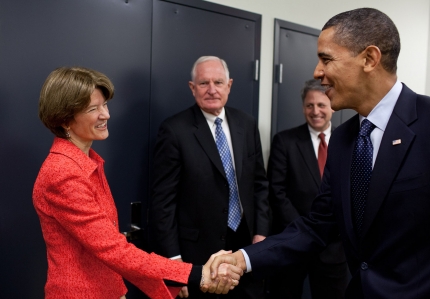
President Obama greets former astronaut Sally Ride at the launch of the "Educate to Innovate"Nov. 23, 2009

President Obama greets former astronaut Sally Ride prior to the launch of the "Educate to Innovate" Campaign for Excellence in Science, Technology, Engineering & Math (Stem) Education, in the South Court Auditorium of the White House, Nov. 23, 2009. (Official White House Photo)

Following the sad news today that Sally Ride, the first American women to fly in space, had died of cancer at the age of 61, President Obama released this statement:

Michelle and I were deeply saddened to hear about the passing of Sally Ride. As the first American woman to travel into space, Sally was a national hero and a powerful role model. She inspired  generations of young girls to reach for the stars and later fought tirelessly to help them get there by advocating for a greater focus on science and math in our schools. Sally’s life showed us that there are no limits to what we can achieve and I have no doubt that her legacy will endure for years to come.  Our thoughts and prayers go out to Sally’s family and friends.

Americans were first introduced to Dr. Ride when she traveled on the Space Shuttle Challenger in 1983, and she continued to teach generations of American girls that there are no limits to what they can accomplish after leaving NASA. The former director of the California Space Institute joined President Obama in his Educate to Innovate campaign to improve the participation and performance of America’s students in science, technology, engineering, and mathematics (STEM). Take a minute to watch these videos of Sally Ride's visits at the White House, where she participated in a Night of Astronomy with the President in 2009, and again when she took questions from Americans on the importance of STEM education:

The White House

Office of the Press Secretary

Statement by the President on the Passing of Sally Ride

Michelle and I were deeply saddened to hear about the passing of Sally Ride.  As the first American woman to travel into space, Sally was a national hero and a powerful role model.  She inspired  generations of young girls to reach for the stars and later fought tirelessly to help them get there by advocating for a greater focus on science and math in our schools.  Sally’s life showed us  that there are no limits to what we can achieve and I have no doubt that her legacy will endure for years to come.  Our thoughts and prayers go out to Sally’s family and friends.

The White House

Office of the Press Secretary

Press Gaggle by Press Secretary Jay Carney en route Reno, Nevada, 7/23/12

Aboard Air Force One
En Route Reno, Nevada

11:49 A.M. PDT

MR. CARNEY:  Good morning.  Welcome aboard Air Force One as we make our way to Reno, Nevada.  As you know, the President is addressing the VFW.  He will talk broadly about American foreign policy, where we were four years ago, where we are now, and where we need to go.  He will also talk about our veterans and the commitment that he has made and this country has made and must continue to make to our veterans who sacrificed so much serving abroad in two wars.

As you remember, when he spoke to the VFW four years ago, we were engaged in two wars that seemed to have no end to them.  Our alliances were frayed.  We were in the worst recession since the Great Depression, and people around the country were questioning America's capacity to lead. 

I think it's fair to say that much has changed in those four years.  The President kept his commitment and ended the war in Iraq.  He is winding down the war in Afghanistan.  He has taken the fight to our enemies, decimating the leadership of al Qaeda, including removing Osama bin Laden.  He has restored our alliances, made them stronger.  He has rebalanced our foreign policy toward Asia, an incredibly important region of the world that was largely neglected in the eight years prior to him becoming President.  And he has made significant commitments to our veterans, both in their care and in helping them when they return from these wars and they return from service, helping them find employment here in America.

And that's my top.  If Jen has something?

MS. PSAKI:  Sure, just one announcement for all of you.  Overnight, in advance of the President's remarks at the VFW Convention, we released -- the campaign released a video called "Welcome Home," that features a parade welcoming returning soldiers and discusses the President's commitment to keeping our nation's sacred promise to our veterans. 

Jay touched on this, of course, but just a reminder, the President has fought to pass a new law that provides business tax incentives for hiring returning veterans and military families, and he fulfilled his promise to fully fund the VA by securing the largest increase in funding for the VA in 30 years.  So look out for that video.

Q    Will we get prepared remarks?

MR. CARNEY:  I don't anticipate that we'll get prepared remarks.  We may have some excerpts for you, but we may not.

Q    The video that you talked about, and a little bit about what you talked about, as well, Jay, focuses on Iraq, drawing down the war.  There have been some pretty horrific attacks there today.  Does the President still consider this a success when you still have attacks and al Qaeda ramping up in Iraq?

MR. CARNEY:  There is no question that Iraq remains a violent place, and we strongly condemn the attacks in Iraq.  It is also the case that Iraq is not nearly as violent a place as it was, and that, thanks to the enormous sacrifice of U.S. military personnel, Iraqi security forces have been trained up and have the capacity to deal with their own internal security, which was exactly what the Iraqi government and the Iraqi people wanted.  So the fact that there remains violence in Iraq is certainly the case and we condemn these attacks, but it is also the case that the Iraqi security forces have been trained up and do have the capacity to handle their own security.

Q    Staying on Iraq, Jay -- critics of the President’s decision to withdraw the troops say that that has put at risk sort of gains in stability and security that America spent a lot of money and sacrificed a lot of blood in securing after the invasion.  How do you respond to that criticism?

MR. CARNEY:  Well, I understand that there are those who think we never should have ended the war in Iraq, that we should stay in Iraq, perhaps, for a second decade.  The President  simply disagrees with that.  And the fact of the matter is that, as I said, thanks to the sacrifice and professionalism of U.S. military personnel, Iraq has significant numbers of security personnel who are engaged in and capable of providing security internally to their own country.

And I also question the general premise that the United States should militarily -- should send forces to every country that has an internal security problem in order to take for -- in order to deal with that security on the behalf of the other country.

MS. PSAKI:  One thing just to add -- just a reminder on the President’s history on the war in Iraq.  He stood up and opposed the war when many people did not, many years before he ran for President.  He promised when he ran for President in 2007 and 2008 he would end the war in Iraq.  He talked about it during his speech when he won the Iowa caucuses.  And that’s been a long road for the American people, but it’s a promise that he’s delivered on.

Q    Is the President ready to resume the sort of punch and counterpunch of the campaign after the weekend timeout?

MS. PSAKI:  Well, the President spent -- as you know because you were all with us -- the day in Colorado, yesterday, meeting with families, remembering victims, hearing some incredible stories.  And as we know, the road of recovery in Colorado is going to be very long, and the day the President spent with these families yesterday will be with him on the campaign trail for several months -- through the end.

At the same time, he also -- what keeps him up at night and what wakes him up in the morning is the concern about middle-class families, the challenges they're facing, whether it’s getting a job, whether it’s having access to affordable health care, whether it’s paying for their college education.  And there’s a lot at stake and he will be continuing to lay out why he’s the right choice for the American people.

You may not have seen because we were taking off, but Mitt Romney did an event that was still going on as we were taking off with some small business owners where he -- where they once again kind of rehashed the false and misleading and out-of-context attacks on the President’s record, as well. 

So this is -- we’ve got a long way to go here.  Just to reiterate, the meetings the President had yesterday will be with him.  They're -- they really touched him yesterday.  But he also knows that he needs to make sure people know what’s at stake.

Q    Jay, there was an international AIDS conference in Washington over the weekend.  The White House had put out a series of fact sheets and updates and stuff on Saturday.  Still there was criticism of the administration for -- on the AIDS program.  And the president of the Black AIDS Institute said that the prevention efforts have been stalled.  I was wondering if you have any response to that.

MR. CARNEY:  Well, I would refer you to the voluminous information that was provided in the run-up to the conference for all the steps that this administration has taken in the battle against AIDS globally and HIV globally.  And I don't have any comment except that we certainly disagree with that and the President has a strong commitment to that fight.

Q    Jay, on Syria, Senator McCain today said that other Middle Eastern nations are begging for American leadership on Syria.  And in his words it’s "missing in action right now."  How do you respond to charges that you've not done enough to deal with this as the situation is getting worse on the ground?

MR. CARNEY:  I’m not sure what Senator McCain is suggesting that the United States do.  Perhaps he’s suggesting that it ought to intervene militarily or perhaps invade.  The President does not believe that’s the right course of action.

Right now we need to focus on the fact that Assad -- his days in power are limited.  The transition needs to take place.  There is broad international support for that.  We are working to further pressure the Assad regime through sanctions and international isolation.  We’ll continue to do that.  We’re working to assist the Syrian people through humanitarian aid and the opposition through nonlethal assistance.  And we will continue to work with our partners to bring about the political transition that the Syrian people deserve.

Q    Staying on Syria.  Assad's government talked today about responding with chemical weapons if they're invaded against a foreign invader.  What's the President's stance on how the United States would respond if chemical weapons came into use against --

MR. CARNEY:  There's a couple of hypotheticals involved in that.  But I would simply say --

Q    But his government is talking about using them.  That's not --

MR. CARNEY:  Well, he's talking about using them -- again, I'm just quoting you -- if there were foreign military intervention.  Our position on this is very clear, as I said yesterday.  We are concerned about the disposition of chemical weapons in Syria, but we believe that they are under control of the Syrian government.  We have made clear to the Syrian government that it is their responsibility to keep control of those weapons and that they will be held accountable, both collectively and individually, if those weapons were to fall out of their control or in any way be used.  That remains our position.

Q    Has the President given any consideration to pulling back on fundraisers in light of events last week?

MS. PSAKI:  Well, obviously visiting the families in Colorado was a huge priority for the President.  We have clearly -- clearly the events, the tragic events of Thursday have impacted both the tone and the schedule, and it has for several days.  There isn’t -- and I know I mentioned this yesterday -- there isn’t a playbook for this.  We felt it was appropriate to pull down kind of the larger crowd energy event we had planned, and we're taking it day by day.

But again, the meetings he had yesterday, the interactions he had with the families, the time he spent remembering the victims was something he felt strongly about doing and that will stick with him, and I think will stick with him not just for the next few days but for the coming months.

Q    Has he had any other briefings on the shootings with anybody else since we left Colorado?

MR. CARNEY:  He received his regular battery of morning updates and briefings, including information on this, but not an in-person briefing, no.

Q    It's a typical day in the stock market today -- there's concern about Europe.  Has the President been in touch with European leaders at all?

MR. CARNEY:  I have no calls to update you on.  The President is briefed regularly and very engaged on this issue.  We call on European leaders to take steps to follow through on the commitments they made in their summit in late June to stabilize the markets and to address the need for both growth and job creation, as well as long-term reform.  And that continues to be our position.

Q    -- going back to --

MR. CARNEY:  Not unless there is a huge demand.  (Laughter.)

Q    Jay, on Iran, the Israeli Prime Minister yesterday said that Iran's behavior in Bulgaria and elsewhere has been "brazen, that the nuclear talks with Iran hasn’t stopped the regime one bit, not one inch."  Do you think Israel is losing patience and wants to see more dramatic action?

MR. CARNEY:  The United States and Israel share a great deal of information about Iran and their nuclear program.  We have a very clear understanding together about what the state of that program is and Iranian intentions are.  This President has made clear that Iran must not obtain a nuclear weapon, and that is why, through this President’s leadership, we have seen unprecedented international consensus with unprecedented sanctions that have had unprecedented effect on the Iranian economy and on the isolation of the Iranian regime.  And we will continue to push forward in that effort.

As you know, new sanctions continue to come online periodically that heighten the pressure on Iran and make even more stark the choice that Iran faces, and that is to continue to be isolated, to continue to see its economy suffer, or to make the right choice to forsake -- forego its nuclear weapons program and to rejoin the community of nations by honoring its international obligations.

Q    Thanks.

END
12:02 P.M. PDT

The White House

Office of the Press Secretary

Statement by the Press Secretary on H.R. 4155

On Monday, July 23, 2012, the President signed into law:

H.R. 4155, the “Veterans Skills to Jobs Act,” which requires Federal agencies, when considering applicants for Federal licensure or certification, to consider relevant training that applicants may have received during service in the Armed Forces.